

More news on this day
Global air travel demand is on track to reach new heights in 2026, with passenger volumes surpassing pre-pandemic records and airline revenues projected to hold above the 1 trillion dollar threshold for the first time.
Get the latest news straight to your inbox!
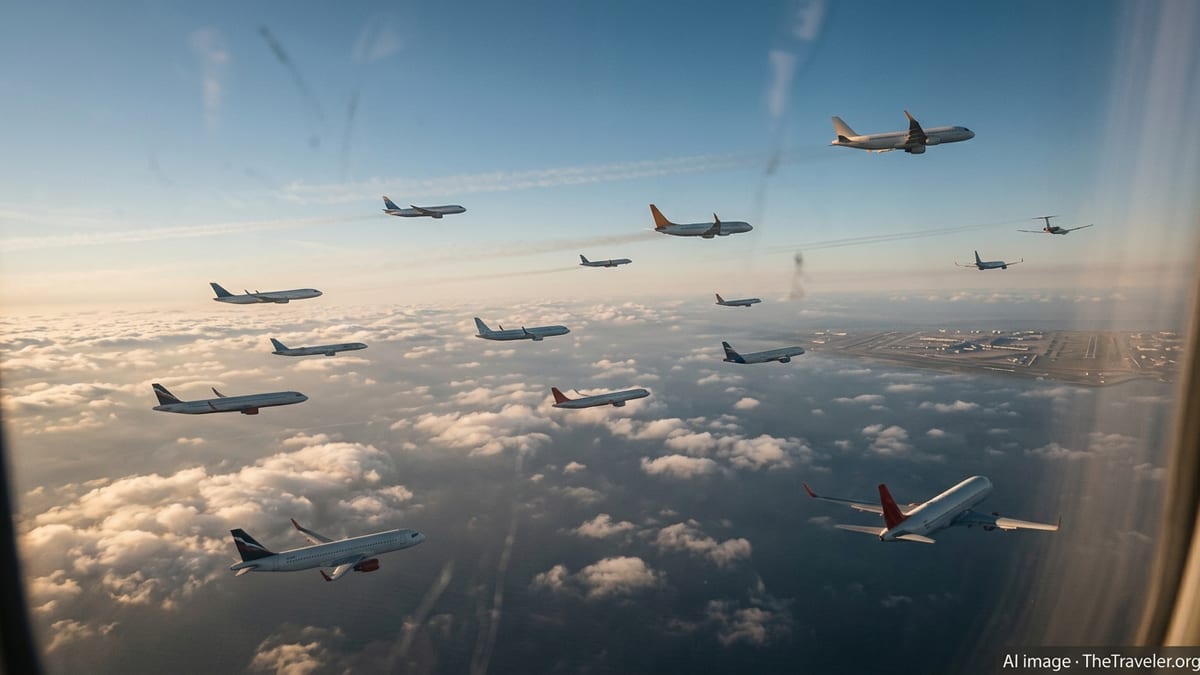
Record Passenger Volumes Signal a New Peak for Aviation
After a full recovery in 2024, when worldwide airport passenger traffic surpassed 2019 levels, industry data now point to a decisive new peak in 2026. Joint analyses from airport and aviation bodies indicate that global passenger numbers climbed to roughly 9.5 billion in 2024 and continued rising through 2025, putting the sector on a firm growth path into 2026.
Airports Council International and the International Civil Aviation Organization report that traffic growth in 2025 is running in the low single digits on a global basis, but from a much larger base than before the pandemic. Projections compiled from thousands of airports suggest total passenger traffic of about 9.8 billion in 2025, setting the stage for another record year in 2026 as capacity constraints gradually ease and new aircraft enter service.
Industry forecasts for 2026 point to passenger volumes comfortably above the pre-2020 trend line, supported by resilient leisure demand and a more stable outlook for business travel. While exact global totals for 2026 are still being modeled, the combination of recovered long haul markets, fully reopened Asia Pacific networks, and continued growth in emerging economies is expected to push the figure well beyond the 10 billion passenger mark over the medium term, with 2026 seen as a key step toward that milestone.
Regional trends remain uneven but broadly positive. Europe and North America are already reporting traffic indices above 2019 levels, while large domestic markets in Asia and Latin America continue to rebuild. Analysts note that even in markets where growth has moderated, high load factors and strong booking curves for 2026 underline a structural shift toward air travel as a preferred mode for both short break tourism and long distance family visits.
Airline Revenues Set to Hold Above 1 Trillion Dollars
On the financial side, the International Air Transport Association has projected that global airline industry revenues will exceed 1 trillion dollars in both 2025 and 2026. The latest profitability outlook released in late 2025 estimates that total revenues will reach approximately 1.053 trillion dollars in 2026, representing growth of around 4.5 percent compared with 2025.
These projections build on a rapid revenue climb in 2023 and 2024, when a surge in deferred travel demand and higher average fares pushed industry takings close to the 1 trillion dollar mark. Earlier forecasts had anticipated that 2024 would already cross that threshold, and although later revisions placed full year revenues just below that level, the momentum carried into 2025 and 2026 has effectively ushered in a new scale for airline turnover.
Profitability remains comparatively modest relative to total revenue, but the absolute numbers are unprecedented. IATA’s most recent assessment suggests net profits of about 39.5 billion dollars in 2025 and 41 billion dollars in 2026, corresponding to net margins of under 4 percent. Industry observers characterize this as historically high in dollar terms but still thin when measured as a return on sales, underscoring the sensitivity of airlines to fuel prices, interest rates, and supply chain costs.
Ancillary revenues are playing a growing role in supporting the 1 trillion dollar level. Reports indicate that income from extras such as seat selection, baggage, onboard sales, and loyalty partnerships now accounts for close to 14 percent of airline revenues worldwide, up from around 12 to 13 percent before the pandemic. As carriers refine dynamic pricing and unbundled fare strategies in 2026, this share is expected to rise further, providing a buffer against cyclical swings in base fares.
Leisure Demand, Fleet Expansion and Emerging Markets Drive Growth
The demand story behind the headline numbers is largely driven by leisure travelers, particularly on short and medium haul routes. Survey data compiled by industry bodies and travel management companies show that households in major markets continue to prioritize travel spending, helped by relatively low unemployment rates and pent up appetite for international trips that were postponed during the pandemic years.
Aircraft manufacturers are aligning their production plans with this demand. The latest commercial market outlooks from Boeing and Airbus both project that global air travel will grow faster than world GDP over the next two decades, propelled by expanding middle classes in Asia, the Middle East, and parts of Africa. Forecasts envision annual passenger traffic growth in the mid single digits, with some regions, notably South Asia and Southeast Asia, expected to post significantly higher rates.
Fleet expansion orders placed in 2024 and 2025 are now feeding into capacity planning for 2026. Large narrowbody orders from carriers in India, the Gulf, and low cost operators in Europe and North America are intended to capture sustained point to point leisure demand. At the same time, widebody orders at major network airlines reflect expectations that long haul premium and visiting friends and relatives traffic will remain robust as visa regimes normalize and tourism promotion intensifies.
Business travel is recovering more gradually but is no longer seen as a structural drag. Forecasts from corporate travel analysts suggest that while virtual meetings have permanently replaced some journeys, in person sales, project, and conference trips are returning in sufficient numbers to support premium cabin yields. As companies adjust travel policies and budgets for 2026, the business segment is expected to complement, rather than dominate, the broader demand picture.
Capacity Constraints, Costs and Sustainability Targets Shape 2026 Outlook
Despite the upbeat demand and revenue projections, the path to record numbers in 2026 is not without constraints. Airlines and airports continue to grapple with supply chain disruptions, pilot and technician shortages, and air traffic management bottlenecks that limit the speed at which capacity can be added. Engine availability issues and slower than expected aircraft deliveries have already led to schedule adjustments at several carriers.
Costs are also a central factor. Fuel remains the single largest expense category, and while prices have eased from their 2022 peaks, jet fuel bills still account for nearly one third of airline operating costs according to recent financial outlooks. Higher interest rates have increased financing costs for fleets and infrastructure, and wage inflation in many markets has pushed unit costs higher just as regulators and passengers demand improved service and reliability.
Environmental policy commitments add another layer of complexity. Aviation’s decarbonization roadmap, including the global CORSIA offsetting and reduction scheme and national level climate targets, is beginning to show up in airline cost structures. IATA’s latest projections for 2026 include several billion dollars in spending on carbon offsetting and sustainable aviation fuel, even though sustainable fuel still represents less than 1 percent of total jet fuel consumption.
Infrastructure capacity at key hubs is emerging as a potential brake on growth. Several major airports in Europe, the Middle East, and Asia are already operating near their declared runway or terminal limits during peak periods. While expansion projects are under way in many of these locations, new runways and terminals often take years to complete, meaning that airlines increasingly rely on upgauging aircraft and optimizing schedules rather than simply adding more flights.
What Record Demand Means for Travelers in 2026
For travelers, the combination of record demand and tight capacity is likely to define the 2026 experience. Publicly available fare forecasts suggest that average ticket prices, which jumped sharply during the immediate post pandemic rebound, stabilized in 2024 and 2025 and are expected to rise only marginally in 2026, by around half a percent on a global basis. That modest increase, however, masks significant variation between regions and seasons, with peak travel periods and constrained routes remaining expensive.
High load factors mean that popular flights may sell out earlier than before, encouraging travelers to book farther in advance to secure preferred dates and times. Carriers are also using increasingly granular revenue management tools, which can widen the gap between the lowest promotional fares and last minute prices. At the same time, competition from low cost carriers on dense short haul corridors continues to provide price sensitive travelers with alternatives, particularly in Europe and parts of Asia.
Product and network strategies are evolving in response to demand. Many airlines are restoring secondary long haul routes and launching new point to point services that bypass traditional hubs, reflecting both the growth of regional centers and advances in aircraft range and efficiency. Cabin configurations are being adjusted, with premium economy and extra legroom products expanded on long haul aircraft to capture travelers willing to pay for comfort without moving to full business class.
Travelers are also seeing more explicit sustainability features in airline offerings. Carbon calculators, options to purchase higher blends of sustainable aviation fuel, and clearer disclosure of fleet age and emissions intensity are gradually appearing in booking funnels. While these initiatives remain at an early stage, their prominence is expected to grow in 2026 as airlines and airports seek to align strong traffic growth with increasingly stringent environmental expectations.