

More news on this day
International travelers are confronting a fresh wave of disruption as ticket prices on some key global routes climb by 50 to 100 percent compared with a year ago, while widespread flight cancellations, surging fuel costs and war-related airspace closures tighten capacity across the world’s major long-haul corridors.
Get the latest news straight to your inbox!
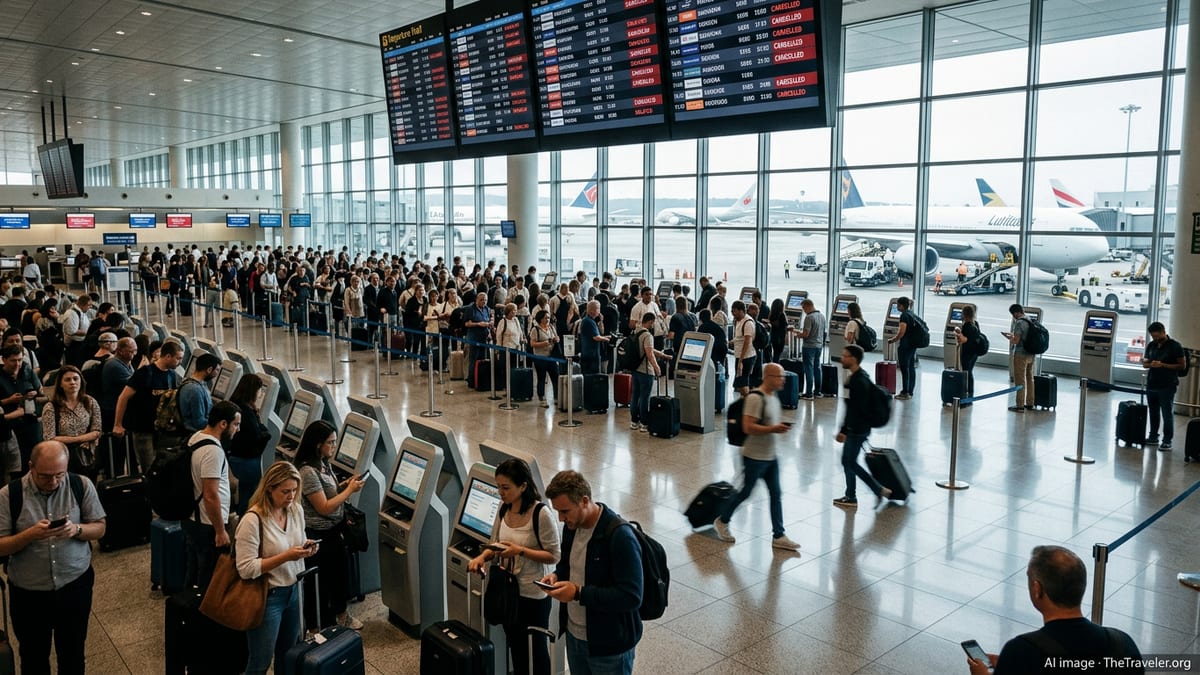
War and Airspace Closures Force Longer, Costlier Routings
Airspace disruptions linked to the widening conflict involving Iran are reshaping global flight patterns and driving up operating costs on heavily traveled international routes. Published coverage in recent days describes extensive airspace closures across parts of the Middle East, forcing airlines to cancel services or divert aircraft onto longer paths that add hundreds of miles to long-haul journeys between Europe, Asia and Africa.
Reports indicate that major Gulf hubs, which serve as critical connectors between continents, have seen rolling waves of cancellations alongside sharply lengthened flight times on remaining services. To avoid closed or high-risk skies, carriers are charting detours that can extend block times by 45 minutes to two hours on some routes, increasing fuel burn and crew costs per flight.
Those extra costs are feeding directly into higher fares. Analysts cited in recent travel and business reporting say immediate price spikes often reflect an imbalance between supply and demand as thousands of seats are removed at short notice. However, they also warn that if airspace restrictions and military tensions persist into the peak northern summer season, structural increases in routing and security costs could keep international ticket prices elevated well beyond the current shock.
The latest conflict comes on top of existing closures over Russia and parts of Ukraine, which have already forced airlines in Europe, North America and Asia to avoid direct great-circle paths across Russian territory. Chinese and U.S. carriers have publicly clashed over access to Russian airspace, underscoring how geopolitics is fragmenting the global network and embedding additional cost into many intercontinental itineraries.
Fuel Price Spike Adds Another Layer of Pressure
At the same time, the conflict-triggered disruption of oil flows through the Strait of Hormuz has sent global energy markets into fresh turmoil. Economic and energy analysis of the 2026 Strait of Hormuz crisis notes that crude prices have surged since early March, with knock-on effects for jet fuel, which already accounted for roughly 30 percent of airlines’ operating costs in 2024 according to industry data.
Travel industry briefings describe Gulf-region jet fuel benchmarks climbing to multi‑year highs, reversing some of the relief carriers had enjoyed as inflation eased in other parts of their cost base. On long-haul flights that are now both longer and more fuel-intensive because of detours, the combination of elevated fuel prices and additional burn per sector is particularly painful.
Analysts following airline pricing strategies indicate that if current fuel and routing conditions persist, more carriers are likely to introduce or increase fuel surcharges on international tickets. While some airlines initially attempt to absorb volatility through hedging programs, sustained price spikes typically filter into base fares and surcharges over subsequent weeks and months.
For travelers, the immediate impact is most visible on time-sensitive, high-demand routes such as Europe–Asia and North America–South Asia, where last-minute economy tickets have, in some documented cases, doubled in price compared with the same period a year earlier. Forward booking data compiled by aviation consultancies suggests that even advance-purchase fares, while less extreme, are tracking significantly higher year on year on routes most exposed to fuel and airspace shocks.
Capacity Constraints and Aircraft Shortages Tighten the Squeeze
Beyond war and fuel, structural capacity issues are amplifying the squeeze on international supply. The International Air Transport Association’s recent traffic updates show global passenger demand continuing to grow faster than available seat capacity, pushing load factors to record or near-record levels in late 2025 and into 2026.
Industry reports attribute much of this imbalance to prolonged supply chain disruptions in aircraft and engine manufacturing. Persistent problems with certain Pratt & Whitney geared turbofan engines have grounded hundreds of Airbus narrowbody and regional jets worldwide, while delayed aircraft deliveries and maintenance bottlenecks have limited airlines’ ability to add back capacity at the pace demand is returning.
Individual carriers across Europe, Asia and the Middle East have publicly outlined plans to cut routes or reduce frequencies because of engine repair delays and aircraft groundings that, in some cases, are expected to stretch into 2027. To keep networks running, many have extended leases on older aircraft or consolidated schedules, effectively reducing the number of seats on sale even as traveler numbers grow.
Airports Council International’s long-term traffic forecasts, released earlier this year, warn that without coordinated investment in fleet and infrastructure, capacity constraints will increasingly shape the passenger experience. With aircraft and airport slots both in short supply on prime international corridors, the pricing power of airlines on those routes has strengthened, reinforcing the upward pressure on fares.
Operational Disruptions and Labor Strains Compound Cancellations
Operational factors within airlines and at airports are further tightening the system. Labor shortages and industrial action among pilots, cabin crew, air traffic controllers and ground handlers have periodically forced carriers to thin schedules or cancel flights outright, particularly in Europe and parts of North America.
Recent high-profile scheduling crises, including mass cancellations at major low-cost and full-service carriers, have highlighted how fragile rosters remain in the wake of the pandemic. Public documents from regulators examining such disruptions cite crew rostering limits, illness, and tight turnaround times as key contributors, with knock-on effects rippling across international networks for days.
These cancellations often remove capacity at short notice during already busy travel windows, forcing passengers to rebook on alternative flights that may be nearly full. Travel search engines and fare trackers have recorded spikes of 70 to 100 percent in last-seat prices on certain long-haul sectors when large blocks of capacity are suddenly withdrawn.
In parallel, air traffic management systems in several regions continue to struggle with congestion and technical outages. Aviation organizations have warned that chronic air traffic control bottlenecks, drone-related disruptions and weather-related shutdowns can quickly cascade into large numbers of cancellations and diversions, particularly in densely trafficked European and North American airspace, further constraining international connectivity.
Travelers Face Tough Choices as Peak Seasons Approach
The combined effect of war-related detours, fuel volatility, aircraft shortages and operational bottlenecks is creating a challenging landscape for international travelers heading into the northern hemisphere’s spring and summer peaks. Industry data shows that while some markets still offer promotional fares far in advance, prices on many trunk routes have risen steeply in recent weeks, and short-notice international trips are becoming prohibitively expensive for many households.
Consumer advocacy groups and travel analysts are advising passengers to plan farther ahead, build in additional time for potential disruptions, and remain flexible on dates and routings where possible. Publicly available information from fare comparison platforms suggests that travelers who can avoid peak departure days, fly via secondary hubs or accept longer layovers may still find comparatively lower prices, though often at the cost of added travel time and complexity.
For the industry, the current squeeze underscores how closely global air travel is now tied to geopolitical stability, energy markets and industrial supply chains. Forecasts from aviation bodies continue to point to robust long-term growth in passenger demand, but also caution that without significant progress on resolving conflicts, expanding capacity and stabilizing fuel costs, periods of intense price pressure and widespread disruption on international routes are likely to remain a recurring feature of the travel landscape.