

More news on this day
Air travelers across the United States, Europe and Asia are confronting a sudden freeze in global connectivity as the war in the Middle East drives jet fuel prices sharply higher, prompts waves of flight cancellations and forces airlines to reroute around closed or volatile airspace, stranding thousands of passengers and rapidly pushing airfares to new highs.
Get the latest news straight to your inbox!
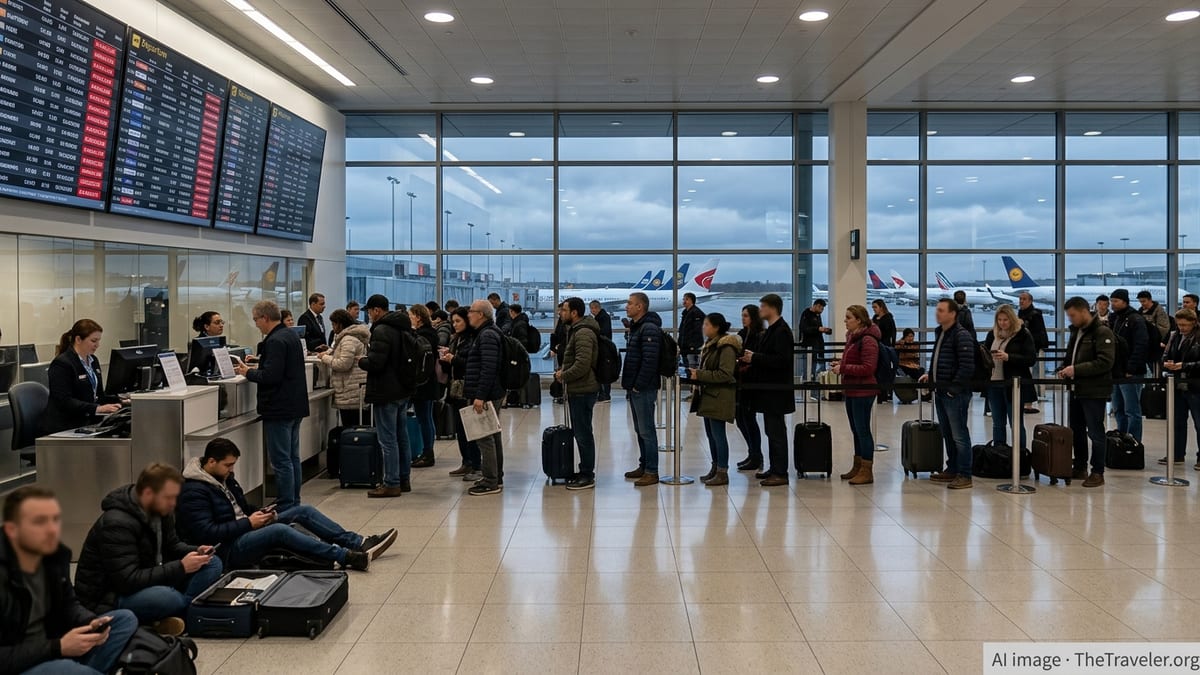
Middle East Conflict Shuts Key Airspace and Chokes Oil Flows
Publicly available information shows that the latest surge in disruption began after the outbreak of a war involving Iran at the end of February 2026, which has rattled energy markets and aviation networks worldwide. The conflict has disrupted exports through the Strait of Hormuz, one of the world’s most critical oil corridors, sending crude prices sharply higher and tightening supplies of jet fuel.
In parallel, multiple states across the Gulf and wider region have imposed temporary airspace closures or severe restrictions as drone and missile attacks proliferate. Reports indicate that Bahrain, Iraq, Israel, Kuwait, Qatar, Syria and the United Arab Emirates have all shut or curtailed parts of their airspace since the conflict escalated, forcing airlines to suspend services or redirect aircraft on lengthy detours.
Brief but highly disruptive shutdowns have also been reported at key hubs such as Dubai, where inbound flights were recently held in extended holding patterns due to potential missile threats. Each closure ripples quickly through global schedules because the Gulf has served for years as a central bridge between Europe, Asia, Africa and Oceania.
Air traffic analysts note that these simultaneous pressures on both fuel supply and flight corridors are unusual in scale. Airlines are being hit on two fronts at once, with higher operating costs from fuel and longer routes, alongside operational constraints that reduce how many flights they can safely operate each day.
US Joins Europe and Asia in Wave of Cancellations
While the most immediate disruptions have centered on the Middle East and Asia-Europe trunk routes, the United States has increasingly been drawn into the turmoil. Major US carriers with extensive international networks are adjusting schedules, consolidating flights and, in some cases, suspending certain connections that rely on now-closed Middle Eastern airspace.
Recent government data and flight-tracking platforms show thousands of passengers affected by cancellations and rolling delays at major US hubs already strained by severe winter storms and a partial federal government shutdown. Airports in New York, Chicago and Atlanta have all experienced heightened disruption in March as carriers juggle weather, staffing challenges at security checkpoints and the knock-on effects of long-haul schedule changes prompted by the Middle East conflict.
Industry commentary indicates that some transatlantic and transpacific services are being retimed or rerouted to avoid sensitive regions, adding flying time and complicating aircraft rotations. That has reduced operational slack in the US system, meaning that routine shocks such as storms or local air-traffic restrictions more quickly cascade into widespread cancellations.
For US travelers heading to or connecting through affected regions, options have narrowed rapidly. Routes that previously offered one-stop connections via Gulf hubs now often require two or more stops, or are temporarily unavailable, contributing to what many travel agents describe as a freeze in practical access to certain destinations.
Europe’s Big Hubs Struggle with a Capacity Crunch
Across the Atlantic, European airports and airlines are also contending with the fallout. Published coverage from outlets including Reuters and Al Jazeera notes that carriers based in the United Kingdom, Germany and France have canceled or suspended numerous Middle East services and rerouted Asia-bound flights to avoid contested airspace, further concentrating traffic on already busy northern routes.
London’s major airports have recorded significant clusters of cancellations and diversions following US and Israeli strikes on Iran, with arrival boards at terminals showing multiple flights from Dubai and other Gulf airports scrubbed during peak disruption. Similar patterns have been reported in Frankfurt and Paris as airlines cut back frequencies or switch to alternative routings that skirt the conflict zone, adding both time and cost.
To preserve capacity on key long-haul corridors, some European carriers are redeploying aircraft away from secondary destinations, leaving smaller markets with fewer options. Travelers report sold-out cabins weeks in advance on some Europe-Asia services that are still operating, especially those able to bypass Middle Eastern waypoints altogether.
Regulators and consumer groups in Europe are closely watching how airlines apply rebooking and compensation rules as the disruption drags on. While airspace closures and armed conflict are generally treated as extraordinary circumstances, critics argue that carriers must still ensure transparent communication and reasonable rerouting support for stranded passengers.
Turkey and Thailand Feel the Strain as Alternative Gateways
As traditional Gulf hubs adjust or curtail operations, countries positioned along alternative corridors are experiencing a sharp uptick in traffic. Turkey’s Istanbul airports have seen rising demand as airlines and travelers search for routings that connect Europe and Asia without crossing the most volatile airspace. Publicly available airline schedules show added frequencies and larger aircraft on some Istanbul-linked routes.
This surge has benefits for local tourism and aviation revenues but also brings crowding and operational challenges. Travelers passing through Turkey report longer queues, tighter connection windows and higher prices on routes that were previously considered secondary options compared with large Gulf hubs.
In Southeast Asia, Thailand has emerged as another key alternative gateway. According to statements from the Civil Aviation Authority of Thailand, jet fuel costs have risen sharply since early March, prompting warnings that local carriers may need to raise fares if the conflict persists. Authorities there point to steep increases on Europe-bound routes, as passengers and airlines restructure itineraries around Middle Eastern disruptions.
Bangkok and other Thai airports are now handling greater volumes of transit passengers who once favored Middle Eastern hub connections. While this has provided a short-term boost for Thailand’s aviation sector, it has also contributed to the broader capacity squeeze and fare inflation on long-haul services to and from Asia.
Airfare Spikes and Operational Challenges Hit Travelers Worldwide
The most visible impact for passengers has been a rapid escalation in ticket prices, particularly on long-haul routes touching Europe, Asia and Oceania. Industry reports compiled by outlets such as The Guardian and regional business media show airlines in Asia-Pacific, including Qantas, Air India, Cathay Pacific, Thai Airways and AirAsia, introducing new fuel surcharges or outright fare hikes in response to soaring jet fuel costs.
Some routes have seen extreme price swings. Analysis from specialist travel data firms indicates that certain Asia-Europe tickets briefly surged to several multiples of their usual levels in early March, particularly on dates when rerouting and capacity constraints were at their worst. At the same time, carriers in Europe and Asia have canceled thousands of flights through April and May, affecting tens of thousands of passengers, as they seek to contain losses and adjust to higher fuel burn on longer detours.
In the United States, publicly available financial commentary from major airlines suggests that carriers are also facing substantial additional fuel expenses. However, executives have pointed to strong demand and record bookings as a buffer, allowing them to pass some of the added costs on to consumers through higher fares while still maintaining profitable schedules on many routes.
Travel experts advise that, for now, passengers should prepare for a period of persistent volatility. With the war in the Middle East showing no clear sign of rapid resolution, industry forecasts suggest that elevated jet fuel prices, intermittent airspace closures and rolling schedule changes could remain a defining feature of global air travel through at least the peak summer season.