

More news on this day
Travelers heading into the 2026 peak season are confronting a fresh global airfare squeeze, as rising fuel costs, constrained airline capacity and stubbornly strong demand collide to push ticket prices sharply higher on key routes.
Get the latest news straight to your inbox!
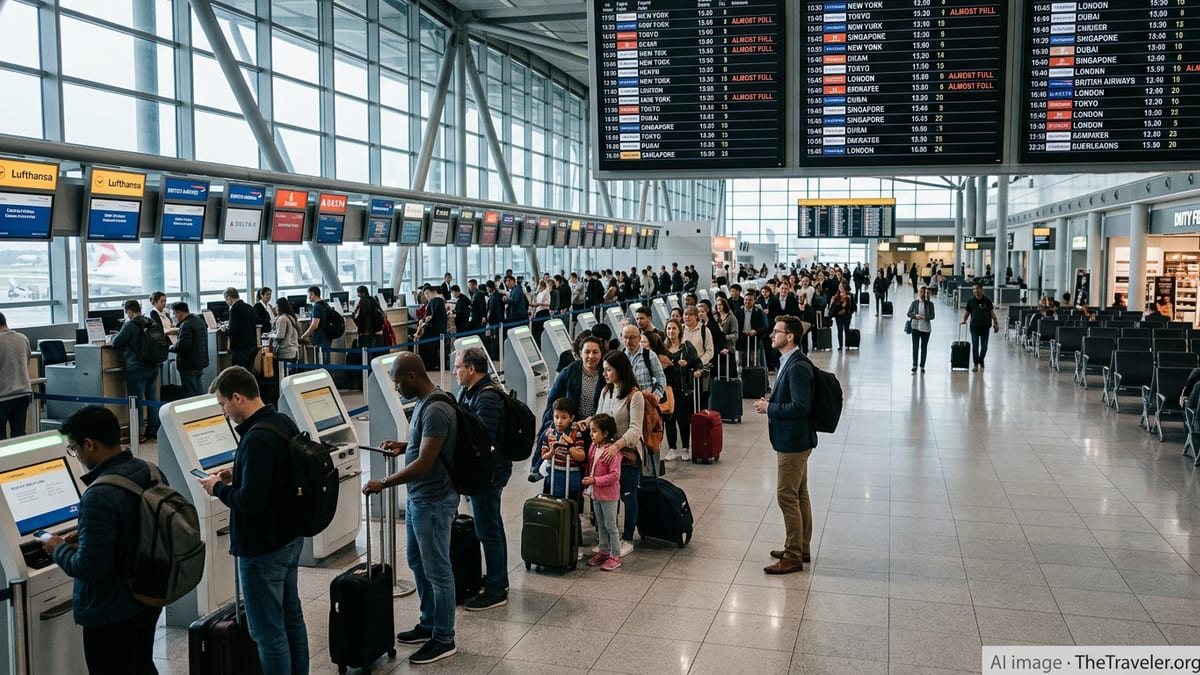
Oil Shock Turns Into a Jet Fuel Surcharge
The most immediate pressure on airfares in early 2026 is coming from energy markets, where the Iran conflict and disruptions around the Strait of Hormuz have driven crude prices above 100 dollars a barrel for the first time in several years. Industry coverage describes Brent crude briefly spiking as high as the mid 120s, reversing the relative stability that characterized much of 2025 and rapidly inflating airlines’ single largest operating cost.
Jet fuel has followed crude higher, with recent analyses indicating that benchmark prices have effectively doubled since late February. Aviation and financial media report that several carriers in Asia and the Middle East have already introduced or increased fuel surcharges on long haul tickets, while North American airlines are signaling that fare adjustments are likely if elevated prices persist into the busy northern summer.
Analysts tracking U.S. and European carriers estimate that the current fuel shock could add billions of dollars to annual operating costs if sustained. Research highlighted by industry outlets suggests that, at prevailing oil levels, airlines may need to lift ticket prices by around 10 to 11 percent on average simply to offset the jump in fuel expenses, with the steepest increases likely on fuel intensive long haul and ultra long haul routes.
For leisure travelers, the timing is particularly painful. Many had expected a period of relative price stability after several years of post pandemic volatility, but the renewed energy shock is feeding directly into summer pricing models just as airlines finalize capacity plans and revenue managers open the last blocks of inventory for June through August departures.
Capacity Still Tight Despite Traffic Normalization
While global passenger demand growth has cooled from the double digit rebound of the immediate post pandemic years, it remains robust heading into 2026. Data released in early March by the International Air Transport Association shows worldwide traffic in January up in the mid single digits from a year earlier, broadly in line with forecasts for steady expansion rather than a downturn.
On the supply side, however, airlines are still constrained by the aftershocks of aircraft delivery delays, engine maintenance bottlenecks and manufacturing quality issues. IATA’s most recent global outlook, published in December, describes aircraft availability as one of the most significant brakes on industry growth, noting that deliveries lost over the past several years have created a structural gap that will take much of the decade to close.
Major manufacturers have outlined ambitious ramp up plans, with Airbus, for example, targeting record production rates for popular single aisle models by the end of 2026. Yet the order backlog for new aircraft already stretches a decade or more at current output levels, and airlines in Europe, the Middle East and North America continue to report that they are flying older jets harder than planned to cover schedules.
This tight capacity is reflected in historically high load factors. Aviation market analysis shows global averages hovering in the mid 80 percent range, meaning that many flights are operating close to full. In practical terms, that leaves little slack to absorb demand surges during school holidays and major events, giving airlines more pricing power on popular city pairs even before fuel costs are factored in.
Forecasts vs Reality: Why Prices Are Rising Anyway
Several outlooks published in late 2025 had suggested that airfare inflation was largely behind travelers. A global business travel forecast released by major corporate travel organizations projected a modest decline in average ticket prices for 2025 followed by only a fractional uptick in 2026, while a separate Air Monitor report from a multinational travel management company anticipated broadly stable fares for the year ahead.
These projections rested on assumptions of relatively benign fuel prices, steady but not explosive demand, and a gradual easing of supply chain disruptions affecting new aircraft deliveries. In addition, long term data from IATA pointed to a multi decade trend of real, inflation adjusted fares drifting lower over time as fleets became more efficient and competition intensified.
The events of early 2026 are testing those assumptions. The sudden oil shock linked to the Iran war and associated shipping risks has altered airlines’ cost base in a matter of weeks, while persistent production and maintenance challenges mean that capacity cannot be flexed upwards quickly to compensate. As a result, many of the efficiency and competitive forces expected to keep fares in check are being temporarily overwhelmed by external shocks.
Industry economists still expect that, over the full year and in real terms, average fares could edge down if energy markets stabilize and aircraft deliveries accelerate in the second half. For individual travelers planning trips in the next few months, however, the headline experience is very different: higher base fares on constrained routes, the return of fuel surcharges in some regions, and fewer last minute bargains than in a typical pre pandemic season.
Regional Hotspots: Where Travelers Feel the Squeeze Most
The impact of the 2026 airfare squeeze is not evenly distributed. Business travel forecasts and corporate booking data point to particularly sharp increases on intercontinental routes, notably between North America and Europe, across the North Atlantic to the Middle East and South Asia, and on certain Asia Pacific long haul links where alternative routings are limited.
Travel market outlooks published in early 2026 highlight that average ticket prices for intercontinental travel are expected to rise more quickly than for regional or domestic trips. One forecast from a global travel management firm projects fare growth of more than 2 percent on long haul segments this year, compared with increases of under 1 percent on shorter routes, as airlines prioritize deployment of scarce widebody aircraft where yields are highest.
In North America and Europe, premium cabins remain a key pressure point. Reports from business travel providers note continuing “premiumization,” with a higher share of corporate and affluent leisure travelers booking business class or upgraded economy products. This shift supports higher average fares even when headline economy prices appear flat, and it reduces the number of lower fare seats available in each cabin.
Emerging markets are facing their own challenges. Carriers in parts of South Asia, Africa and Latin America are contending with weaker local currencies against the dollar, which amplifies the impact of dollar denominated fuel and aircraft costs. Publicly available financial updates indicate that some have responded by trimming marginal routes and focusing on core profitable networks, a strategy that often reduces competition on secondary city pairs and leads to higher prices for remaining services.
What It Means for Peak Season Travelers
For travelers looking ahead to the northern summer holiday period, the convergence of higher fuel costs, limited capacity and solid demand suggests that waiting for last minute deals is becoming increasingly risky on many international routes. Airline pricing models typically load higher fare buckets first when demand is strong and seats are scarce, and current booking trends reported by major online travel agencies indicate that popular dates around school breaks are already filling fast.
Travel industry commentary recommends that passengers with fixed travel windows secure tickets earlier than they might have in previous years, particularly for long haul leisure trips, complex multi stop itineraries and flights involving smaller or monopoly airports. Flexible booking options and partially refundable fares, which gained traction during the pandemic, are again being highlighted as tools to manage uncertainty while locking in prices before further fare adjustments.
Some travelers are responding by changing how and where they fly. Early 2026 search data cited in travel trade publications points to increased interest in shoulder season departures in May and September, as well as in alternative hubs where competition remains stronger. There is also evidence of a modest shift from air to rail on short haul routes in regions with high speed networks, especially in Europe, as price sensitive passengers seek to avoid airline fuel surcharges.
Even with these adaptations, the underlying dynamics driving the current surge in ticket prices are unlikely to resolve quickly. Energy markets remain volatile, aircraft manufacturers are still working through backlogs and quality issues, and global passenger demand has so far shown little sign of weakening. For many would be holidaymakers, the 2026 peak season is shaping up to be another year where finding an affordable seat requires more advance planning, greater flexibility and a careful eye on fast changing fare trends.