

More news on this day
International travelers heading into the 2026 peak season are confronting a sharp squeeze on global air capacity, with published fares on some long-haul routes reportedly jumping by 50 to 100 percent as airlines battle rising fuel costs, widespread schedule disruptions and mounting airspace restrictions linked to conflict and geopolitics.
Get the latest news straight to your inbox!
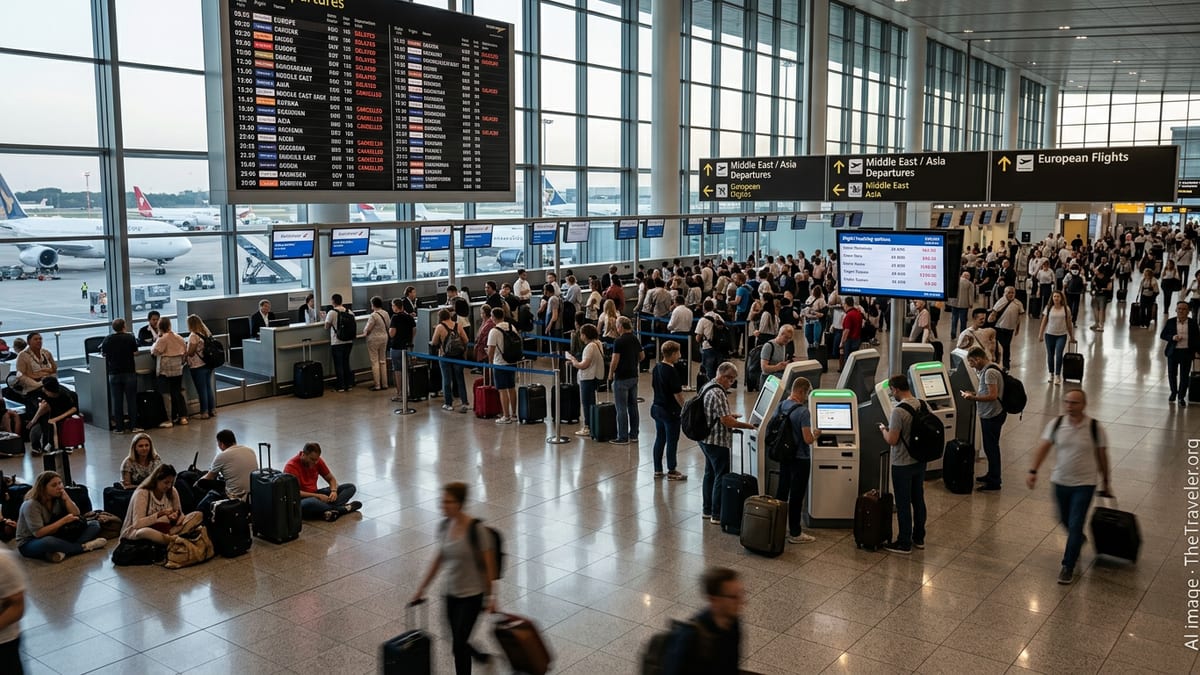
Fuel Costs Surge Amid Strait of Hormuz Crisis
Jet fuel, which typically represents roughly a quarter to a third of an airline’s operating costs, has become a central driver of the latest ticket price shock. Industry monitoring shows jet fuel prices rising again in early 2026 after a period of relative easing in 2024 and 2025, as the Strait of Hormuz crisis sends fresh volatility through global energy markets. Oil shipments through the key chokepoint have been severely disrupted since late February, with benchmark crude prices jumping in response and analysts warning of further spikes if the stand-off persists.
Reports from aviation and energy trackers indicate that average jet fuel prices have climbed well above pre-pandemic levels, eroding the margin relief carriers briefly enjoyed last year. Airlines that hedged a portion of their 2025 and 2026 fuel needs at lower levels are somewhat shielded in the short term, but many are now exposed to spot prices that are rising faster than anticipated. Publicly available data from airline financial updates and aviation consultancies suggest that carriers are passing a significant share of these higher input costs on to passengers, particularly on long-haul international sectors that burn the most fuel.
The renewed fuel spike comes on top of structural cost pressures from the industry’s transition toward lower-carbon operations. Sustainable aviation fuel typically remains several times more expensive than conventional jet fuel, and while its share of the global fuel mix is still modest, early-adopting airlines are layering green premiums, surcharges or higher base fares into long-haul pricing. For passengers, this convergence of short-term geopolitical shocks and longer-term decarbonization expenses is translating into some of the steepest fare levels seen since international travel fully reopened.
Airspace Disruptions Reshape Major Global Routes
At the same time, a widening patchwork of restricted or high-risk airspace is forcing airlines to redraw the map of global aviation, adding time, distance and cost to many marquee routes. Flight tracking data and published coverage show carriers rerouting around parts of the Middle East in the wake of the Iran conflict, compounding existing detours already in place because of the long-running war in Ukraine and earlier attacks on commercial shipping and infrastructure around the Red Sea.
These closures and advisories are particularly disruptive for hub-and-spoke networks that rely on Gulf and Levant airports as bridges between Europe, Africa and Asia. With overflight options narrowed, some long-haul flights have been extended by an hour or more, requiring additional fuel uplift and triggering extra overflight fees to alternative states. Analysts note that the economics of ultra-long sectors are highly sensitive to such changes, and marginal routes can quickly become unviable when detours are layered on top of higher fuel prices.
On certain days following major flare-ups, long-haul schedules into and across the broader region have seen waves of cancellations and rolling delays as carriers reassess routings, crew duty limits and insurance constraints. Industry observers point out that while many flights are eventually restored on adjusted paths, the immediate impact is a sharp reduction in available seats. The resulting capacity squeeze has helped push last-minute fares dramatically higher on remaining services, particularly between Europe, the Indian subcontinent, Southeast Asia and Australasia.
Capacity Constraints and Cancellations Deepen the Squeeze
Beyond geopolitically driven detours, airlines are still grappling with structural capacity constraints that make the current disruption more painful for travelers. According to aviation maintenance and finance analyses, the sector continues to face a multibillion-dollar supply chain backlog, with aircraft and engine parts in short supply and turnaround times for heavy maintenance longer than before the pandemic. This has left some carriers short of serviceable aircraft at the very moment demand for international travel remains robust.
Regional episodes of mass cancellations have highlighted how thin the margin for error has become. In late 2025, for example, a major Indian carrier canceled thousands of flights during a scheduling and crew-availability crisis, stranding large numbers of passengers and reducing capacity on one of the world’s fastest-growing aviation markets. Similar, if smaller-scale, disruption has appeared elsewhere when weather shocks, staffing issues or technical inspections have collided with already stretched fleets and congested hubs.
With limited spare aircraft and crews, airlines are often consolidating lightly booked services, trimming frequencies or exiting marginal routes to preserve operational resilience on core corridors. While this can reduce the risk of day-of-travel chaos, it also means fewer seats overall on many international city pairs. Published fare data from online travel agencies and metasearch platforms now frequently show economy tickets on some intercontinental routes selling at double their typical shoulder-season levels, especially when purchased close to departure or around major holidays.
Travelers Face Sharp Fare Spikes on Key Long-Haul Markets
The combined effect of higher fuel costs, circuitous routings and constrained capacity is being felt most acutely on long-haul international markets, where options are fewer and competition is thinner. Reports from global booking engines indicate that passengers searching for near-term departures between North America and southern Africa, Europe and parts of South Asia, or East Asia and Europe are encountering fares significantly above historical norms. In some cases, round-trip economy tickets that would have sold for under 1,000 dollars outside peak periods are now pricing at 1,500 to 2,000 dollars or more.
Analysts emphasize that the steepest increases are concentrated on routes where airspace closures or conflict-related insurance concerns have removed certain carriers from the field. When a handful of airlines suspend service to specific destinations, the remaining operators often see their flights sell out rapidly, leaving only high fare classes or premium cabins available. Dynamic pricing systems, which adjust fares in real time based on demand and remaining inventory, further amplify these spikes, especially as departure approaches.
Some travelers are responding by seeking multi-stop itineraries that connect through secondary hubs or mix full-service and low-cost carriers to reduce costs. However, these workarounds can involve longer travel times, tighter connections and more complex baggage arrangements. Travel agents and consumer advocates caution that in the current environment, last-minute rebooking options are limited when disruptions occur, since alternative flights on the same day may simply not exist at any price on busy long-haul corridors.
Outlook: Persistent Volatility as Peak Season Nears
Looking ahead to the northern hemisphere summer, industry outlooks point to a persistently tight international market rather than a rapid normalization. Forward bookings compiled by travel data firms indicate strong leisure and visiting-friends-and-relatives demand through mid-2026, even at elevated prices. At the same time, airlines remain cautious about adding back capacity too aggressively, given uncertainty around fuel, supply chains and geopolitics.
Economic forecasts published by aviation bodies suggest that, on a full-year basis, global average fares may not double across the board compared with previous years. However, analysts widely expect pronounced spikes on specific dates and routes whenever new disruptions hit. Any further escalation in the Strait of Hormuz crisis, additional airspace closures or renewed attacks on transportation infrastructure could trigger another round of cancellations, rerouting and fare surcharges with little warning.
For individual travelers, the environment now resembles a rolling squeeze rather than a one-off shock. Publicly available fare tracking shows that booking earlier, avoiding the most conflict-affected transit points and maintaining flexibility on dates and routings can still yield more manageable prices. Yet with multiple overlapping pressures bearing down on the international aviation system, the era of reliably cheap, straightforward long-haul travel appears to be on hold as 2026 unfolds.