

More news on this day
Soaring oil and jet fuel prices are triggering a rapid escalation in airfares worldwide, as Air France joins KLM, Air New Zealand, SAS, United Airlines, Delta Air Lines and Cathay Pacific in rolling out higher base fares, fuel surcharges and capacity cuts that threaten to disrupt peak holiday travel across Europe, New Zealand, the United States and large parts of Asia.
Get the latest news straight to your inbox!
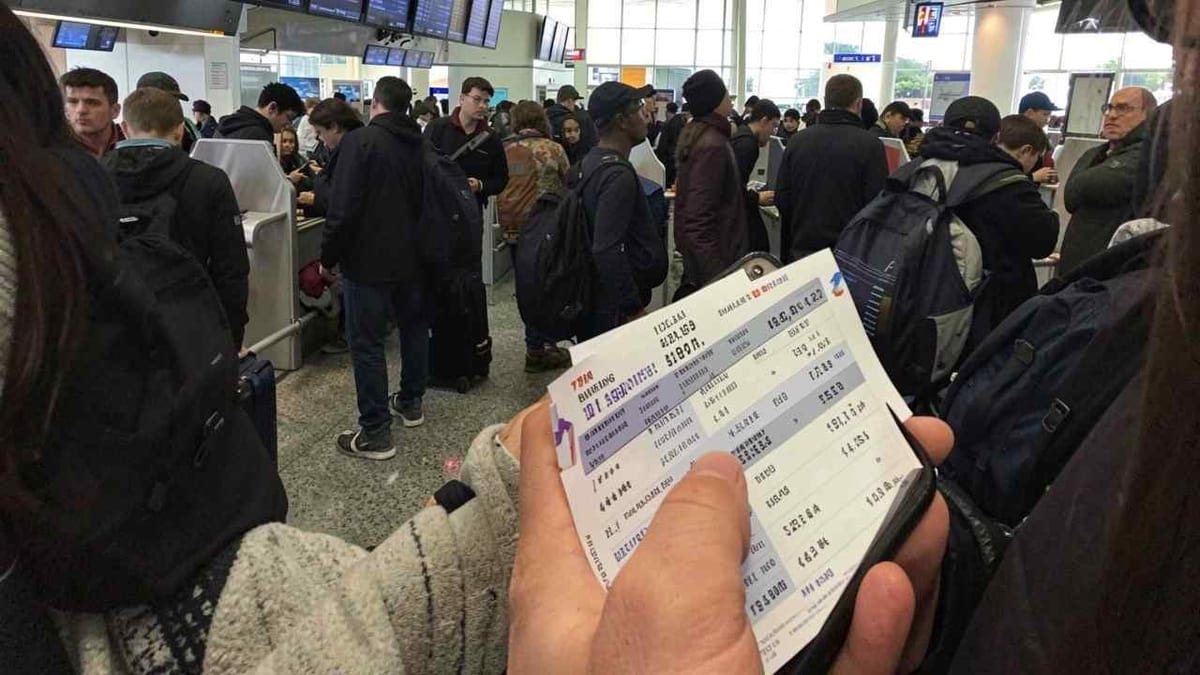
Image by Travel And Tour World
Oil Shock Pushes Jet Fuel Toward Extreme Territory
Global energy markets have been roiled in recent weeks by conflict in the Middle East and disruptions around key shipping lanes, pushing benchmark crude sharply higher and sending jet fuel costs toward levels that analysts warn could test 200 dollars per barrel in coming months. Industry reports describe one of the fastest fuel cost run-ups since the 2008 financial crisis, with Brent crude surging into triple digits and aviation-grade kerosene rising even faster as refiners struggle to keep pace with demand.
Published analysis of the latest crisis around the Strait of Hormuz notes that traders are increasingly modeling scenarios in which extended supply disruptions and refinery outages could propel crude prices close to 200 dollars per barrel if tensions drag on into the peak northern summer. In parallel, financial research focused on airline equities highlights that jet fuel prices have already doubled from earlier in the year on some spot markets, with airlines confronting a sudden jump in what is typically one of their largest operating expenses.
Market commentary from banks and energy specialists emphasizes that aviation faces a particularly acute squeeze because of its reliance on refined products whose prices tend to overshoot crude benchmarks during shocks. Even before crude would hypothetically touch 200 dollars, the cost of jet fuel has, in some regions, traded in a range similar to that stress level once refining margins and transport costs are factored in, leaving carriers with little room to absorb the hit without passing costs on to passengers.
Analysts also point out that the oil spike comes on top of higher borrowing costs and ongoing wage pressures, intensifying financial strain across the sector. That combination is driving airlines around the world to reassess their fare structures, fuel hedging policies and capacity plans just as travelers finalize bookings for midyear school holidays and year-end peak seasons.
Air France Joins Global Wave of Fare Hikes
Against this backdrop, Air France and its partner KLM have moved to increase ticket prices, positioning themselves alongside United Airlines, Delta Air Lines, Air New Zealand, SAS and Cathay Pacific in leading the latest global fare surge. According to recent European financial coverage, Air France KLM has introduced typical increases of around 50 euros on long haul economy return tickets, with the change applying to tickets issued from mid March as jet fuel costs climbed.
Separate aviation industry reporting indicates that Air France is combining higher base fares with adjustments to surcharges, including fuel and sustainability related components that have gradually appeared in ticket breakdowns over recent years. While some competitors label these add ons explicitly as fuel surcharges, others, including parts of the Air France KLM portfolio, are folding the additional costs directly into published fares, resulting in overall price increases estimated between 5 and 20 percent on certain routes.
Across the Atlantic, publicly available information on United Airlines and Delta Air Lines shows both carriers are already pushing through higher prices on a range of domestic and international routes, with analysts citing average fare growth in the low double digits tied largely to fuel. United has also signaled plans to trim less profitable flying over the next two quarters in anticipation of an extended period of elevated oil prices, while Delta has highlighted the fuel spike as a key variable in its outlook for the remainder of 2026.
In the Asia Pacific region, Air New Zealand and Cathay Pacific are similarly adjusting pricing and capacity. Regional news reports from New Zealand describe a mix of higher long haul fares and selective surcharges on transpacific and Asian routes, while coverage in Hong Kong notes that Cathay Pacific is revising fuel surcharges ex Asia as part of a broader effort to protect yields. Together with the Air France KLM moves in Europe and the steps by major US carriers, these changes form a coordinated global trend toward higher ticket prices as airlines race to keep pace with runaway fuel bills.
Europe and Transatlantic Travelers Brace for Costly Peak Season
The impact is being felt most immediately in Europe, where carriers such as Air France, KLM, SAS and low cost rivals are raising fares into the busy summer season. A recent survey by aviation regulators in Asia, which also tracked inbound European carriers, found that more than half of airlines operating international services had either implemented or planned to implement higher fuel related charges from mid March, with legacy European brands among those opting to embed the costs in their base fares.
Scandinavian operator SAS, already under financial pressure before the latest oil shock, has announced a series of schedule reductions, including hundreds of flights removed from spring and early summer calendars. European business and travel publications report that the airline has both raised fares and cut capacity on selected routes, emphasizing that even with earlier price increases the additional fuel burden remains substantial.
For transatlantic travelers, the convergence of higher European and US fuel costs is particularly challenging. Air France, KLM, Delta and Air France’s joint venture partners on the North Atlantic together control a significant share of capacity between Europe and the United States. With several of these carriers raising fares or signaling further adjustments, analysts expect average ticket prices between major hubs such as Paris, Amsterdam, New York and Los Angeles to climb well above last year’s levels.
Tour operators and online agencies across key European markets are already warning customers that traditional late booking bargains may be scarce this year. Dynamic pricing tools used by airlines are quickly incorporating updated fuel cost assumptions, which could see economy class return tickets for peak July and August travel from Europe to North America repriced upward multiple times in the coming weeks if energy markets remain tight.
US and Asia Holiday Plans Hit by Surcharges and Route Changes
In the United States, higher fuel costs are filtering through to both domestic and international fares as United Airlines, Delta Air Lines and other major carriers reoptimize their networks. Industry coverage notes that United is prioritizing routes with stronger premium demand while paring back less profitable flying, effectively reducing seat supply to some secondary destinations. Delta is reported to be factoring the new fuel environment into its capacity planning for the late summer and Thanksgiving peaks, a move that could constrain availability during traditional family travel windows.
Asian markets are also seeing a rapid escalation in prices. A recent survey by Vietnam’s civil aviation authorities found that more than 60 percent of airlines serving the region had introduced or were preparing to introduce fuel surcharges of up to several hundred dollars per ticket, citing jet fuel costs that have surged into a range equivalent to 150 to 200 dollars per barrel when refining margins are included. International carriers such as Air France and United were among those opting to blend the additional costs into their fare structures, while a number of Asian airlines applied explicit per segment surcharges.
For travelers planning trips around major Asian holidays later in the year, including Golden Week style peaks and school breaks in markets such as Japan, South Korea and Southeast Asia, these changes are translating into sharply higher upfront costs. Corporate travel managers in the region are revising budgets and encouraging earlier booking patterns, while leisure travelers are increasingly turning to price comparison tools to monitor fare movements day by day.
Some Asia based airlines have begun to adjust schedules in response to the fuel shock, reallocating capacity from thinner long haul routes to denser regional markets where higher load factors can help absorb the cost spike. That shift risks reducing options for long haul travelers from Asia to Europe and North America, reinforcing the price pressure on the remaining services operated by large global brands including Cathay Pacific, Air New Zealand and their alliance partners.
Travelers Confront Tough Choices as Prices Climb
With jet fuel costs climbing toward levels associated with a hypothetical 200 dollar per barrel oil environment, airlines’ room to absorb volatility is narrowing. Hedging programs that shielded some carriers earlier in the crisis are gradually rolling off, exposing them more fully to spot prices. Publicly available statements from several European and US airlines suggest that, unless energy markets stabilize, further adjustments to fares and surcharges cannot be ruled out in the second half of 2026.
For leisure travelers in Europe, New Zealand, the United States and Asia, the result is a complex web of trade offs. Industry analysts advise that those determined to travel during peak school holiday periods may need to book earlier than usual, accept less flexible ticket conditions or consider alternative routings through secondary hubs where competition remains slightly stronger. Others may choose to postpone long haul trips or switch to closer to home destinations reachable by rail or shorter flights that consume less fuel.
Tourism boards and airport operators are watching closely for signs that the fare surge will dampen demand. While pent up appetite for travel remains strong after years of pandemic and post pandemic disruption, the latest fuel driven price shock introduces a new level of uncertainty ahead of what is typically one of the busiest periods of the year for global aviation. With Air France, KLM, Air New Zealand, SAS, United Airlines, Delta Air Lines and Cathay Pacific now all participating in the push to raise fares, the coming months will test how much more travelers are willing, or able, to pay to keep their holiday plans in the air.