

More news on this day
Airlines from Europe to Asia are warning travelers to brace for sharply higher ticket prices and weaker route networks as the US‑Israeli war on Iran drives up jet fuel costs, disrupts key Middle East air corridors and chills demand for leisure travel across Thailand, Vietnam, the United Arab Emirates and other tourism hubs.
Get the latest news straight to your inbox!
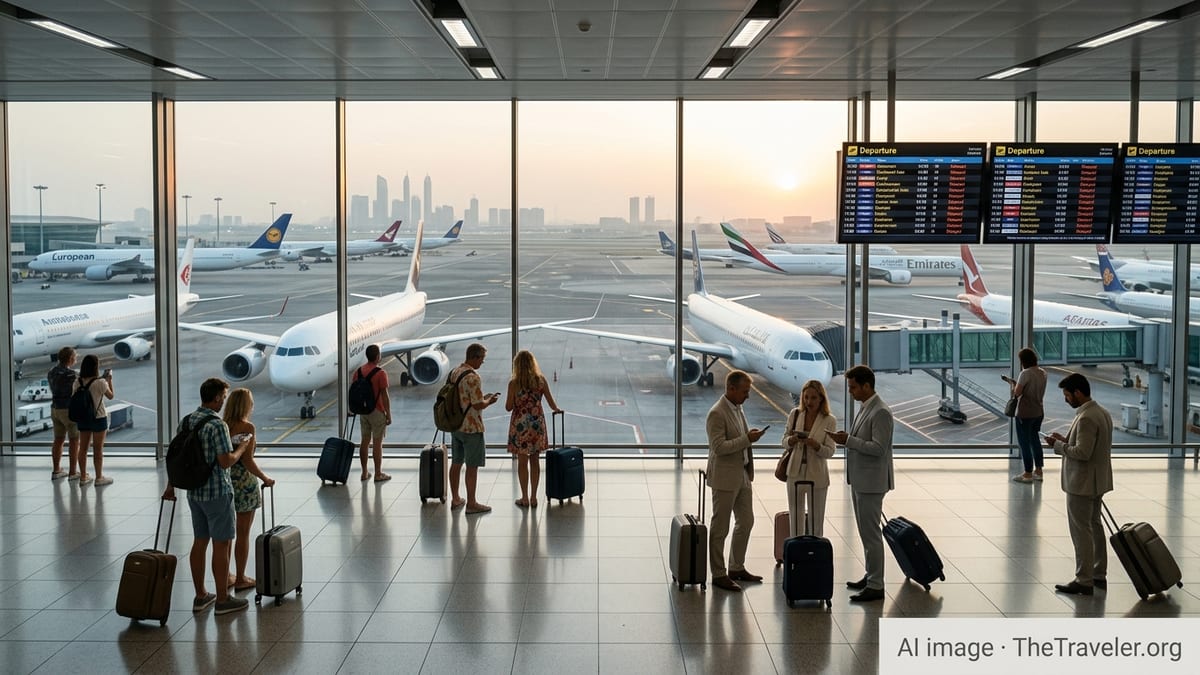
Jet Fuel Shock Pushes Major Carriers Toward Higher Fares
Global aviation is grappling with a rapid and steep jump in fuel costs since the outbreak of large‑scale hostilities involving the United States, Israel and Iran. Industry data compiled in March indicate jet fuel prices have climbed by around 50 to 60 percent within weeks compared with earlier 2026 expectations, a shift that is quickly rippling through airline pricing models and route planning.
Publicly available guidance from airline groups and trade bodies shows that fuel, which can account for a third or more of operating costs on long‑haul routes, is now the primary driver behind fresh fare increases and new or higher fuel surcharges. Airlines that had hedged a portion of their 2026 fuel needs are still exposed on unhedged volumes and on extended flying times caused by detours around closed or risky Middle East airspace.
Reports from aviation analysts note that many carriers are no longer able to absorb the extra expense through internal cost cuts, particularly after several years of post‑pandemic rebuilding. Instead, they are shifting the burden to passengers through higher base fares, surcharges and tighter capacity, with the biggest impact expected on long‑haul leisure itineraries.
United, Cathay Pacific, Air France‑KLM and easyJet Signal Price Pain
Large network carriers and low‑cost operators alike are flagging the likelihood of more expensive tickets as the conflict drags on. Coverage of recent public comments by United Airlines executives indicates that the US carrier expects American travelers to ultimately shoulder much of the cost of elevated fuel and rerouting, especially on international services that cross or skirt the Middle East.
Cathay Pacific, a major Asia‑Pacific long‑haul airline, has already begun lifting fuel surcharges and fares, with regional reporting describing double‑digit percentage increases following a sharp rise in the carrier’s March fuel bill compared with earlier in the year. The Hong Kong‑based airline relies heavily on long‑haul traffic linking Asia with Europe, North America and Australia, routes that are especially sensitive to both fuel prices and detour‑driven flight‑time extensions.
In Europe, Air France‑KLM has announced higher prices on long‑haul tickets issued from mid‑March, citing the sudden escalation in kerosene costs tied to the Middle East crisis. French and Dutch media coverage indicates that typical economy‑class round‑trip fares have risen by dozens of euros, with the group warning that further adjustments may follow if market conditions worsen.
At the short‑haul end of the market, easyJet and other low‑cost carriers are signaling that their business models are under strain from the same fuel shock and airspace restrictions. While budget airlines traditionally compete aggressively on price, analyst commentary suggests they may have limited room left to absorb additional costs without passing them on, particularly on Mediterranean and Middle Eastern leisure routes that now face heightened geopolitical risk.
Thailand and Vietnam See Tourism Sentiment Dented
The tourism industries of Thailand and Vietnam, two of Asia’s most popular holiday destinations, are being hit indirectly by a conflict unfolding thousands of kilometers away. Travel trade reports from major source markets in Europe, the Middle East and parts of Asia highlight a softening in new long‑haul bookings to Southeast Asia since early March, as travelers react to headlines about regional instability, elevated airfares and longer flight times.
Route disruptions and capacity cuts affecting Middle Eastern hubs are a key factor. For many European, African and Gulf travelers, journeys to Thailand and Vietnam involve connections through Middle East or South Asian gateways. With some flights to Gulf hubs cancelled or rerouted and others seeing steep fuel surcharges, total trip costs have jumped, undermining the appeal of long‑haul beach holidays compared with closer alternatives.
Tour operators in source markets report more cautious booking behavior, shorter lead times and a growing preference for flexible or refundable fares. Publicly available industry commentary points to rising cancellation and rebooking activity for late‑spring and early‑summer travel to Southeast Asia, with some customers deferring trips or switching to destinations perceived as less exposed to conflict‑related airspace issues.
While domestic and short‑haul demand within Southeast Asia remains comparatively resilient, analysts warn that a prolonged period of elevated long‑haul fares could slow the region’s post‑pandemic tourism recovery. That risk is particularly acute for Thailand and Vietnam, which rely heavily on discretionary holidaymakers sensitive to overall trip costs.
UAE Hotels Face a Hit to High‑Spending Visitors
The United Arab Emirates, and Dubai in particular, has long positioned itself as a global stopover and luxury leisure destination, heavily dependent on smooth, high‑frequency air links. The Iran conflict has disrupted that model, as airspace closures, higher operational risk and fuel price spikes weigh on traffic flows into Gulf hubs.
Gulf‑based travel coverage shows that several international and regional carriers have temporarily reduced or suspended services into key UAE gateways, while others have reworked schedules or upgauged aircraft to consolidate demand. These aviation shifts are already filtering through to the hospitality sector, where hotels in Dubai and Abu Dhabi report softer forward bookings from some long‑haul markets and a rise in last‑minute cancellations.
Industry data providers tracking hotel performance in the Gulf note early signs of pressure on occupancy and average daily rates, especially in upscale and luxury properties that depend on high‑spending business and leisure guests. Conference and exhibition organizers are also reassessing event calendars and attendance expectations, with higher travel costs and perceived security concerns dampening corporate appetite for large in‑person gatherings.
Local tourism boards are responding by emphasizing regional and domestic source markets, as well as promoting special offers to stimulate demand. However, analysts caution that such measures can only partially offset the loss of high‑yield long‑haul visitors if conflict‑related aviation disruption persists into the peak winter season.
Global Holiday Bookings Enter a Volatile Phase
Beyond specific countries, the broader global holiday market is entering a period of volatility as the Iran conflict reshapes traveler behavior. Travel technology firms and online agencies that publish aggregated booking trends describe a patchwork pattern: strong demand for short‑haul and intra‑regional trips, contrasted with hesitation around long‑haul journeys that require transiting volatile air corridors.
Higher airfares are a central concern. Public reporting from consumer groups and travel industry bodies suggests that price‑sensitive families, students and group travelers are particularly likely to scale back or postpone international holidays in response to rising ticket costs. Many are turning to closer destinations reachable by car or short‑haul flight, while others are opting to travel less frequently but for longer stays.
For airlines, tour operators and hotels, this shift complicates capacity planning for the key summer season in the Northern Hemisphere. Companies are weighing whether to trim schedules, pivot capacity toward shorter routes, or maintain frequencies in the hope that geopolitical tensions ease and fuel prices retreat. The outcome will shape not only ticket prices, but also the availability and diversity of holiday options for travelers worldwide in the coming months.
With no clear timeline for a resolution to the US‑Israeli war on Iran and associated disruptions to Middle Eastern airspace and energy supplies, most publicly available forecasts now assume a sustained period of elevated aviation costs and uneven demand. For travelers, that likely means fewer bargains, more carefully chosen trips and a renewed focus on flexibility when planning holidays for 2026 and beyond.