

More news on this day
Travellers booking flights this spring are being hit with sharply higher fares as the escalating war with Iran drives oil above 100 dollars a barrel, jet fuel costs to multi‑year highs and airlines worldwide scramble to pass the shock on to passengers.
Get the latest news straight to your inbox!
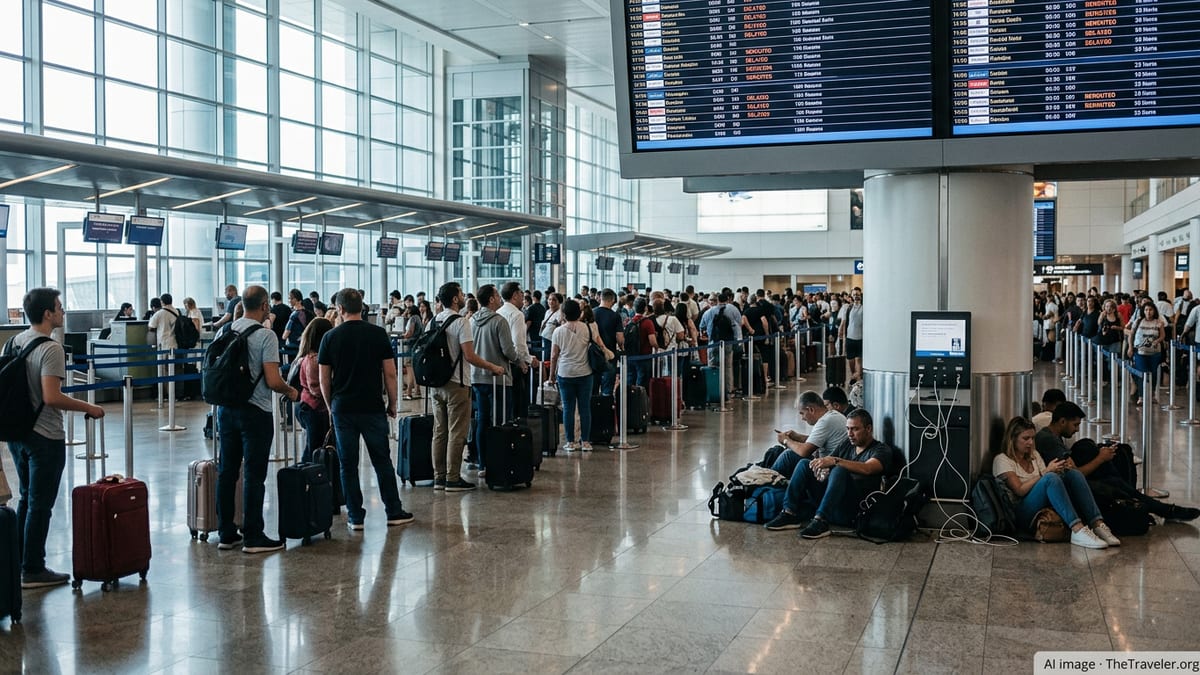
Jet Fuel Shock Hits Airlines’ Bottom Lines
The latest flare-up in the Middle East, centered on Iran and key Gulf energy infrastructure, has jolted energy markets just as airlines were counting on relatively stable fuel costs for 2026. Brent crude has surged back to around 100 dollars a barrel, reversing earlier forecasts that oil would hover in the mid‑70s range this year and squeezing an industry where fuel is typically the single largest expense.
According to recent industry and analyst data, global jet fuel prices have jumped by more than 50 percent in a matter of days, with benchmark aviation fuel now trading in the 150 to 200 dollars per barrel range, far above the sub‑90 dollar average airlines had built into their budgets. That sudden spike is blowing a hole in financial outlooks that only months ago anticipated modest improvement in profitability after years of post‑pandemic recovery.
Before the conflict escalated, the International Air Transport Association had projected a relatively benign fuel environment for 2026, with only a slight decline in jet fuel prices from 2025 and a gradual normalization of costs. Those assumptions have been upended by the new oil shock, leaving carriers little choice but to raise fares, add surcharges or cut capacity to stay in the black.
Fuel can account for up to 40 percent of an airline’s operating costs, and the current spike is landing on top of higher labor bills, aircraft shortages and lingering supply chain issues. The result is a rapid repricing of tickets that is being felt from low‑cost leisure routes to premium long‑haul cabins.
Middle East Conflict Chokes Key Energy and Air Corridors
The immediate trigger for the surge in fuel costs is the disruption to oil and gas flows around the Strait of Hormuz, the narrow maritime chokepoint that carries roughly a fifth of the world’s seaborne crude and liquefied natural gas. Military strikes, drone attacks on refinery and export facilities, and heightened naval activity have rattled shippers and insurers, pushing up both spot prices and risk premiums.
Attacks on Saudi and Qatari energy assets, alongside Iranian missile and drone barrages across the Gulf, have led to what regional authorities describe as “unprecedented shutdowns” at some facilities. Even when damage is limited, precautionary halts, inspections and rerouting of tankers are constraining supplies of refined products such as aviation fuel, tightening an already delicate market.
At the same time, aviation is being directly hit by the closure or partial restriction of airspace over Iran and several neighboring states, including key hubs that normally act as crossroads between Europe, Asia and Africa. Airlines are diverting flights around conflict zones, lengthening routes by hundreds of miles in some cases, which in turn increases fuel burn and operating time per flight.
This dual squeeze – higher fuel prices at the pump and longer, less efficient routings in the sky – is amplifying the cost shock. For passengers, that means not just pricier tickets but also more frequent delays, tighter capacity on certain routes and, in some cases, outright cancellations where carriers deem operations too risky or uneconomical.
Global Carriers Move Fast to Raise Fares and Add Surcharges
Airlines across Asia, Europe and the Pacific have moved quickly in recent days to reprice their networks. Major carriers in Australia, New Zealand and Scandinavia have announced broad fare increases or new fuel surcharges, explicitly linking the changes to the sudden jump in jet fuel costs triggered by the war. Several have also withdrawn or revised their financial guidance for 2026, citing extreme uncertainty.
In India, full‑service and low‑cost airlines alike have warned that aviation turbine fuel prices, which they say already represent nearly 40 percent of their cost base, have climbed steeply since the start of March. Some have implemented immediate fuel surcharges on domestic and international tickets, while signalling that further adjustments may follow if current price levels persist.
European and Gulf carriers are likewise reassessing their pricing, particularly on long‑haul sectors that must now avoid Iranian and adjacent airspace. Routes between Western Europe and East Asia are among the hardest hit, with travel agents reporting double‑digit percentage fare increases on some nonstop and one‑stop itineraries compared with just a few weeks ago.
Budget airlines, which rely on high aircraft utilization and thin margins, are especially exposed. Many have hedged a portion of their fuel needs, but few anticipated the speed and scale of the current spike. Where hedges run out or fail to fully cover consumption, they too are relying on surcharges and higher base fares to close the gap.
Travellers Face Higher Costs, Fewer Options and Regional Disparities
For travellers, the impact of the Middle East conflict is most visible in the booking path. Fares that had begun to stabilize after the pandemic recovery are now climbing again, particularly for departures in the next three to six months. Industry consultants say that leisure passengers on popular holiday routes may see increases of 5 to 15 percent in the near term, with the steepest rises on itineraries touching Europe, the Gulf or East Asia.
Corporate travel managers are reporting early signs of tightening budgets as companies respond to the renewed inflation threat from higher energy prices. While business‑critical trips are still going ahead, some non‑essential travel is being deferred or shifted to virtual meetings, especially on routes where fares have spiked and connections have become more complicated due to rerouting.
The pain is not evenly distributed. Regions heavily dependent on connecting traffic through Gulf hubs, such as parts of Africa and South Asia, are particularly vulnerable to both higher costs and reduced connectivity. In emerging markets where disposable incomes are low and demand for air travel is highly price‑sensitive, even modest fare hikes can push trips out of reach for many households.
There is also growing concern about knock‑on effects for tourism‑dependent economies that rely on affordable air links. Higher ticket prices, combined with lingering security worries among some travellers, threaten to slow visitor arrivals just as many destinations were hoping for a strong 2026 season.
How Long Could the Price Pain Last?
The outlook for airfares will largely depend on how long the Iran war and associated disruptions to oil and flight routes persist. If tensions ease and key energy infrastructure and shipping lanes can operate more normally, analysts expect jet fuel prices to retreat from their current peaks, though likely not back to pre‑crisis levels in the immediate future.
Industry bodies have warned that the conflict has exposed structural vulnerabilities in jet fuel supply chains, particularly Europe’s reliance on refined products from the Gulf. That has prompted renewed calls for strategic aviation fuel reserves, greater diversification of supply and accelerated investment in lower‑carbon alternatives such as sustainable aviation fuel, though these options remain significantly more expensive today.
In the meantime, airlines are focusing on levers they can control: trimming marginal routes, deploying more fuel‑efficient aircraft where possible and fine‑tuning schedules to protect profitability. However, with aircraft order backlogs stretching years into the future and many fleets still in transition, there are limits to how quickly carriers can adapt their cost base.
For travellers, the practical takeaway is that elevated fares are likely to be a feature of the market for at least the coming months. Flexible trip planning, early bookings and openness to alternative routings or secondary airports may help soften the blow, but as long as the conflict keeps energy markets on edge, cheap seats will be harder to find.