

More news on this day
Lost luggage may finally be losing its grip on air travel misery as Turkish Airlines, Lufthansa, Saudia and other carriers begin integrating Google’s new real-time tracking technology into their baggage recovery systems.
Get the latest news straight to your inbox!
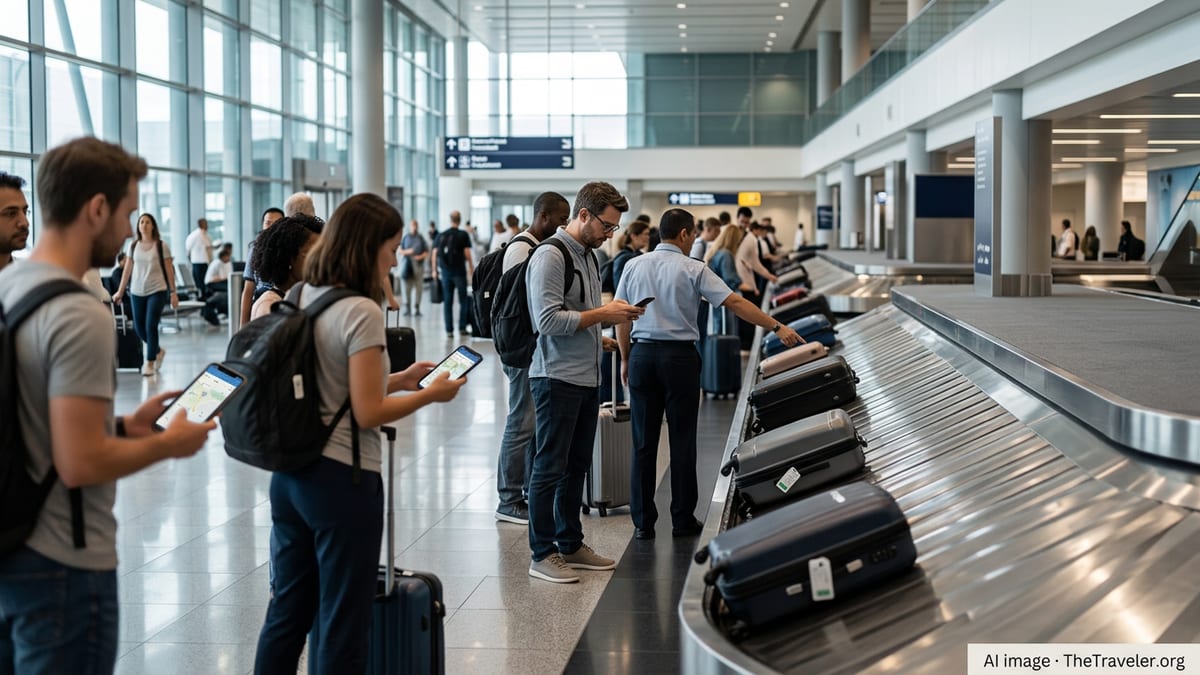
How Google’s Find Hub Links Turn Your Luggage Into a Live Signal
Google’s latest move in travel technology centers on its Find Hub network, a platform designed to track compatible Bluetooth tags and devices across millions of Android phones. The company has introduced a feature that lets travelers generate a secure, time-limited link tied to a tracker attached to their checked suitcase. That link can then be shared with an airline’s baggage team, giving them access to the bag’s live location data on their own internal tools.
The Find Hub link does not expose a traveler’s full Google account or personal information. Instead, it shares only the location of the individual tracking tag for a limited period, typically several days, and automatically disables once the item is recovered or the link expires. This setup is meant to provide airlines with just enough data to locate and route a missing bag without raising the privacy bells that have historically complicated cross-platform tracking.
For passengers, the new feature formalizes what many have been doing informally with personal trackers for years. Until now, travelers could show an airport agent their phone and insist that a lost suitcase was sitting in another terminal, a warehouse, or at the departure airport. With Find Hub links, that same data moves directly into the airline’s systems, blending consumer-grade tracking with traditional baggage tracing processes.
Google frames the initiative as a step toward a unified ecosystem where both passengers and airlines draw on the same set of location signals, potentially shortening the search window from days to hours when a bag goes missing.
Turkish Airlines and Saudia Lead Early Airline Partnerships
Among the most prominent early adopters is Turkish Airlines, which has announced a strategic cooperation with Google focused specifically on digital baggage tracking. The carrier is integrating Find Hub links into its lost and delayed luggage workflows, allowing passengers who use compatible tracker tags to attach a Google-generated location link to their baggage claim details. Ground teams can then see the approximate position of the suitcase on a map while it moves through airport and handling facilities, rather than relying purely on scan records and phone calls.
Industry reports indicate that Turkish Airlines sees the tie-up as part of a broader digital transformation push, aimed at smoothing pain points across the journey from online booking to final baggage delivery. The airline already participates in global tracing systems, but Google integration adds a second layer of intelligence that can reveal whether a bag is stuck at the origin airport, left behind on a trolley, or misrouted to a nearby hub.
Saudia is also emerging as a vocal supporter of the technology, according to people familiar with current trials. The airline is working with Google and its ground-handling partners in the Gulf region to test passenger-shared tracking links on select routes, with an eye toward scaling across its international network. For carriers like Saudia, which operate extensive connecting traffic through large hubs, the ability to see live data from passenger-owned tags could be especially valuable during peak seasons when baggage volumes are at their highest.
Both Turkish Airlines and Saudia are positioning the initiative as a customer experience upgrade, promising faster reunions with misplaced luggage and fewer opaque “we’re still looking for your bag” updates that frustrate frequent flyers.
Lufthansa Group and Global Carriers Plug Into Google’s Network
The Lufthansa Group, which has experimented with digital baggage tools and has previously explored ways to use consumer tracking data inside its operations, is part of the first wave of airlines accepting Google’s Find Hub links. Travelers on Lufthansa and its sister airlines can now share tag-based location details for missing bags directly through airline channels, where they are routed to baggage service staff.
For European carriers that handle large volumes of transfer traffic and complex interline itineraries, the new Google capability arrives as mishandled bag rates are under intense scrutiny. Industry baggage reports have highlighted how tight connections, congested hubs and labor shortages have created bottlenecks in luggage handling. Live location data, even if approximate, can help pinpoint whether a suitcase is languishing behind customs doors, parked in a baggage hall, or loaded onto the wrong flight.
Beyond Europe and the Middle East, more than 10 airlines worldwide are already in the program or preparing to join, according to technology briefings shared with trade press. While not all carriers are naming themselves publicly, the list spans full-service and hybrid airlines that see an opportunity to differentiate on reliability as much as price. Discussions are also under way with North American airlines, whose hubs routinely appear in rankings of airports with the highest baggage volumes.
By embracing Google’s network, these airlines are effectively acknowledging that passenger-owned trackers are here to stay. Rather than resisting them, carriers are beginning to treat them as additional sensors feeding into the same overarching goal: getting each bag to its owner, with fewer unpleasant surprises along the way.
Merging Find Hub With Legacy Baggage Systems Like WorldTracer
Behind the scenes, real-time tracker links are being layered on top of long-established baggage tracing systems such as WorldTracer, the decades-old platform used by most major airlines and ground handlers to manage lost and delayed luggage files. In the traditional model, bags are followed through their journey via barcode scans and manual status updates as they move between airports, conveyor belts and storage rooms.
When a suitcase goes missing, agents open a WorldTracer file tied to a unique reference code and begin searching by checking scan histories, calling other stations and, in some cases, manually walking through storage areas. It is an exhaustive process, but one that can be painfully slow, especially when there are gaps in the scan chain or errors in the routing information.
The new Google-powered links effectively act as an overlay, injecting live coordinates into that same workflow. An airline agent can pull up a WorldTracer record and, if the traveler has supplied a Find Hub link, cross-check system data against the latest tag location. If the bag appears to be sitting in a different terminal, or even at a different airport, that insight can prompt targeted searches or rerouting actions that would not have been obvious from scan data alone.
Technology vendors see the integration as part of a broader modernization wave in baggage management, where sensor data from multiple sources, including consumer trackers, airport equipment and smart tags, will converge into unified dashboards for airline operations teams.
What This Means for Travelers and the Future of Luggage Security
For travelers, the most immediate benefit of the new partnerships is psychological as much as practical. Knowing that an airline can officially tap into the same tracker data displayed on a phone reduces the feeling of talking past each other during a luggage crisis. Instead of trying to persuade an agent that the suitcase is “definitely still at the previous airport,” customers can now submit a formal location link that becomes part of the case file.
In practical terms, early trials suggest the technology can cut down the time it takes to identify where a bag went astray and arrange its onward journey, particularly in cases involving multiple connections or interline itineraries across several carriers. Faster identification also shortens the window in which items can be mishandled or misplaced in secondary storage, a recurring point of friction in the current system.
The rise of shared tracking does, however, raise new questions around privacy, liability and expectations. Airlines and regulators will be watching closely to ensure that location data is used strictly for recovery, stored only as long as necessary and protected from misuse. Travelers, meanwhile, may start expecting near-perfect performance, even though weather disruptions, tight connections and human error will continue to create occasional problems that no technology can fully eliminate.
As more airlines join Turkish Airlines, Lufthansa and Saudia in adopting Google’s Find Hub links, luggage tracking is poised to become a collaborative effort between passengers, platforms and carriers. While lost bags will not vanish overnight, the balance of information is shifting in favor of the traveler, and the days of “we have no idea where your luggage is” may finally be numbered.