

More news on this day
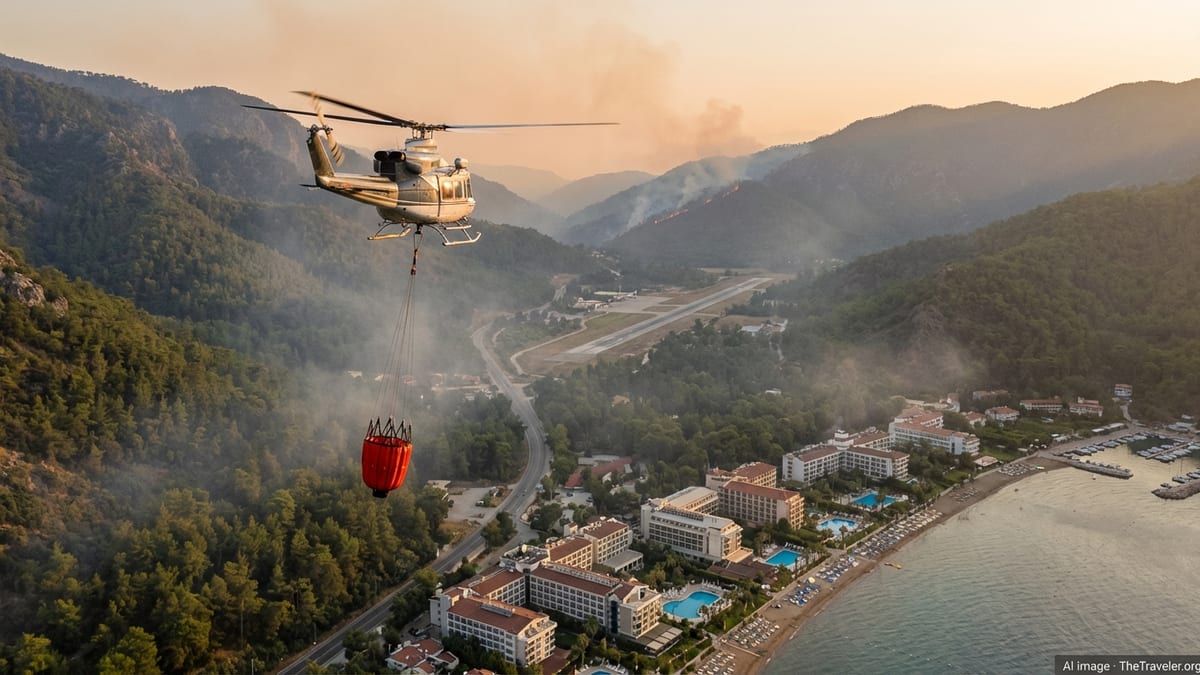
As wildfires increasingly threaten some of the world’s most popular destinations, a new alliance of major airlines and firefighting innovators is emerging, with carriers such as Qatar Airways, Emirates, Singapore Airlines, Air Canada, Delta, Lufthansa, British Airways, and Air France spotlighting advanced tools like Kawak Aviation’s Cascade firefighting bucket as part of a broader push to protect the tourism economies they depend on.
Wildfires Become a Core Risk for Global Tourism
In recent years, wildfires have shifted from being a largely seasonal concern to a defining risk for tourism-dependent regions across North America, Europe, the Middle East, and Asia-Pacific. From the American West and Mediterranean islands to Australia and Hawaii, intense fire seasons have repeatedly forced resort closures, disrupted air links, and clouded iconic skylines with smoke just as peak travel seasons begin. Tourism authorities now treat wildfire resilience as a strategic priority on par with marketing or infrastructure.
Industry data underscores the scale of the challenge. In the United States alone, an average of around 73,000 wildfires burn nearly 7 million acres each year, destroying thousands of structures and disrupting local economies built around visitor spending. As climate patterns shift, similar fire conditions have appeared in new regions, from northern Europe to parts of the Middle East. Against this backdrop, destinations are under mounting pressure to show travelers and investors that they can keep landscapes, skylines, and routes open even in severe fire seasons.
The impact on travel is multifaceted. When major wildfires hit, airlines reroute or cancel flights due to visibility and safety concerns. Hotels act as evacuation shelters instead of welcoming guests. Tour operators pivot itineraries at short notice. Even in regions where the physical damage is limited, global media coverage and social feeds can magnify perceptions of risk far beyond the actual footprint of the fire, slowing recovery long after flames are contained.
For both airlines and destinations, that combination of physical threat and reputational damage has driven a new urgency around wildfire response. The conversation has shifted from merely reacting to disasters toward actively investing in the technology, partnerships, and on-the-ground capacity that can limit fire growth, shorten closures, and keep tourism lifelines functioning.
How Kawak’s Cascade Bucket Changes the Aerial Firefight
At the center of this evolving response is a wave of innovation in aerial firefighting, where helicopters and fixed-wing aircraft deliver water and retardant directly to fire lines. Kawak Aviation, an Oregon-based engineering company known for its high-performance belly tanks and pump systems, has emerged as a key player with its Cascade firefighting bucket, a next-generation helibucket designed for fast, precise drops and rapid refills from shallow water sources.
The Cascade bucket combines a collapsible, compact design with a high-capacity power-fill pump that can draw water from lakes, rivers, reservoirs, or portable dams at rates measured in thousands of liters per minute. By minimizing the time a helicopter spends hovering low over water, the system both improves safety and dramatically increases the number of drops crews can achieve in a single operational period. Stable flight characteristics and predictable handling are built into the design, reducing pilot workload in demanding conditions and allowing crews to fly with confidence close to terrain and smoke.
Recent reporting in the aerial firefighting sector indicates that Kawak’s Cascade buckets are now in service in multiple size configurations, with capacities ranging from a few hundred to more than 2,600 US gallons. More than 60 Cascade buckets are operating globally alongside a fleet of large-capacity Kawak tank systems on heavy helicopters. During severe fires in Southern California in January 2025, helicopters equipped with Kawak tanks and Cascade buckets collectively flew more than one thousand water loads over several days, offering a vivid demonstration of how modern equipment can help slow fast-moving fires at the wildland-urban interface.
For tourism regions, the technical detail matters because it translates directly into fewer lost days. Faster fill times and higher drop precision mean quicker containment near critical assets such as hotels, resorts, airports, and visitor attractions. The ability to fill from shallow or improvised water sources close to the fire line is particularly important in dry, heavily developed coastal and mountain destinations, where large lakes may be distant but smaller reservoirs or temporary basins can be established near resorts, ski areas, or urban edges.
Major Airlines Step Into the Wildfire Conversation
While airlines are not operating firefighting helicopters themselves, global carriers are increasingly vocal about the technologies and partnerships that protect the destinations they serve. Qatar Airways, Emirates, Singapore Airlines, Air Canada, Delta, Lufthansa, British Airways, and Air France have all stepped up public commitments to climate resilience, disaster response, and community support in markets vulnerable to wildfire, framing these efforts as integral to their long-term network strategies.
In North America, where wildfires have repeatedly affected key summer routes, carriers have invested in disaster-relief partnerships that hinge on rapid airlift of firefighters, emergency workers, and specialized equipment. Programs that provide cargo space and priority routing for aerial firefighting components, including buckets, pumps, and spare parts, ensure that operators using systems like the Cascade bucket can stay mission-ready even during peak demand. Airlines have also supported relief flights and travel vouchers for displaced residents, as seen in recent airlift and ticket-donation campaigns following major fires in Hawaii and the US West.
European and Middle Eastern carriers are building similar responses as Mediterranean and Alpine fires intensify. Lufthansa and Air France have strengthened links with national civil protection agencies that oversee aerial firefighting fleets, while Gulf carriers such as Qatar Airways and Emirates highlight their role in connecting global volunteer organizations, technical experts, and aid shipments to fire-stricken regions. Singapore Airlines, serving both highly forested Southeast Asia and long-haul markets such as Australia, increasingly frames its sustainability reporting around resilience investments and operational partnerships that help protect natural assets central to tourism.
Across the group, these airlines are also using their marketing and communications platforms to spotlight advanced firefighting capabilities in key destinations. By emphasizing that local authorities are investing in modern tools like Kawak’s Cascade bucket, they seek to reassure travelers that regions affected by recent fires are not only rebuilding but also improving their capacity to respond to future events, supporting stable demand for flights and hotel stays.
From Smoke to Bookings: Protecting Hotel and Destination Brands
For hotel groups and tourism boards, the immediate concern during a major wildfire is safety: evacuating guests, supporting staff, and keeping critical infrastructure secure. Once the flames are out, however, the challenge becomes reputational. Scenes of smoke-filled skylines and burnt hillsides can linger in travelers’ minds for seasons, raising questions about air quality, access to nature, and the viability of planned vacations or conferences.
Destinations such as California have already shown how coordinated wildfire response and clear messaging can shape recovery. After severe fires in Los Angeles and other parts of the state, tourism authorities mobilized crisis funds and marketing campaigns to counter the misconception that entire regions were out of bounds, even when the actual burn area was a small fraction of the territory. Highlighting the speed and effectiveness of aerial firefighting efforts, including the deployment of modern helicopter buckets and tank systems, has become part of the narrative used to reassure domestic and international visitors.
Hotels are also adjusting how they talk about preparedness. In resort areas near forests or wildland-urban interfaces, some properties now emphasize their coordination with local firefighting agencies, proximity to cleared firebreaks, and the availability of helipads or staging areas that can support air operations. While guests primarily come for beaches, cityscapes, or mountain views, the behind-the-scenes presence of well-equipped aerial response teams can be a subtle but powerful factor in destination choice, especially for high-value travelers and event planners managing large groups.
In this context, advanced equipment like Kawak’s Cascade bucket becomes more than a technical footnote. Its presence within regional firefighting fleets is part of the story tourism boards tell about protecting landscapes, infrastructure, and clean air. A region able to showcase rapid, well-equipped helicopter operations can credibly argue that it has shortened the window between ignition, containment, and full reopening, limiting the number of nights that hotels, restaurants, and attractions sit empty.
Supply Chains, Hubs, and the Rapid Movement of Firefighting Gear
The global reach of Qatar Airways, Emirates, Singapore Airlines, Air Canada, Delta, Lufthansa, British Airways, and Air France gives them an underappreciated role in the spread and support of advanced firefighting tools. Kawak Aviation’s Cascade bucket is manufactured in the United States but now serves customers across North America, Europe, and Asia-Pacific. Moving these systems to where they are needed quickly, particularly at the start of a fire season or in response to an unexpected surge in activity, depends on reliable, flexible air cargo networks.
Airlines have been working more closely with equipment manufacturers and aerial firefighting operators to anticipate demand and streamline logistics. That coordination includes pre-positioning key components in regional warehouses, securing customs arrangements that minimize delays, and ensuring that cargo capacity is available even during busy travel periods. When Canadian Air Parts was appointed as an exclusive distributor for Cascade buckets in Canada, such arrangements highlighted how regional stocking points supported by international air freight can shorten lead times during emergency deployments.
These logistics capabilities matter directly to tourism economies. In many fire-prone regions, the window between an early-season test of equipment and a first major blaze can be measured in weeks. Being able to airlift additional buckets, pumps, or spare parts into a region can significantly increase daily drop capacity at critical moments, improving the odds of containing fires before they threaten airport access roads, coastal resort zones, or historic town centers.
For the airlines themselves, this function fits into a broader narrative about their role in community resilience. Corporate responsibility reports increasingly highlight the number of crises supported, the tonnage of supplies transported, and the partnerships forged with firefighting agencies, humanitarian groups, and manufacturers. As demand for transparency grows, carriers are expected not only to reduce their own environmental impact but also to show how they help protect the very destinations that drive their route networks.
Wildfire Recovery Flights and Traveler Confidence
Beyond the movement of equipment and specialists, airlines are also experimenting with how passenger flights themselves can support wildfire-affected communities and rebuild traveler confidence. In some cases, carriers have operated special charter or relief flights that give impacted families a temporary escape from devastated areas or connect them with essential services. Others have provided large pools of donated or discounted tickets to help residents relocate, return for rebuilding, or access medical and mental health support.
These human-focused programs, while not directly tied to aerial firefighting hardware, reinforce the message that airlines are partners in resilience rather than simply observers of disaster. For tourism destinations, they provide emotional and symbolic bridges between crisis and recovery, showing potential visitors that both local communities and the global travel industry are committed to rebuilding.
Standard scheduled services also play a symbolic role. When flames threaten a region, cancellations and diversions can convey a sense of isolation. Conversely, the rapid restoration of flights once conditions are safe sends a clear signal that a destination is open again. Airlines often work with tourism boards and hotel groups to align the timing of flight resumptions with marketing pushes that emphasize improved preparedness, including upgraded firefighting assets like Kawak’s Cascade bucket in local fleets.
Travelers are becoming more attuned to these signals. In surveys conducted in major outbound markets, an increasing share of respondents say they consider environmental risk management and disaster readiness when choosing destinations. Airlines and hotels that can point to tangible improvements in firefighting capacity, clear evacuation planning, and visible partnerships with local authorities are better positioned to retain bookings even in regions with a recent history of fires.
Technology, Data, and the Next Phase of Wildfire Resilience
The deployment of hardware such as the Cascade bucket is only one piece of the puzzle. Airlines and destination managers are also integrating more advanced data and forecasting into their operational planning. Carriers use sophisticated meteorological models to adjust flight paths for smoke and turbulence, minimize fuel burn, and limit exposure to hazardous airspace, while destination organizations monitor fire-risk indicators to tailor messaging, adjust capacity, and coordinate with emergency services.
For aerial firefighting units using modern gear, data integration is becoming just as important as equipment specifications. Power-fill buckets and high-capacity tanks are now being paired with real-time mapping tools, satellite-based detection, and analytics that prioritize drops around critical tourism infrastructure. This allows command centers to direct helicopters toward hotel zones, transport corridors, or cultural landmarks that are most at risk or most vital to rapid economic recovery once the fire is contained.
Global airlines are watching these developments closely because they influence both route planning and long-term network strategy. Carriers serving regions that demonstrate robust, tech-enabled wildfire response can generally be more confident in maintaining seasonal capacity and marketing commitments, even in years with elevated fire risk. Conversely, destinations that lag in adopting modern tools may face growing pressure from both regulators and industry partners to upgrade their fleets and protocols.
For travelers, the changes may be most visible not in the skies above fire lines but in smoother, more predictable experiences during fire season. Fewer long-term closures, clearer communication about air quality, and rapid reopening of iconic viewpoints or hiking routes all stem in part from what happens when a helicopter equipped with a bucket like Kawak’s Cascade makes another fast, precise drop on a ridge before sunrise.
What It Means for the Future of Travel
The alignment of airline strategy, firefighting innovation, and destination management signals a new phase in how the travel industry approaches natural hazards. Qatar Airways, Emirates, Singapore Airlines, Air Canada, Delta, Lufthansa, British Airways, and Air France are unlikely to operate their own wildfire fleets, but their influence over supply chains, public perception, and investment priorities is already shaping which technologies gain traction on the front lines.
For companies like Kawak Aviation, that shift translates into growing demand for reliable, fast, and globally supportable equipment such as the Cascade firefighting bucket. Recent efforts to expand distribution networks in markets like Canada and broaden the bucket program across North and South America, Europe, and Australasia reflect a recognition that wildfires are a transnational challenge. The same helicopters dropping water over California foothills, Greek islands, or Australian bushland are increasingly drawing on shared technology platforms and support ecosystems.
For tourism economies, the stakes are clear. As wildfire seasons lengthen and visitor expectations evolve, being able to point not only to scenic coastlines and cultural festivals but also to modern, well-equipped firefighting capacity will become part of the competitive landscape. Destinations that show they can keep airports open, skies clear, and signature experiences accessible, even during difficult seasons, will have an edge in attracting both leisure travelers and major events.
The next time smoke appears on the horizon of a beloved travel region, the response overhead may include helicopters carrying bright, collapsible Cascade buckets, supported by spare parts flown in via global airline hubs and backed by hotel groups and tourism boards determined to keep their doors open. In a warming world, that tight link between aviation, firefighting technology, and the visitor economy is likely to become a defining feature of how the travel industry navigates the age of wildfires.