

More news on this day
Australia’s tourism recovery is gaining fresh momentum as international capacity from carriers such as Emirates, Qantas and Singapore Airlines climbs, while regional specialist Alliance Aviation Services accelerates its expansion, helping fill hotel rooms across the country for global hospitality brands including Marriott and Hilton.
Get the latest news straight to your inbox!
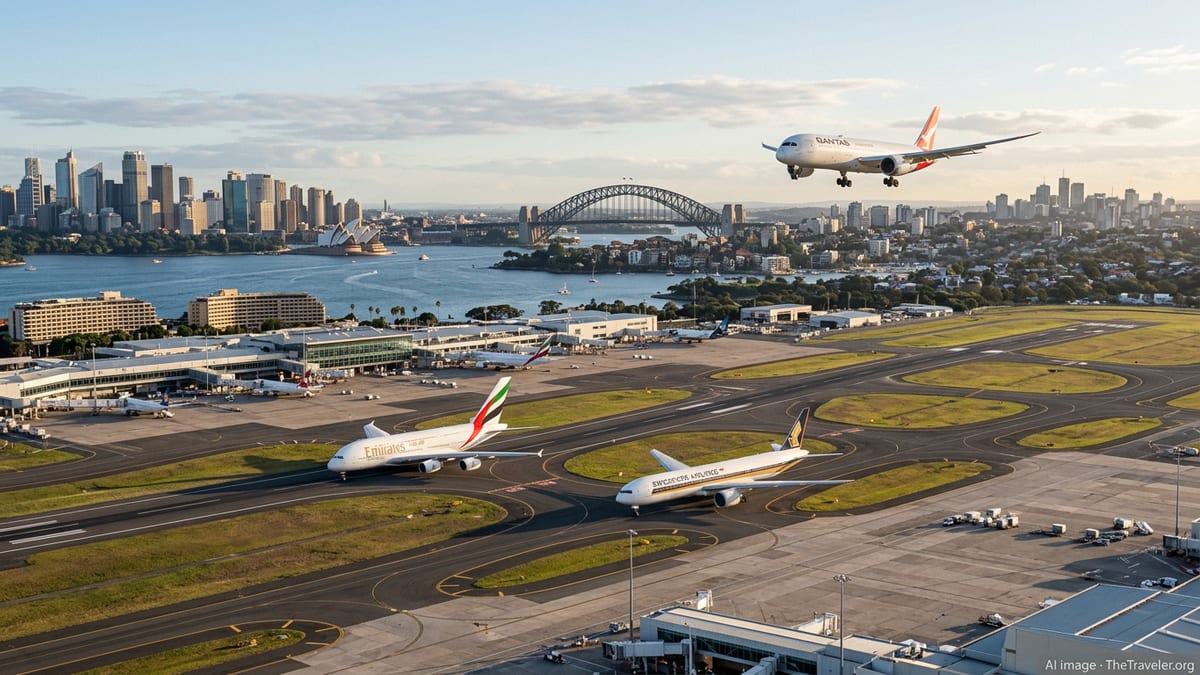
International Capacity Surge Lifts Australia’s Tourism Outlook
International travel to Australia is rebounding sharply, with recent government and industry data pointing to steady gains in inbound passengers through 2024 and 2025 compared with the pandemic years. Publicly available figures for August 2025 show international traffic continuing to recover toward pre‑2019 levels, with foreign carriers supplying the bulk of long haul capacity into major gateways such as Sydney, Melbourne and Brisbane.
According to official aviation activity reports, Qantas, Jetstar and Virgin Australia together accounted for less than one fifth of international passenger traffic in August 2025, while foreign airlines including Singapore Airlines and Emirates carried a much larger share of inbound travelers. Singapore Airlines held close to 9 percent of the international passenger market and Emirates more than 6 percent during that month, underlining the importance of overseas carriers in feeding Australia’s tourism economy.
Tourism and aviation analyses indicate that increased capacity from markets such as Southeast Asia, the Middle East, North America and China is expected to translate directly into higher demand for accommodation across Australia’s capitals and regional destinations. Research from global property consultancies has highlighted that new and restored air links could add millions of room nights over the next year, supporting an uplift in occupancy and revenue per available room even as new hotels open.
This combination of rising long haul seat supply and gradual normalization of travel restrictions has prompted Tourism Research Australia and industry forecasters to project a full recovery, and in some segments an overshoot, of pre‑pandemic arrival volumes by the end of 2025, reinforcing aviation’s role as a key driver of the broader visitor economy.
Emirates, Qantas and Singapore Airlines Deepen Australian Networks
Major global and regional airlines are reshaping their Australian strategies to capture surging leisure and business demand. Qantas has been renewing and expanding its fleet, including the introduction of Airbus A321XLR aircraft in 2025, initially on domestic routes but with potential deployment to secondary Asian destinations. Industry commentary notes that this new narrowbody type allows the flag carrier to open thinner long range routes and improve connectivity into Australia’s interior, feeding both tourism and resources sector travel.
Singapore Airlines continues to treat Australia as a cornerstone market in its network. Schedules data and airline reports show the carrier operating multiple daily frequencies into cities such as Sydney, Melbourne, Brisbane, Perth and Adelaide, positioning its Singapore hub as a key gateway for European, Asian and North American visitors heading to Australia. The airline’s premium positioning and strong connectivity with partner carriers make it a significant channel for higher yielding tourists.
Emirates remains an important long haul player into Australia through its Dubai hub, even as individual route adjustments occur. Publicly available timetable changes have included redeployment of some capacity, but overall seat supply from the Gulf region has trended upward compared with the depths of the pandemic. Combined with other Middle Eastern and Asian carriers, this has helped restore one stop access from a wide range of European and African origins to Australian destinations.
Industry reports suggest that competition among these airlines has supported a broader range of schedules and cabin products, improving Australia’s appeal for both short break and extended itineraries. As fare levels stabilize from their post‑pandemic peaks, analysts expect more price sensitive segments to return, further bolstering visitor numbers.
Alliance Aviation Services Scales Up to Support Domestic and Regional Growth
Below the long haul gateways, Alliance Aviation Services has emerged as a critical link in Australia’s aviation network. The Brisbane based operator reported a 19.4 percent increase in revenue in its 2025 financial year, along with record flight hours, despite a modest decline in statutory profit before tax. The company has attributed much of this growth to expanded contract flying and wet lease operations for larger carriers, particularly Qantas and its QantasLink brand.
Alliance has been executing a fleet renewal and expansion strategy centered on Embraer E190 regional jets, alongside its long standing Fokker operations. Company filings and annual reports show the group simultaneously acquiring additional aircraft and divesting surplus frames and engines to optimize utilization and reduce maintenance costs. At the same time, management has guided the market to expect further increases in wet lease flying and contract activity in Western Australia and Queensland through the 2026 financial year.
These regional and charter services are closely tied to Australia’s resources sector, fly in fly out work patterns and tourism to remote destinations. By providing reliable lift into mining towns, regional centers and emerging leisure markets, Alliance helps distribute international arrivals beyond capital cities, extending the economic benefits of tourism to smaller communities and supporting demand for accommodation in locations that might otherwise see limited air service.
Alliance’s updated guidance in early 2026 signaled expectations for higher earnings before interest, tax, depreciation and amortization and a significant reduction in net debt by June 2026 as new contracts bed down. Market analysts view this as a sign that regional connectivity, underpinned by specialist operators, will remain a structural component of Australia’s aviation landscape even as major carriers restore more of their own capacity.
Marriott and Hilton Ride the Wave of Hotel Demand
The aviation rebound is intersecting with an aggressive expansion cycle for global hotel groups. Marriott International reported another year of strong development momentum in 2025, adding more than 700 properties and almost 100,000 rooms worldwide and delivering net rooms growth above 4 percent. Its Asia Pacific excluding China division highlighted milestone openings and signings across the region, including the Adelaide Marriott Hotel, which underscored the company’s confidence in Australia as a long term growth market.
Marriott’s regional development updates have also emphasized growing investor appetite for midscale and select service brands that can capture the rising volume of value conscious international travelers. Industry coverage points to a broader shift in Australia’s hotel pipeline, with more conversion friendly brands and flexible formats being used to reposition existing assets in gateway and secondary cities for the post‑pandemic market.
Hilton is experiencing a similarly robust phase. Company communications and earnings commentary show its global pipeline surpassing 520,000 rooms by early 2026, the largest in its history, supported by net unit growth of roughly 6 to 7 percent in 2025. Its luxury and lifestyle portfolio reached around 1,000 operating hotels with hundreds more planned, while branded residential projects continue to expand in key leisure and urban markets.
Tourism Australia’s project updates and development roundups have highlighted several high profile Hilton affiliated openings and refurbishments in Australia, including the Waldorf Astoria Sydney and additional capacity in cities such as Perth. These properties are positioned to absorb higher spending international visitors arriving on carriers such as Emirates, Qantas and Singapore Airlines, particularly in the luxury, meetings and events, and experiential travel segments.
From Runways to Room Nights: A Tightening Supply Picture
While hotel brands add properties, analysts note that Australia’s new hotel construction pipeline has become more constrained because of higher building costs and labor challenges. Research cited by commercial real estate firms indicates that, in many cities, demand from increased international air capacity will outpace additions to room supply over the medium term, potentially tightening occupancy and supporting rate growth.
For Marriott, Hilton and other global groups, this environment can be favorable, as strong loyalty programs and distribution platforms help them capture a disproportionate share of rising demand. At the same time, the pattern may reinforce the importance of secondary and regional destinations, where Alliance Aviation’s network and QantasLink’s services play a crucial role in opening up new tourism corridors.
Industry observers expect that as more long haul routes mature and new aircraft such as Qantas’s A321XLR and additional widebodies across foreign carriers enter service, Australia will see deeper connectivity into nontraditional source markets. This could support further diversification of the tourism base, with opportunities for new hotel projects in coastal, wine and nature focused regions as well as strengthening occupancy in established city centers.
Taken together, the alignment of expanding international airline capacity, regional aviation growth and ambitious hotel development programs suggests that Australia’s tourism surge is entering a new phase. How effectively airlines like Emirates, Qantas and Singapore Airlines, regional specialists such as Alliance Aviation Services, and hospitality leaders including Marriott and Hilton coordinate network and investment decisions will help determine whether the country can translate additional arrivals into sustainable benefits for communities and investors across the tourism value chain.