

More news on this day
Air Canada has joined Delta, United, American and a growing list of global carriers in cancelling and rerouting flights across the Middle East after US and Israeli strikes on Iran triggered retaliatory missile fire toward Israel and Gulf states including Bahrain, the UAE, Kuwait and Saudi Arabia.
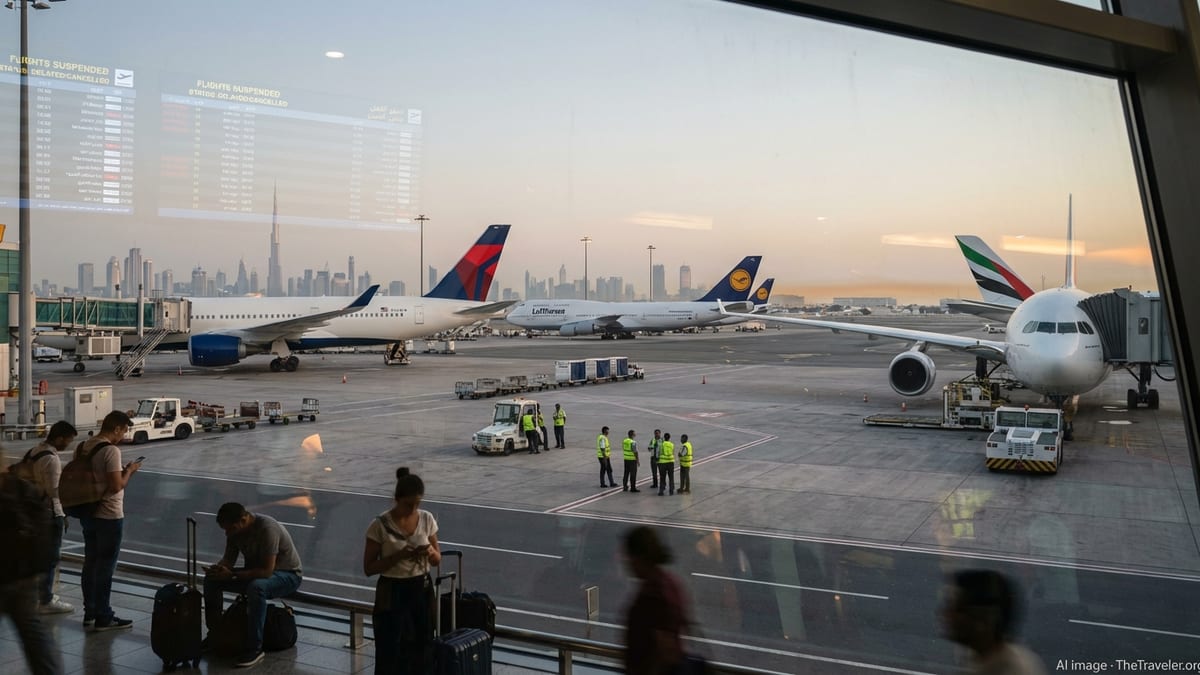
Wave of Cancellations Hits Key Middle East Gateways
Major North American and European airlines moved swiftly on Saturday to suspend services to key Middle Eastern hubs as regional airspace closures rippled outward from Iran. Data from aviation analytics firms showed large portions of the skies over Iran, Iraq, Kuwait, Israel and Bahrain effectively empty after the strikes, forcing airlines to ground or divert aircraft and abandon well-traveled corridors between Europe, North America and Asia.
Delta Air Lines, United Airlines and American Airlines cancelled flights to Tel Aviv and other destinations in the region, citing operational constraints and security concerns after Iranian missiles targeted Israel and US-linked sites in several Gulf states. Air Canada followed by cancelling services to and from Dubai and other Gulf points, as carriers worked through complex contingency plans drawn up for a possible widening of the conflict.
European groups including Lufthansa, Air France and KLM also halted services to multiple Middle Eastern cities, while low-cost and regional operators such as Wizz Air and Aegean Airlines suspended flights to Israel, the Gulf and parts of the Levant. The cumulative effect has created one of the most abrupt aviation shutdowns in the region since the early days of the pandemic.
Early figures indicated that close to 40 percent of flights to Israel and a significant share of services across the wider region were cancelled or suspended on Saturday alone, with industry observers warning that the tally was likely to rise if missile exchanges and airspace restrictions continued into the coming week.
Gulf States Tighten Airspace as Tehran Targets Regional Neighbours
The closures intensified as Iran answered the US and Israeli strikes with missile salvos aimed not only at Israel but also at Gulf countries that host American military assets. Officials in Doha, Abu Dhabi, Dubai, Manama and Kuwait City reported intercepting or tracking incoming projectiles, while civil aviation regulators moved to close or severely restrict their skies.
Authorities in the United Arab Emirates temporarily suspended flights at Dubai International, the world’s busiest airport for international traffic, and at Al Maktoum International, with operators warning passengers of extensive delays and diversions. Similar measures were reported in Qatar, Bahrain, Kuwait and Oman, where airspace was partially or fully closed as air defense systems were activated and military traffic took priority.
The heightened threat environment extended well beyond Iran’s borders. Israel, Lebanon, Syria and Iraq all carried notices of airspace restrictions, leaving few usable corridors for civilian aircraft between Europe and South or Southeast Asia. Airlines that chose not to cancel outright were forced into long detours that added hours to flight times and significantly increased fuel burn.
Iranian officials said that all US and Israeli interests in the region were now considered legitimate targets, language that reinforced airline risk assessments and underpinned decisions by carriers to avoid not just Iranian skies but also the airspace of neighboring states seen as potential flashpoints.
North American Carriers Scramble to Rework Networks
For North American airlines, the sudden shock has primarily hit eastbound long-haul operations, particularly those relying on connections through Middle Eastern hubs. United and American had already scaled back certain Israel services during previous bouts of unrest, but the latest escalation pushed them to suspend additional flights and reroute aircraft away from the affected airspace.
Air Canada’s cancellations to Dubai and other Gulf destinations underscored how deeply integrated the Middle East has become in global travel networks, especially for Canadian and US passengers heading to India, Southeast Asia and Africa. With Russian airspace still largely off-limits for many Western airlines, Middle Eastern corridors had become critical alternatives, meaning Saturday’s closures leave carriers with far fewer options.
Delta, which has relied more on European partners to serve the region, faced disruptions through its joint ventures as Air France and KLM halted flights to Tel Aviv and other cities and diverted traffic away from multiple Gulf hubs. US carriers also reported operational knock-on effects as aircraft and crew were stranded out of position, complicating schedules across their broader transatlantic and domestic networks.
Analysts noted that if the airspace disruptions last only a few days, the financial impact on US and Canadian airlines may be limited to higher costs and short-term schedule upheaval. A protracted conflict, however, could force deeper network redesigns, potentially dampening demand for discretionary travel to and through the region and pushing some travelers to postpone or reroute long-planned trips.
Europe and Asia Feel the Strain of Rerouted Traffic
The turmoil has been especially acute for European and Asian carriers that rely heavily on Middle Eastern air corridors to connect their hubs with markets in India, China and Southeast Asia. Airlines such as Lufthansa, Turkish Airlines, Qatar Airways and Emirates faced not only outright suspensions to certain destinations but also complex rerouting challenges around a widening conflict zone.
Turkey’s flag carrier cancelled flights to Lebanon, Syria, Iraq, Iran and Jordan through early March, while suspending services to several Gulf states at least through the weekend. Qatar Airways and major UAE-based airlines cut or curtailed services to multiple cities as local regulators tightened airspace controls, throttling capacity through Doha, Abu Dhabi and Dubai, three of the region’s most important transfer points.
Asian airlines, including Air India and Japan Airlines, also pulled back, avoiding routes that cross Iran or neighboring airspace. Many began sending flights on more southerly or northerly tracks, adding significant distance to journeys between Europe and Asia. Aviation safety regulators in Europe issued bulletins warning of a high risk to civil aviation in affected skies and urged operators to avoid the area until further notice.
These disruptions come as airlines were still recalibrating networks in response to other geopolitical constraints, including the closure of large swathes of Russian and Ukrainian airspace. The overlap of restricted zones has further constrained routing flexibility, making it harder to absorb new shocks triggered by the Iran crisis.
Travelers Face Uncertainty as Industry Watches for Next Moves
For passengers, the immediate effect has been a wave of cancellations, long queues at airport service counters and hours spent on hold with call centers as airlines attempt to rebook disrupted itineraries. Travelers heading to or transiting through Dubai, Doha, Tel Aviv, Riyadh and other regional gateways have been urged to check their flight status frequently and to expect last-minute changes.
Many carriers are offering flexible rebooking or refunds for affected flights, but the lack of clear timelines for reopening airspace has complicated planning for both airlines and passengers. Some travelers have opted to reroute through alternative hubs in Europe or South Asia, while others have postponed trips altogether, especially where journeys involved multiple connections through high-risk areas.
Airport operators and tourism boards across the Gulf and wider Middle East are bracing for a sharp but uncertain downturn in arrivals, particularly from high-spending long-haul markets in North America and Europe. Hoteliers and tour operators who had been banking on strong spring travel demand now face a period of sudden cancellations and fragile forward bookings.
Airline executives and travel industry leaders are closely watching diplomatic efforts to contain the crisis, mindful that the Middle East is not only a major source and destination market but also a vital bridge between continents. The speed with which carriers such as Air Canada, Delta, United and American withdrew from key routes underlines how quickly geopolitical tensions can redraw the global travel map, even for destinations thousands of miles from the immediate line of fire.