

More news on this day
Major European and Gulf airlines are sharply reducing or suspending flights across the Middle East as widening conflict involving Iran, Israel, the United States and several Arab states triggers airspace closures, missile and drone attacks, and rapidly escalating security risks for civilian aviation.
Get the latest news straight to your inbox!
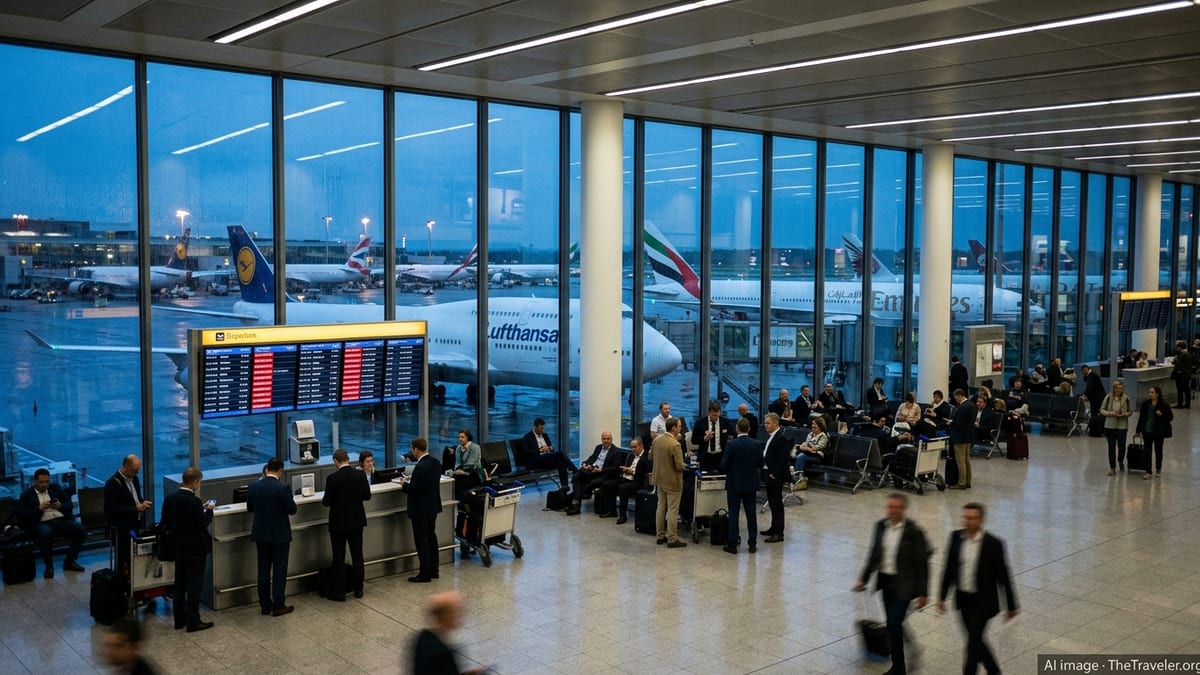
Lufthansa Extends Cuts as Network Pressures Deepen
Lufthansa has moved to curtail more of its Middle Eastern network as the conflict around Iran intensifies and multiple Gulf and Levant airspace zones remain restricted. Publicly available information and industry advisories indicate that the German carrier, which had already suspended services to Tel Aviv following earlier rounds of violence, has now halted or severely limited operations to additional destinations judged to be at higher risk.
Passenger reports and booking data shared across travel forums show that Lufthansa has sharply constrained availability to Israel well into the second half of 2026, with only limited premium-class inventory on sale on some future dates. Travel advisories dated in March highlight that the airline continues to route long-haul traffic away from the most volatile corridors above Iran, Iraq and the eastern Mediterranean, adding time and cost to journeys between Europe and Asia.
Specialist risk briefings circulated to corporate clients in early March describe a patchwork of cancellations and schedule reductions by major European carriers, with Lufthansa repeatedly cited among those avoiding routings that would require crossing conflict-adjacent skies. Analysts note that the airline is balancing its obligation to maintain links to key markets with strict internal safety thresholds, resulting in a cautious return to some destinations and continued suspension of others.
For passengers, the result is a shrinking set of options to reach cities such as Beirut, Tel Aviv and certain Gulf hubs. Travellers with existing bookings on Lufthansa are being advised by travel management companies to monitor schedules closely and be prepared for last-minute changes if the security picture deteriorates further.
KLM, British Airways and Virgin Atlantic Scale Back Regional Presence
The ripple effects extend well beyond Germany. Dutch flag carrier KLM, British Airways and Virgin Atlantic have all adjusted their Middle East flying programmes in response to the expanding conflict and a series of missile and drone strikes on countries including Qatar, Saudi Arabia, the United Arab Emirates and Israel. Aviation risk summaries compiled in March describe a sharp reduction in European services into the region as airlines weigh the safety of overflight corridors and destination airports.
According to operational updates and schedule data reviewed by travel industry analysts, KLM has trimmed frequencies and temporarily withdrawn from some higher-risk destinations, instead funnelling passengers through alternative hubs or encouraging rebooking on partner airlines operating via safer routes. British Airways has implemented rolling cancellations to Israel and parts of the eastern Mediterranean, while maintaining limited links to Gulf states judged to be more secure on a day-to-day basis.
Virgin Atlantic, whose long-haul model relies heavily on connecting traffic over its London base, has focused on rerouting services to avoid the densest clusters of military activity and potential air defence engagements. Capacity into certain Gulf hubs has been cut back, and some flights have been retimed or consolidated to allow more flexible use of aircraft and crews as conditions evolve.
Industry observers note that these carriers are particularly exposed to sudden airspace closures because many of their Asia and Africa routes normally rely on overflight rights in Iran, Iraq and adjacent states. With conflict-related notices to air missions expanding, traditional great-circle paths have become constrained, forcing airlines either to accept longer detours or to suspend operations altogether.
Turkish Airlines and Gulf Carriers Face Turbulence in Their Home Region
Turkish Airlines, long a dominant player in connecting Europe, the Middle East, Africa and Asia through its Istanbul hub, has also been forced to pare back flights into some neighbouring trouble spots. Travel agency bulletins from Beirut note that Turkish Airlines has joined Lufthansa and several Gulf carriers in cancelling rotations to Lebanon on days when nearby airspace closures and heightened military activity make operations less predictable.
Reports from regional airports describe similar disruptions for Gulf-based airlines. Emirates, Etihad, Qatar Airways and other carriers headquartered in the UAE and Qatar have faced intermittent shutdowns or severe constraints on their own airspace since late February, following waves of Iranian missile and drone strikes across multiple Arab states. At the height of the crisis, airports in Doha, Dubai and Abu Dhabi experienced ground stops, diversions and widespread cancellations as air defence systems intercepted incoming projectiles and debris fell near aviation facilities.
Security advisories aimed at maritime and aviation operators in the Gulf have repeatedly stressed that airspace above the UAE, Qatar and segments of Saudi Arabia remains sensitive, subject to short-notice closures and strong guidance from national regulators. While some corridors have partially reopened under emergency conditions to enable evacuations and critical cargo flights, standard commercial schedules remain disrupted, and airlines are operating with considerable caution.
For Turkish Airlines and its Gulf counterparts, the challenge is compounded by their role as major transit hubs for travellers between Europe, Asia and Africa. With traditional east–west and north–south flows disrupted, these carriers are redesigning networks on the fly, suspending some point-to-point routes while concentrating capacity on comparatively safer corridors that avoid the hottest conflict zones.
Airspace Closures, Conflict Zones and Mounting Safety Concerns
The wave of airline cancellations cannot be understood without reference to the unprecedented level of military activity spanning from the Levant to the Gulf. Since late February, multiple countries in the region have been struck by Iranian missiles and drones or have hosted retaliatory strikes by other actors, leaving airspace planners and civil aviation authorities scrambling to keep commercial traffic away from conflict zones.
National regulators across the Gulf and eastern Mediterranean have issued a series of restrictions and closures, with Qatar, Israel and several neighbouring states at times shutting their skies entirely to routine passenger flights. International conflict-zone bulletins continue to advise against overflights of Iran, Iraq, Israel, Jordan and Lebanon, citing the risk of misidentification or collateral damage in areas where air defence systems are on high alert.
Industry data compiled in late March suggests that a substantial share of scheduled services to and from the Middle East has been cancelled or rerouted compared with pre-crisis norms. Flights that do operate are often subject to prolonged detours around the Strait of Hormuz and adjacent land corridors, sometimes adding several hours to journey times and creating knock-on delays at hubs around the world.
Travel risk consultancies emphasise that the situation remains highly fluid. Missile and drone launches, as well as retaliatory strikes, have been reported across multiple days and nights, making it difficult for airlines to forecast safe windows of operation. As a result, many carriers prefer to cancel or consolidate flights rather than risk last-minute diversions into already crowded alternative airports.
Travellers Confront Uncertainty, Rebookings and Longer Routes
For travellers, the cascading cancellations by Lufthansa, KLM, British Airways, Virgin Atlantic, Turkish Airlines and numerous Gulf carriers translate into an unpredictable and often frustrating experience. Passengers heading to or transiting through the UAE, Qatar, Saudi Arabia, Lebanon, Israel and other affected destinations are encountering abrupt schedule changes, limited rebooking options and extended journey times.
Consumer advisories issued by travel management firms urge passengers to avoid travelling to the region unless strictly necessary and to build significant flexibility into any planned itineraries. Those already holding tickets are encouraged to check flight status repeatedly in the 24 hours before departure and to consider alternative routings that bypass high-risk hubs and overflight zones, even if this requires backtracking through Europe, Africa or South Asia.
Airlines on both sides of the affected routes are offering a mixture of refunds, vouchers and fee-free date changes, but the variability of policies between carriers and booking platforms is adding to the complexity. Some travellers report being rebooked several times as carriers adjust schedules in line with evolving government guidance and their own internal risk assessments.
With no clear timeline for a durable de-escalation in the wider conflict, aviation analysts expect that cancellations and reduced frequencies to key Middle Eastern markets will persist in the near term. The combination of security threats, damaged infrastructure and constrained airspace is reshaping how people move between continents, and the decisions now being made by Lufthansa and its peers are likely to influence global travel patterns well beyond the duration of the current crisis.