

More news on this day
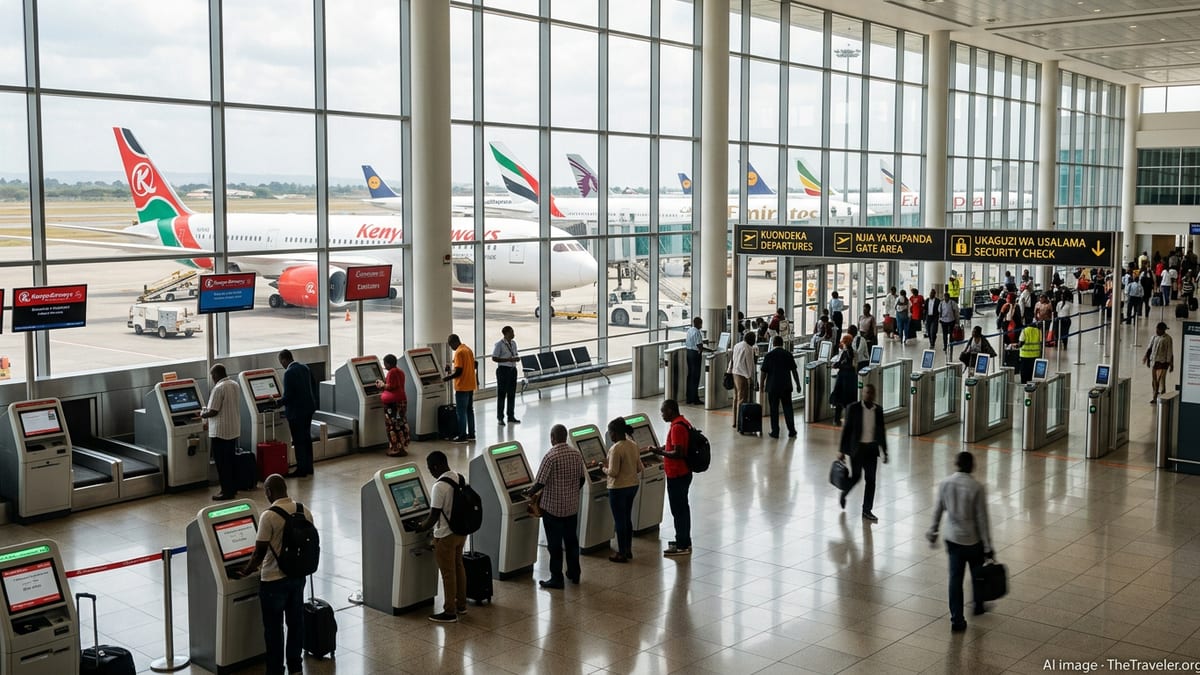
Jomo Kenyatta International Airport in Nairobi is emerging as one of Africa’s most competitive hubs, as Emirates joins Kenya Airways, Lufthansa, Qatar Airways, and Ethiopian Airlines in expanding routes to the Kenyan capital while the airport rolls out new self-service and biometric systems designed to speed up passenger processing.
Get the latest news straight to your inbox!
Major Airlines Deepen Commitments to Nairobi
Recent schedule filings and corporate announcements indicate a fresh wave of capacity into Nairobi, with Emirates adding to the list of global carriers targeting Kenya’s growing demand for business and leisure travel. Nairobi’s Jomo Kenyatta International Airport, already a strategic entry point to East and Central Africa, is seeing more frequencies, new routes, and deeper partnerships that collectively broaden connectivity to Europe, the Middle East, North America, and Asia.
Kenya Airways has been steadily rebuilding and expanding its long-haul network, including the launch of a direct service between Nairobi and London Gatwick from July 2025, complementing its existing Heathrow operations and reinforcing JKIA’s role as a gateway for UK–East Africa travel. Publicly available information also shows the carrier increasing select regional frequencies and re-optimizing schedules to capture peak-season demand and improve onward connections through its Nairobi hub.
Qatar Airways is similarly stepping up its presence. Airline timetable data and trade bulletins show that the Doha–Nairobi route is being reinforced with a third daily flight from September 2025, substantially increasing daily seat capacity and connection options via Doha to key markets in Europe, North America, India, and Asia-Pacific. The move follows an expanded partnership with Kenya Airways that allows for more seamless itineraries and shared traffic flows.
Alongside Gulf carriers, Ethiopian Airlines and Lufthansa are maintaining a strong focus on Nairobi within their wider African strategies. Addis Ababa and key European hubs such as Frankfurt and other Star Alliance gateways continue to serve Nairobi with multiple weekly services, and recent route updates suggest incremental capacity adjustments in line with rising demand for trade, investment, and tourism flows into Kenya.
Emirates Adds Competitive Pressure on the Dubai–Nairobi Corridor
Emirates’ decision to expand services to Nairobi underscores the importance of the Dubai–Nairobi corridor as a high-yield market linking East Africa with the Gulf, South Asia, and beyond. Industry schedules point to additional frequencies and capacity upgrades on the route, adding competitive pressure to an already busy segment and providing travelers with more choice in terms of departure times, cabin products, and connection windows.
The Dubai hub remains a critical gateway for Kenyan travelers heading to destinations in Asia, Europe, and North America. Increased Emirates capacity, layered on top of added services from other Gulf and African carriers, is expected to stimulate further traffic by lowering average fares on some sectors and improving the convenience of same-day connections. Travel trade reports suggest that corporate travel, visiting friends and relatives, and outbound tourism from Kenya are all benefiting from the intensified competition.
For inbound markets, enhanced Emirates frequencies support growing interest in Kenya’s safari circuits, Indian Ocean beaches, and Nairobi’s emerging status as a regional conference and technology hub. Tour operators and corporate travel planners are likely to welcome the broader seat inventory during peak seasons, particularly when aligned with Kenya Airways’ own long-haul and regional expansion.
Additional capacity also has cargo implications. Nairobi’s position as a major exporter of fresh flowers, produce, and pharmaceuticals means that more widebody belly space on the Dubai–Nairobi route contributes to more reliable and potentially more cost-effective logistics options, strengthening Kenya’s role in global supply chains.
JKIA Accelerates Self-Service and Biometric Transformation
While airlines race to add seats, Jomo Kenyatta International Airport is undertaking a parallel transformation on the ground. Publicly available information from aviation and technology briefings indicates that JKIA is deploying new self-service check-in kiosks, biometric-enabled e-gates, and automated bag-drop systems designed to cut queues and standardize the passenger journey to global hub standards.
The rollout, which is being implemented in phases across key terminals, aims to reduce reliance on traditional check-in desks and manual document checks. Passengers on participating airlines will be able to complete check-in, print bag tags, and proceed through security and departure gates with limited interaction with staff, relying instead on facial recognition and digital identity verification where enabled.
These investments are aligned with a broader trend across African gateways toward smarter, more automated infrastructure. Airport planning documents and industry commentary highlight that congestion and processing delays have been recurring challenges at JKIA during peak travel periods. By shifting much of the initial processing to self-service stations and e-gates, operators intend to improve throughput, enhance security screening accuracy, and reduce the risk of missed connections for transfer passengers.
For airlines adding capacity into Nairobi, the upgraded systems promise more predictable turnaround times and improved punctuality. Faster check-in and boarding processes can support tighter scheduling and better aircraft utilization, which, in turn, strengthens the commercial case for additional frequencies and new destinations.
Competitive Hub Strategy Positions Nairobi Against Regional Rivals
JKIA’s modernization push and the latest round of airline expansions are part of a broader bid to position Nairobi as a leading African hub against regional competitors such as Addis Ababa, Kigali, and Dar es Salaam. These airports have also invested in new terminals, runways, and technology, vying to capture a larger share of intra-African and intercontinental transfer traffic.
Kenya’s national development plans and aviation policy statements have long emphasized the importance of air connectivity for tourism, agriculture, and services exports. Enhanced services from carriers such as Emirates, Lufthansa, Qatar Airways, Ethiopian Airlines, and Kenya Airways are viewed within the industry as reinforcing that strategy by knitting Nairobi more tightly into global networks. Increased frequencies provide travelers with more options for same-day connections to secondary African cities and long-haul destinations.
Reports from aviation analysts suggest that Nairobi’s advantage lies in its balanced mix of regional and long-haul services, along with its role as a base for several African and regional carriers. As more international airlines expand into the city, Kenya Airways can leverage partnerships and codeshare agreements to extend its virtual network without adding its own metal on every route, while still feeding traffic through JKIA.
The success of this hub strategy, however, depends heavily on operational reliability and customer experience. Self-service systems, smoother immigration processes, and transparent security procedures are increasingly seen by travelers and airlines as non-negotiable elements of a modern hub. Nairobi’s current investments are therefore both a response to present bottlenecks and a prerequisite for capturing future growth.
Travelers to Nairobi Gain More Choice and Faster Journeys
For passengers, the convergence of new airline capacity and upgraded airport technology in Nairobi is reshaping the day-to-day travel experience. More carriers on key routes typically translate into a greater spread of fares, seat classes, and connection patterns. Leisure travelers heading for Kenyan safaris or Indian Ocean resorts stand to benefit from more competitive pricing and better-aligned arrivals that fit with tour departure times and regional connections.
Business travelers, meanwhile, are likely to appreciate both the expanded schedule options and the time savings promised by self-service systems at JKIA. Faster check-in, shorter queues at immigration where e-gates are available, and clearer wayfinding can reduce total journey times and make short trips to Nairobi more feasible. As airlines adjust timetables and capacity based on demand, same-day turnarounds for regional meetings or conferences may become increasingly practical.
Industry observers note that the combination of more flights and smarter airport processes can have a compounding effect on demand. As journeys become easier and perceptions of reliability improve, both first-time visitors and repeat travelers are more inclined to choose Nairobi as a gateway or stopover. This, in turn, encourages airlines to maintain or further increase their presence, completing a cycle that supports sustained growth in Kenya’s aviation and tourism sectors.
With Emirates joining Kenya Airways, Lufthansa, Qatar Airways, and Ethiopian Airlines in raising their bets on Nairobi, and as JKIA’s self-service and biometric upgrades gather pace, the Kenyan capital appears set to consolidate its position as one of the most important aviation crossroads in Africa.