

More news on this day
Major international and Brazilian airlines including Qatar Airways, LATAM, Emirates, United and Azul have cancelled dozens of flights on March 12, triggering fresh disruption across key routes linking Brazil with Doha, Dubai, Washington and Buenos Aires, as well as services between São Paulo, Rio de Janeiro, Brasília and other domestic hubs.
Get the latest news straight to your inbox!
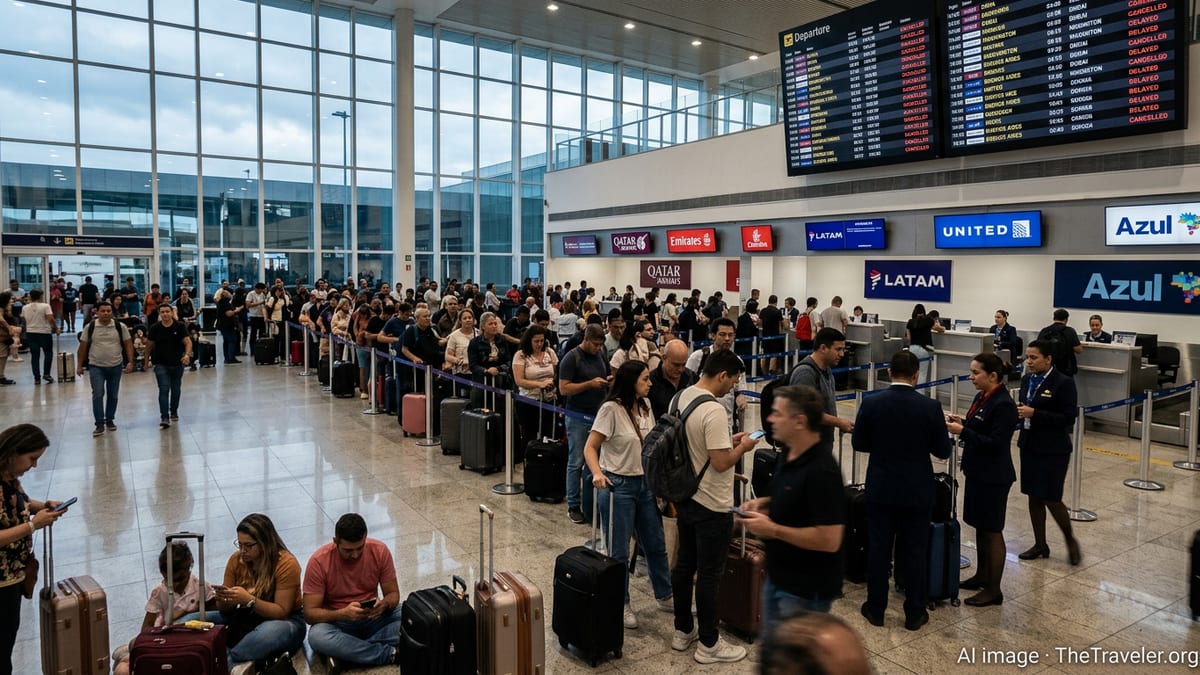
Over 40 Flights Scrapped as Ripple Effects Hit Brazil
Air travel across Brazil faced another day of turbulence on Thursday as more than 40 flights were cancelled or heavily delayed, according to airport and flight-tracking data. Long haul services connecting Brazil to the Middle East, North America and the rest of South America were among the hardest hit, alongside a string of domestic links operated by Brazilian carriers.
Qatar Airways, LATAM and Emirates were among the most affected on routes touching São Paulo Guarulhos and Rio de Janeiro Galeão, while United Airlines and Azul reported targeted cancellations and schedule changes. Several services between Brasília and major Brazilian business centers also dropped off departure boards, frustrating corporate and government travelers at the height of the working week.
The latest wave of cancellations builds on a rolling pattern of disruption that has persisted since late February, as carriers react to a volatile security and airspace environment in parts of the Middle East and adjust capacity on long haul corridors. For Brazilian passengers, the impact is increasingly visible at check in counters, where lines for rebooking and refunds have stretched through terminal halls.
Qatar Airways Cuts Brazil Flights as Doha Operations Remain Restricted
Qatar Airways remained at the center of the disruption narrative, with at least one flagship flight from Doha to São Paulo, QR773, cancelled at short notice based on live departure data. The airline has been operating on a constrained schedule this month after Qatari airspace restrictions forced it to sharply cut back services and reroute a limited number of flights through designated corridors.
In recent days, Qatar Airways has been publishing rolling lists of destinations it can still serve from Doha, and São Paulo has appeared intermittently as capacity is adjusted. However, passengers report that flights to Brazil and onward codeshares to Buenos Aires are particularly vulnerable to last minute changes, with cancellations sometimes confirmed only hours before planned departure.
The curtailed operation through Doha has had a knock on effect on LATAM customers booked on codeshare itineraries marketed under LATAM flight numbers but operated by Qatar Airways aircraft. Travelers originating in cities such as Rio de Janeiro or Brasília and connecting in São Paulo for a single ticket journey to Doha, Washington or Asian destinations have faced complex rebookings or forced stopovers.
Emirates and United Tweak Long Haul Schedules to and from Brazil
Dubai based Emirates has also been adjusting its Brazil network, issuing updated schedules that show changes on services between Dubai and São Paulo and Rio de Janeiro. While some flights continue to operate, others have been retimed or cancelled, especially on days when operational constraints are at their tightest. Passengers bound for onward connections in the Gulf and beyond have been urged to verify flight status before heading to the airport.
In parallel, United Airlines has implemented targeted cancellations and schedule modifications on Brazil routes, including flights linking São Paulo with Washington Dulles. Industry observers say these changes are partly driven by aircraft and crew rotations affected by broader network volatility, as well as softer demand from connecting traffic that would normally transit through Middle Eastern hubs.
The result for Brazilian travelers is a shrinking pool of long haul options on certain days, particularly for those hoping to reach the Middle East or connect from Brazil to Asia and Africa via Doha or Dubai. Corporate travel managers report that itineraries which once relied on a single smooth connection now often require two or even three stops, extending total journey times by many hours.
LATAM, Azul and Domestic Networks Feel the Strain
Inside Brazil, LATAM and Azul have shouldered an additional layer of disruption as they attempt to reposition aircraft and accommodate displaced passengers from cancelled international flights. At São Paulo Guarulhos and Congonhas airports, as well as Rio de Janeiro and Brasília, domestic rotations have been thinned out or consolidated, producing cancellations on routes to cities such as Porto Alegre, Belo Horizonte and Recife.
Azul, which maintains an extensive domestic network from hubs like Campinas and Belo Horizonte, has canceled or retimed several feeder services that would normally connect passengers onto international partners. This has left some customers stranded mid journey, particularly those holding separate tickets rather than through itineraries protected by interline agreements.
LATAM, meanwhile, has been walking a tightrope between protecting high demand trunk routes such as São Paulo to Rio de Janeiro and Brasília, and freeing up capacity to cover international disruptions. Where aircraft have become out of position because of overseas cancellations, domestic sectors have sometimes been sacrificed, creating knock on delays and cancellations across the day.
Stranded Passengers Face Long Queues, Limited Alternatives
For passengers caught in the middle of these schedule changes, the immediate reality on March 12 has been long queues at ticket counters and customer service desks across Brazil’s major airports. With multiple carriers affected at the same time, rebooking options on remaining flights have quickly dried up, particularly in premium cabins and on popular evening departures.
Many travelers have reported being rerouted through alternative hubs such as Istanbul, Madrid or Lisbon instead of Doha or Dubai, often with overnight layovers and longer journey times. Others have opted to postpone trips entirely or request refunds where airline policies allow, especially in cases where the original purpose of travel, such as a short business meeting or event, can no longer be met.
Airlines have encouraged customers to use digital channels and call centers rather than showing up at airports without confirmed alternatives, but overloaded systems and long wait times have remained common complaints. Travel agents and corporate booking teams have become crucial intermediaries, sifting through changing fare rules and waiver policies to salvage workable itineraries for their clients.