

More news on this day
U.S. air travelers already contending with winter storms and a partial government shutdown are now facing the prospect of longer security lines, as the Global Entry program remains paused and the Department of Homeland Security warns that TSA PreCheck access could soon be scaled back or suspended if staffing shortages worsen.
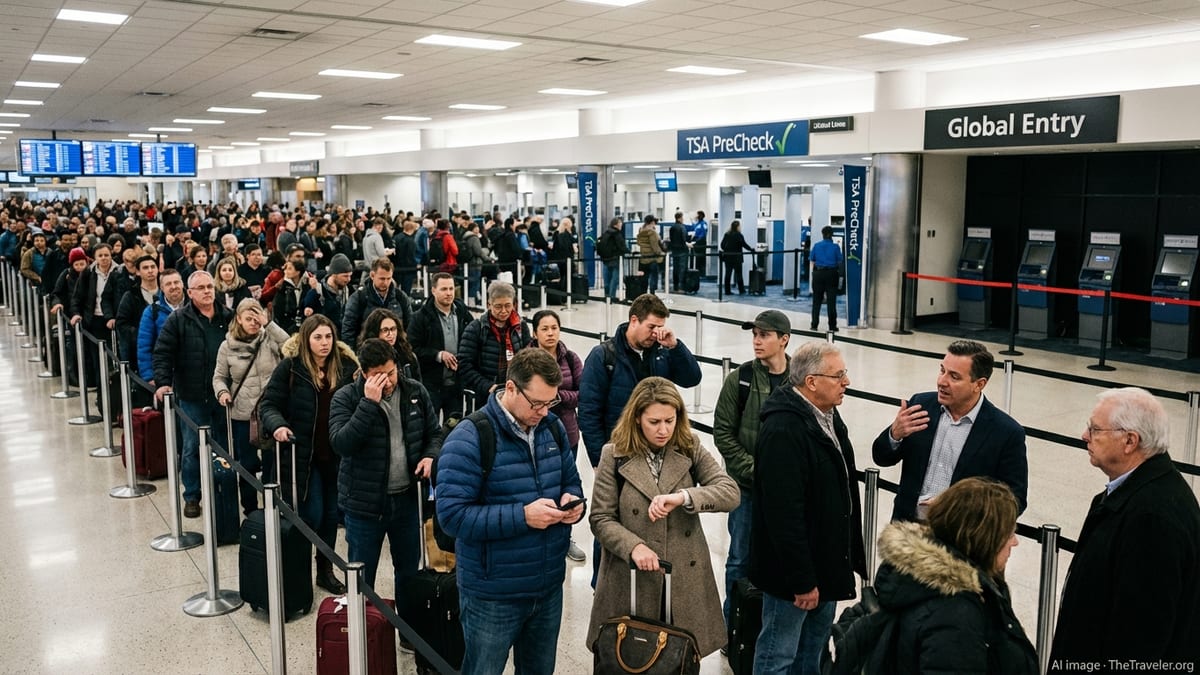
Shutdown Politics Spill Into Airport Security
The turbulence began on February 22, when the Department of Homeland Security announced that it would suspend both TSA PreCheck and Global Entry as part of emergency cost-cutting during an ongoing funding lapse at the agency. The partial shutdown, which started on February 14, has left thousands of Transportation Security Administration and customs officers working without pay, heightening the risk of increased sick calls and attrition.
Within hours of the initial announcement, TSA moved to reassure the public that PreCheck lanes would, for now, remain open. The agency said the trusted traveler program “remains operational with no change for the traveling public,” while acknowledging that local adjustments could be made as staffing constraints arise. That reversal eased immediate fears of an overnight collapse in expedited screening, but it did little to calm concerns about the weeks ahead.
Global Entry, however, has not received a reprieve. Customs and Border Protection has halted Global Entry arrival processing at kiosks nationwide, reassigning officers who normally staff those expedited lanes to help manage standard lines for all international arrivals. Existing Global Entry memberships technically remain valid, but the core benefit of skipping traditional passport queues is on hold until DHS funding is restored.
The mixed signals have left travelers and airport operators struggling to interpret what services will be available from one day to the next, even as passenger volumes creep toward spring break peaks.
Threat of PreCheck Curtailment Raises Fears of Long Lines
Despite TSA’s assurances, Homeland Security Secretary Kristi Noem has continued to warn that PreCheck’s future during the shutdown is not guaranteed. In a recent television interview, she said the department may again move to suspend or sharply curtail the program if staffing shortages worsen, arguing that standard security lanes serving the majority of travelers must be prioritized when resources are tight.
That warning has put millions of frequent flyers on edge. More than 19 million people are enrolled in TSA PreCheck, according to recent government figures, and many plan itineraries and connections around the expectation of shorter lines and faster screening. If those passengers are suddenly forced back into general security queues, analysts say processing times at major hubs could spike, especially during morning and late-afternoon rush periods.
Airport officials caution that even partial cutbacks could ripple through the system. If local TSA managers quietly shift officers out of dedicated PreCheck lanes to shore up standard checkpoints, the effect for travelers could be nearly indistinguishable from an outright suspension: fewer open lanes, longer lines, and more missed flights. With the shutdown entering its third week and no firm end date in sight, the possibility of gradual erosion in service is a growing concern.
For now, TSA insists that PreCheck members’ Known Traveler Numbers will continue to function and that boarding passes should still carry the familiar “TSA PreCheck” indicator. But the agency has been clear that all operations are subject to real-time staffing decisions, leaving travelers to brace for sudden changes.
Global Entry Pause Snarls International Arrivals
While PreCheck hangs in the balance, the impact of the Global Entry pause is already being felt at international terminals. With kiosks shut down, Global Entry members have been shunted into regular passport lines alongside other arriving travelers, erasing one of the most valued perks for frequent international flyers.
Travel-services firms that track appointment availability say no new Global Entry interviews are being scheduled while the program is suspended. Enrollment centers are operating on a patchwork basis, with many cancelling or postponing appointments and warning of significant backlogs once operations resume. For prospective applicants, that raises the likelihood of months-long delays to gain access to the program even after DHS funding is restored.
The suspension also undercuts one of the post-pandemic recovery tools airports and airlines have relied on to manage rising passenger numbers without proportional increases in staffing. By shifting vetted, low-risk travelers to self-service kiosks, Global Entry has reduced pressure on primary passport control lines. Without that relief valve, customs officers must process every traveler in person, a shift that could become more evident as spring and summer leisure travel ramps up.
Industry observers note that while early reports from some airports suggested only modest delays over the first shutdown weekend, those snapshots came amid winter storms and widespread flight cancellations that temporarily suppressed arrivals. If the shutdown drags on into busier travel periods, they warn, today’s manageable lines could quickly lengthen.
Airlines, Travel Industry Sound Alarm
Airlines, airport operators and travel trade groups have lined up to criticize the suspension of Global Entry and the potential curtailment of TSA PreCheck, arguing that the moves risk turning routine trips into ordeals and undermining confidence in the air travel system. Several industry associations have urged Congress and the administration to treat trusted traveler programs as essential infrastructure, not bargaining chips in budget negotiations.
Carriers say they are already dealing with elevated call volumes and social media complaints from customers worried about missed connections and tight layovers. Some airlines have begun proactively warning passengers to arrive at the airport earlier than usual and to leave more buffer time when booking domestic connections after long-haul international flights.
Travel economists warn that sustained uncertainty around security wait times can suppress demand, particularly among business travelers who place a premium on predictability. If trip planning becomes more stressful and time-consuming, they say, some travelers may opt for video meetings or postpone nonessential journeys, adding an economic drag on cities that depend heavily on business and convention travel.
Executives also note that both TSA PreCheck and Global Entry are funded largely through user fees rather than general tax dollars, intensifying frustration that fee-supported services are being curtailed in a budget dispute. While DHS argues that staff time and overhead must still be covered during a shutdown, industry leaders contend that shuttering programs paid for by travelers sends a confusing message to the flying public.
What Travelers Can Expect in the Coming Weeks
With negotiations in Washington showing little visible progress, travelers are being advised to plan for a summer-style crunch at security checkpoints, even in late winter. Airport and airline officials recommend arriving at least two hours before domestic flights and three hours before international departures, particularly at large hubs and during peak times.
PreCheck members are being told to continue entering their Known Traveler Numbers when booking, on the assumption that expedited lanes will remain open where staffing allows. But experts say passengers should build their schedules as if they may need to use standard screening, especially if additional announcements come from DHS about reallocating staff.
For Global Entry users, the guidance is even starker: travelers returning from overseas should be prepared for full passport control lines and allow extra time to clear customs before making onward connections. Those seeking to enroll or renew memberships can submit applications online, but many will likely face processing delays and postponed interviews until the suspension is lifted.
As the funding stalemate continues, the battle over trusted traveler programs has become a test of how much disruption Americans are willing to tolerate at the airport. For now, the only certainty is that security lanes are set to get busier, and patience will be tested long before travelers reach their gates.