

More news on this day
Millions of U.S. air travelers face a confusing patchwork of security rules this week after the Department of Homeland Security reversed course on suspending TSA PreCheck during the ongoing partial government shutdown, even as the separate Global Entry program remains halted.
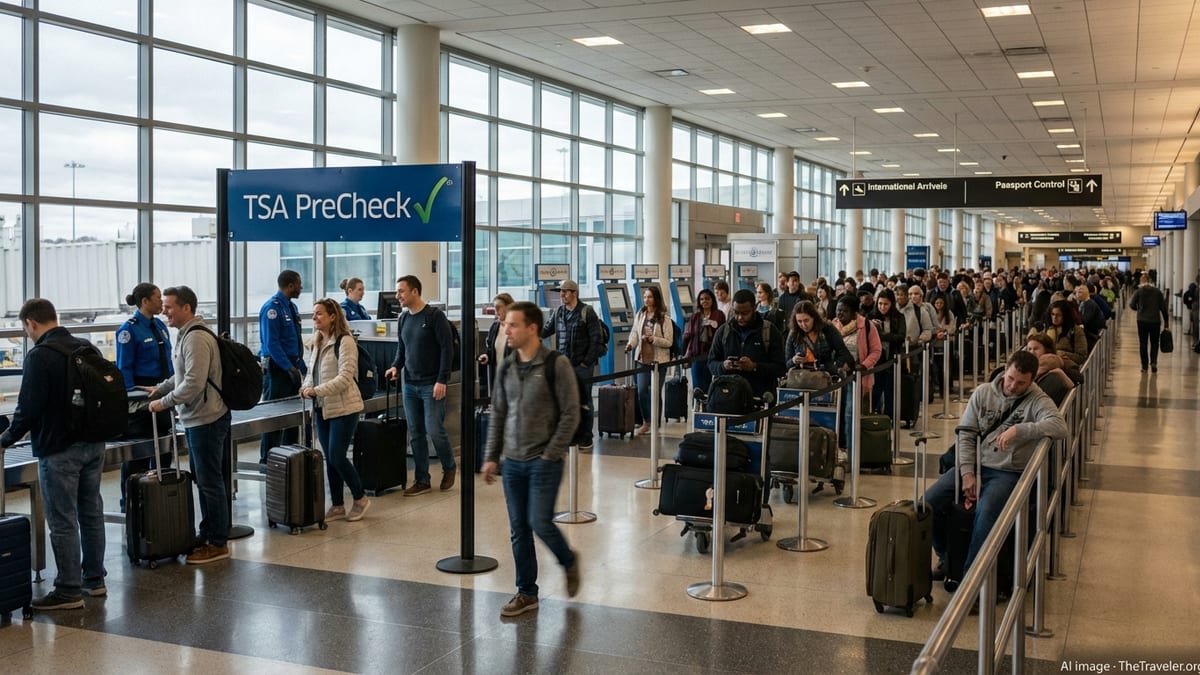
Confusion After a Weekend of Rapid-Fire Announcements
The turmoil began late on Friday and into Saturday, February 21 and 22, when the Department of Homeland Security (DHS) said it would suspend both TSA PreCheck and Global Entry starting early Sunday morning as part of emergency cost-cutting measures during the funding lapse. The announcement triggered immediate concern from travelers, airlines and airports preparing for heavy traffic and winter weather disruptions.
By Sunday, however, the Transportation Security Administration, which operates PreCheck, said the program would in fact “remain operational with no change for the traveling public,” effectively reversing the earlier suspension. At major hubs on Sunday morning, expedited lanes continued operating even past the previously announced cut-off time, adding to the perception of mixed messaging from federal officials.
While PreCheck survived, DHS and Customs and Border Protection officials confirmed that Global Entry, which streamlines the customs process for preapproved, low-risk travelers entering the United States, is being paused as the shutdown continues. That split decision has left frequent international travelers, in particular, wondering what to expect on their next trip through a U.S. airport.
What Is Still Running and What Has Stopped
For now, TSA PreCheck screening lanes are open and operating at U.S. airports. Enrolled travelers whose Known Traveler Numbers are active can continue to use dedicated PreCheck lanes, keep shoes and light jackets on, and leave laptops and compliant liquids inside bags, just as they did before the shutdown. The agency has stressed that, from a passenger’s perspective, the experience at the checkpoint should look largely the same.
Behind the scenes, though, officials caution that operations are subject to staffing realities at each airport. Essential TSA officers are required to work without pay during the funding lapse, and the agency has said it will make “case by case” decisions if shortages emerge. In practice, that could mean some airports temporarily consolidate or close PreCheck lanes at certain times of day, pushing even enrolled travelers into standard security lines when staffing is too thin.
Global Entry is in a different position. The trusted traveler program, run by Customs and Border Protection, relies on both staffing and back-end systems support to function smoothly at passport control and customs inspections. With DHS redirecting resources, officials say Global Entry kiosks and dedicated lanes will be unavailable for the duration of the shutdown. That affects both arrival processing for current members and, in many cases, enrollment and interview appointments for new applicants and those seeking renewal.
How the Shutdown Is Affecting Airport Travel Right Now
The partial government shutdown, which stems from a political stalemate over DHS funding and immigration policy, is now reverberating across the aviation system. Even with PreCheck intact, airports are bracing for longer lines and more unpredictable wait times as federal security and customs personnel work without pay, creating risks of low morale and higher absenteeism.
Industry groups say the situation is especially precarious because the shutdown coincides with a period of strong air travel demand and severe winter weather. A major blizzard in the Northeast has already prompted widespread cancellations and delays, and carriers have issued flexible travel waivers. Any additional slowdown caused by reduced staffing or the loss of Global Entry’s efficiencies at international terminals could worsen bottlenecks at key gateways.
At domestic checkpoints, travelers may see variations from one airport to the next. Some large hubs reported operating PreCheck lanes as normal on Sunday, while others briefly rerouted passengers to standard screening before restoring expedited service. At international arrival halls, the absence of Global Entry kiosks means Global Entry members will line up with other passengers, subject to manual document checks and interviews by customs officers, potentially adding significant time to the arrival process during peak hours.
What Global Entry Members Should Expect on Arrival
For current Global Entry members, the most immediate change is at passport control when reentering the United States. Without access to automated kiosks or dedicated Global Entry lanes, returning travelers will join general immigration and customs queues at their arrival airport. Wait times, which Global Entry was designed to shorten dramatically, will depend on how many officers are on duty and how many international flights arrive around the same time.
Travelers should also be prepared for changes to interview and enrollment appointments. Many enrollment centers are housed in airport facilities that depend on DHS staffing and support. With the program halted, appointments may be cancelled, rescheduled for later dates, or simply left in limbo until funding is restored. Applicants who have conditionally approved status but are waiting for an in-person interview should expect delays and keep an eye on their government account for updated guidance once the shutdown ends.
Existing Global Entry memberships are not being revoked, but the associated benefits are effectively suspended. That means travelers will not see Global Entry lines advertised at airports during the shutdown, and Global Entry status will not speed the customs process. Other connected benefits, such as the use of Global Entry to qualify for TSA PreCheck in some cases, may continue only insofar as PreCheck remains active and the Known Traveler Number is still valid in airline reservations.
Impacts on New Applications, Renewals and Fees
The shutdown is also disrupting the pipeline for travelers who were in the process of joining Global Entry or renewing their membership. Application processing typically requires both automated background checks and human review. With Global Entry halted, these back-end tasks are likely to slow substantially or pause altogether, even if online portals remain accessible. Applicants could face extended waits after submitting forms and fees, receiving little to no status updates until normal operations resume.
Renewal timelines are another concern. Global Entry memberships generally last five years, and many travelers plan renewal around upcoming international trips. If their renewal interview or approval is delayed because of the shutdown, they may encounter a period where their benefits are temporarily inaccessible, even if the government ultimately grants an extension or backdated validity. Travelers who cut it close in scheduling renewals may find themselves caught in a gap they did not anticipate.
Questions also remain about the self-funded nature of programs such as Global Entry and TSA PreCheck, which collect enrollment and renewal fees from users. Travel industry groups argue that because these programs generate their own revenue, they should not be subject to broad shutdown-related suspensions in the same way as services that rely solely on congressional appropriations. For now, however, DHS is treating Global Entry as part of its overall shutdown strategy, leaving fee-paying customers without access to a benefit they have already financed.
Why TSA PreCheck Was Spared While Global Entry Was Not
The decision to keep TSA PreCheck operational while halting Global Entry reflects both political pressure and operational priorities within DHS. When the department first outlined plans to suspend both programs, airlines, airports and travel advocacy organizations warned that doing so would significantly slow passenger throughput at security checkpoints and customs halls, amplifying the wider effects of the shutdown. The outcry was especially sharp over PreCheck, which is now used by millions of domestic travelers every week.
Within hours, lawmakers from both parties criticized the suspension plan, saying it risked turning routine air travel into a high-profile casualty of the budget standoff. According to multiple reports, senior administration officials consulted with TSA and the White House over the weekend, ultimately deciding that keeping PreCheck running would help minimize visible disruption for the general traveling public, even if other internal services needed to be scaled back.
Global Entry, by contrast, serves a smaller subset of primarily international travelers and relies heavily on Customs and Border Protection staffing and systems that are already under strain. DHS officials argue that pausing Global Entry allows scarce resources to be concentrated on baseline border security and customs functions, which must continue even without full funding. In that hierarchy of needs, Global Entry was more vulnerable to cuts than PreCheck, despite the programs’ shared focus on efficiency and security.
Practical Advice for Travelers in the Coming Days
For passengers heading to the airport while the shutdown continues, experts recommend building in extra time, regardless of enrollment status in trusted traveler programs. Even if PreCheck is operating at a given airport, unexpected staffing changes can force temporary closures of expedited lanes. Arriving 30 to 60 minutes earlier than usual for domestic flights, and at least three hours ahead for international departures, can provide a cushion against surprise backups.
Travelers returning from abroad should assume they will not be able to use Global Entry for the duration of the shutdown. That means planning for longer lines at immigration and customs and factoring that into connections for onward domestic flights. Those with tight layovers, especially at busy hubs, may want to consider rebooking for longer connection windows to reduce the risk of missed flights due to extended processing times.
Officials also urge travelers to double-check their boarding passes before heading to security. If PreCheck is available and properly linked to a reservation, the indicator should appear on the boarding pass. If it does not, passengers may need to reenter their Known Traveler Number with the airline or accept standard screening. With communication from DHS evolving quickly, travelers should monitor airline notifications and airport social media channels for airport-specific updates about security and customs wait times.
What Could Happen Next if the Shutdown Drags On
How long this mixed operating status persists depends entirely on the political negotiations unfolding in Washington. If lawmakers and the White House reach a funding agreement for DHS in the coming days, both PreCheck and Global Entry could return to stable, predictable operations relatively quickly, though there would still be a backlog of applications, renewals and rescheduled interviews to clear.
If the shutdown stretches into weeks, however, aviation and travel industry leaders warn of compounding effects. Prolonged unpaid work for TSA and customs officers could exacerbate staffing shortages, resulting in more frequent closures of PreCheck lanes and longer waits at standard checkpoints. At the same time, the ongoing suspension of Global Entry would continue to lengthen arrival queues at international terminals, especially during peak travel periods and holidays.
For now, travelers are caught in the middle of a policy fight that has turned routine airport conveniences into bargaining chips. The partial shutdown underscores how deeply federal funding decisions are intertwined with day-to-day travel experiences, from the speed of a security line to the ease of clearing customs after a long-haul flight. Until there is a political resolution, passengers will have to navigate a system where one expedited program remains intact while another is abruptly on hold.