

More news on this day
The United States quietly switched Global Entry kiosks back on early Wednesday, restoring a popular fast-track immigration program even as a partial shutdown of the Department of Homeland Security continues to snarl airport operations and stretch federal staff thin.
Get the latest news straight to your inbox!
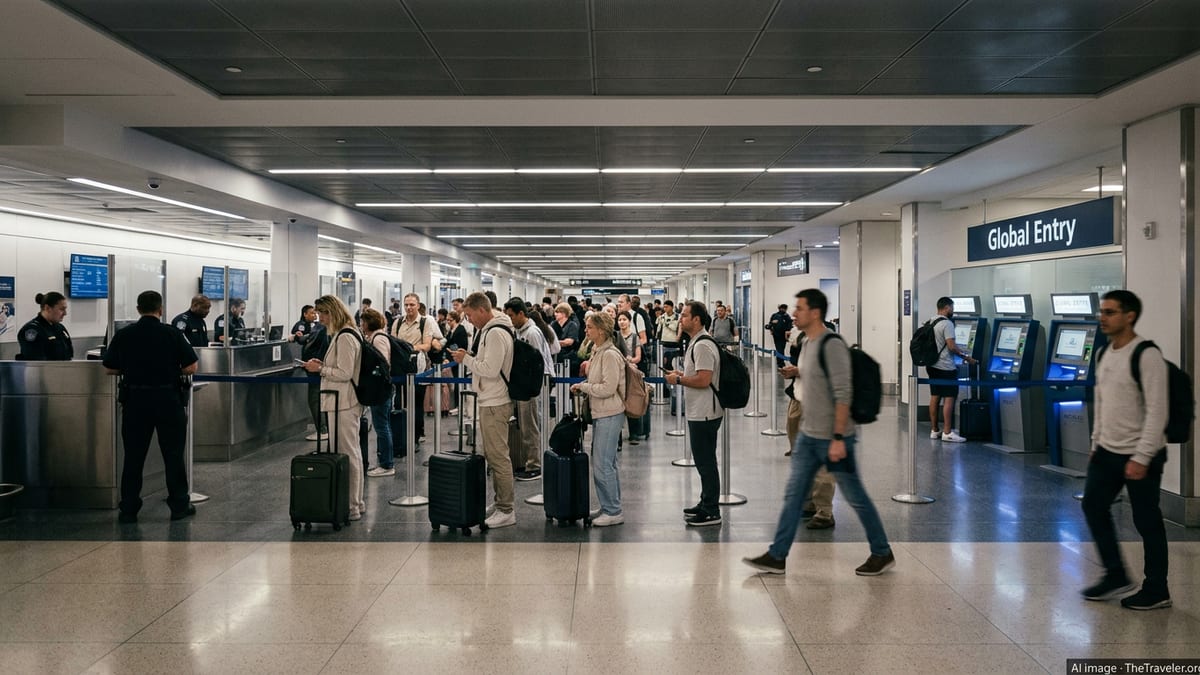
Global Entry Reactivated After Sudden Nationwide Suspension
The Department of Homeland Security confirmed that Global Entry service resumed at participating airports at 5:00 a.m. Eastern time on March 11, following a 17-day suspension tied to the agency’s funding lapse. The trusted traveler program, run by U.S. Customs and Border Protection, allows preapproved passengers to use automated kiosks and dedicated lanes when reentering the country, typically cutting processing times from close to an hour to just a few minutes.
Global Entry was halted on February 22, several days after a partial government shutdown began on February 14 and forced DHS to triage operations. Kiosks were disabled, dedicated lanes were closed, and enrollment centers paused most interviews, pushing travelers back into regular immigration queues at some of the nation’s busiest hubs.
The move to restore the program comes amid mounting pressure from the travel industry and members of Congress, who argued that suspending a self-funded, fee-based initiative made little fiscal sense while amplifying crowding in already stressed international arrival halls. Travel advocacy groups warned that the shutdown-related pause threatened to undo years of investment in speeding border processing for low-risk travelers.
Officials now say the decision to bring Global Entry back online reflects a reassessment of how best to deploy limited staffing while the shutdown drags on. By shifting pre-vetted passengers back to automated lanes, CBP hopes to ease some of the strain on officers handling standard passport control.
Shutdown Pressures Keep Airport Lines Long
The restoration of Global Entry lands in the middle of a turbulent week for U.S. air travel. In the days leading up to the restart, passengers in Houston, New Orleans and Atlanta reported hours-long waits at security checkpoints and immigration counters as unpaid Transportation Security Administration and CBP staff tried to keep up with early spring break traffic.
Airport authorities in Houston warned travelers to arrive up to five hours before departure as lines at the city’s secondary airport stretched across terminals. Similar, though less severe, backups were reported at other major hubs, where the combination of surging demand and thin federal staffing has exposed how fragile the system can be during a funding standoff.
Within DHS, thousands of employees are working without pay, and some are calling in sick or taking on second jobs to cover basic expenses. While essential security and border operations remain in place, even small gaps in staffing can ripple quickly through crowded terminals, slowing down security screening, immigration checks and baggage inspections.
Industry analysts point out that Global Entry, by design, acts as a pressure valve at international arrival points. Removing it funneled more people into regular lines just as the agency was asking the same number of officers to do more. Turning the program back on may help rebalance that workload, but it does not resolve the underlying strain caused by the shutdown itself.
What Returning Travelers Can Expect at the Border
For travelers arriving from overseas this week, the return of Global Entry will be a welcome sight, but the experience on the ground may feel different from pre-shutdown norms. CBP has warned that it could take several hours to fully reactivate kiosks and software at some locations, and not every enrollment center or dedicated lane will necessarily operate at full capacity right away.
Frequent international travelers should once again be able to bypass the main immigration line where Global Entry kiosks are active, scan their passports, and proceed to a shorter exit queue for final inspection. However, officers may still conduct more secondary checks than usual, and travelers report that some airports are consolidating lanes or closing stations during off-peak periods to save on overtime.
Enrollment and renewal appointments, which were widely canceled or postponed during the suspension, are expected to resume, but applicants face a growing backlog. Some travelers whose interviews were scrubbed in late February are being rebooked weeks or even months out, and same-day “enrollment on arrival” may be limited at certain ports where staffing is particularly tight.
Travel advisors recommend that passengers build in extra time even if they are Global Entry members, especially when connecting to domestic flights after clearing immigration. While processing times for trusted travelers are likely to improve relative to the last two weeks, irregular staffing patterns and uneven demand across airports mean that wait times could still spike without warning.
Will Global Entry’s Return Actually Shorten Delays?
Whether the program’s return will quickly translate into shorter lines is a more complicated question. By rerouting hundreds of thousands of low-risk travelers through kiosks each week, CBP can reassign some officers to focus on standard lines, which in theory should reduce average waits for everyone. Yet the gains will depend on how many officers are available to begin with, and how long the shutdown continues to disrupt staffing and morale.
Travel economists note that trusted traveler programs work best when they are part of a broader strategy that includes adequate funding, stable staffing and modern infrastructure. The current environment, with officers working without pay and airports juggling unpredictable schedules, blunts some of those efficiencies. In other words, Global Entry can help, but it cannot fully offset the operational drag of a prolonged funding crisis.
There are also questions about how quickly travelers will feel the difference. During the suspension, many international passengers shifted to mobile passport control apps, airline-managed document checks, and other workarounds promoted by airports and carriers. As Global Entry returns, those overlapping systems could create a patchwork of experiences, with some terminals flowing smoothly while others wrestle with bottlenecks at connecting points like baggage claim or secondary screening.
Airports are urging passengers not to assume that having Global Entry eliminates the need to arrive early or pad layovers. Instead, they view the program as one of several tools, alongside TSA PreCheck at departures and mobile passport apps at arrivals, that can collectively keep traffic moving in an environment still hampered by political gridlock.
Travel Industry Seeks Long-Term Fix Beyond Trusted Traveler Perks
For airlines, hotels and tourism boards, the return of Global Entry is a relief, but not a resolution. Trade groups have spent weeks warning that recurring shutdowns risk eroding the United States’ appeal as a seamless international gateway, especially for high-spending visitors who expect efficient border processing and predictable flight operations.
Several industry organizations and lawmakers are now renewing calls to insulate fee-funded travel programs from future shutdowns, arguing that services supported directly by traveler payments should not be switched off when Congress fails to agree on a budget. They contend that unpredictable suspensions damage traveler confidence and undercut the very efficiencies those programs were designed to deliver.
Some policy experts are also questioning whether Global Entry and similar programs have become a crutch, masking deeper vulnerabilities in the nation’s travel infrastructure. While trusted traveler lanes can shave minutes off the journey for millions of pre-vetted passengers, they do little to address chronic staffing shortages, aging facilities and inconsistent investment in technology across airports.
With the DHS funding stalemate still unresolved, the return of Global Entry is best seen as a partial remedy rather than a cure. It may make the next international arrival a bit smoother for those already enrolled, and it could ease some of the worst choke points at crowded passport halls. But until the shutdown ends and a more durable funding framework for border and aviation security is in place, travelers should expect that long lines and last-minute disruptions will remain part of the landscape.