

More news on this day
Global Entry kiosks are lighting back up across major US airports after a 17-day suspension tied to the latest Department of Homeland Security shutdown, offering some relief to weary international travelers caught in weeks of mounting delays and uncertainty.
Get the latest news straight to your inbox!
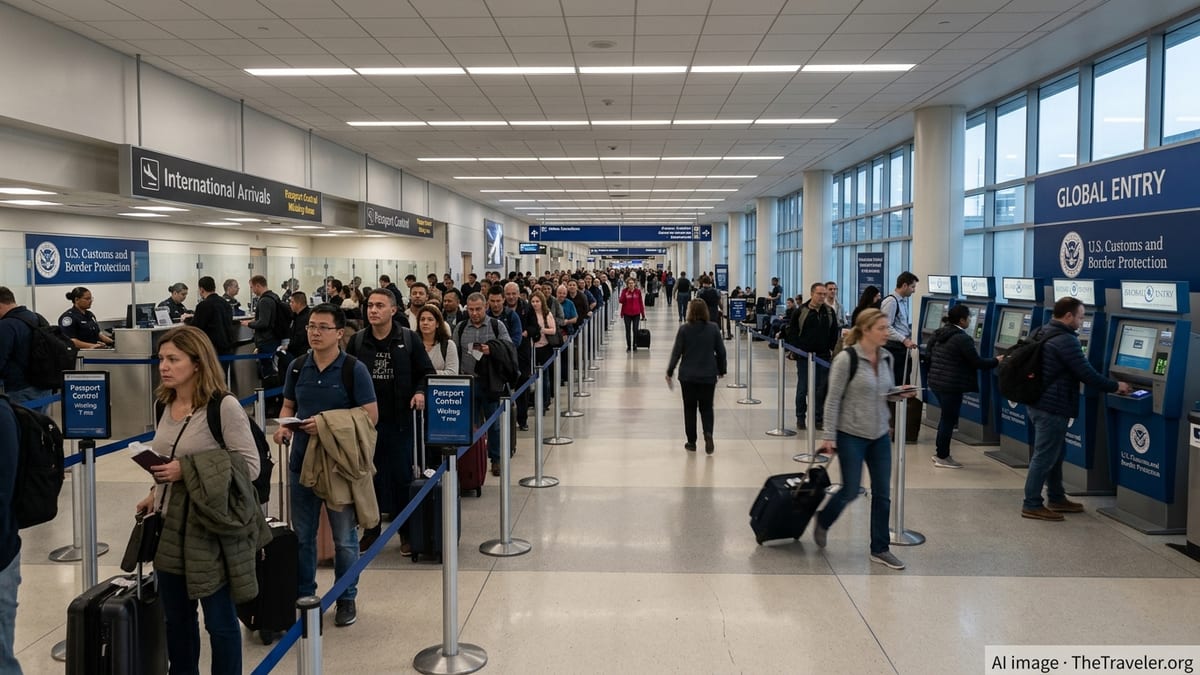
Program Rebooted After 17 Days of Suspension
The Department of Homeland Security reactivated Global Entry on March 11 at 5 a.m. Eastern time, according to multiple news and industry reports. The move followed a suspension that began February 22, when Customs and Border Protection shifted personnel away from trusted traveler processing in response to lapsed Homeland Security funding.
Global Entry, a cornerstone of the United States trusted traveler portfolio, allows pre-approved, low-risk passengers to use automated kiosks for faster clearance through passport control when arriving from overseas. Reports indicate that the halt in operations affected both kiosk processing and many in-person enrollment services, stranding existing members in longer lines and putting new applicants in limbo while the shutdown dragged on.
Travel coverage from outlets including major wire services and trade publications suggests the suspension quickly exposed how dependent international hubs have become on Global Entry to manage peak-volume arrivals. Once the program went dark, airports from New York to Houston reported longer immigration queues and more missed connections for travelers who had previously relied on expedited processing.
The shutdown backdrop has also sharpened the political dimension of the pause. Publicly available information on the funding standoff points to a clash in Congress over immigration enforcement and Homeland Security priorities, with the Global Entry suspension becoming one of the most visible pain points for the traveling public.
Airport Chaos Exposes Reliance on Trusted Traveler Systems
In the final days of the suspension, airport conditions became a central part of the broader shutdown narrative. Travel industry reports describe hourslong lines at some international arrival halls, where the loss of Global Entry capacity pushed more passengers into standard inspection queues already strained by staffing challenges.
According to coverage in national outlets and trade media, the disruption came at a critical moment in the calendar. The shutdown overlapped with the early build-up to the spring break and Easter travel period, when international arrivals typically swell. Without Global Entry kiosks absorbing a sizable share of pre-vetted travelers, airports had fewer levers to pull to smooth out sudden surges in passenger volume.
Travel groups that monitor airport performance have long argued that trusted traveler programs are not just convenience products but essential tools for throughput and security. Recent commentary from travel associations, cited in industry news, emphasized that Global Entry members undergo extensive background checks and in-person interviews, allowing frontline officers to focus more attention on travelers who have not been pre-screened.
The 17-day pause effectively tested what happens when that layer is suddenly removed. Reports from consumer travel sites and frequent flyer forums documented inconsistent conditions, with some airports maintaining relatively steady processing times while others struggled with bottlenecks when multiple wide-body arrivals landed in quick succession.
Backlog Fears for Applications and Interviews
With kiosks back online, attention is rapidly shifting to what the shutdown means for Global Entry’s already stretched enrollment pipeline. Prior to the suspension, application processing times and interview availability were a frequent source of traveler frustration, and observers now expect a fresh wave of delays as the system reboots.
Guidance compiled by travel advisory platforms and Global Entry tracking sites notes that many enrollment centers paused or sharply curtailed interviews during the funding lapse. Conditionally approved applicants who were counting on near-term appointments, including those planning to use Enrollment on Arrival, now face uncertain timelines as Customs and Border Protection rebuilds schedules and reallocates staff.
Some analysis suggests that the backlog could ripple through the coming months, particularly in coastal hubs and high-demand enrollment centers that were already fully booked well into summer. Travelers who had timed their applications to secure Global Entry before peak vacation periods may find themselves relying on standard passport control while they wait for new interview slots to open.
Consumer-focused travel outlets are advising applicants to monitor their online accounts frequently, cast a wider net across multiple enrollment locations, and remain flexible about using Enrollment on Arrival where it is available. While the program’s restart is a clear positive for existing members, the path back to normal for new applicants may prove slower and less predictable.
Shutdown Ends, But Travel Disruptions Linger
The resumption of Global Entry coincides with the formal end of the latest Homeland Security funding impasse, but reports indicate that travel operations will not snap back instantly. Aviation experts quoted in recent coverage caution that the cumulative impact of staffing shifts, deferred training, and disrupted schedules can persist well after the political drama in Washington fades from the headlines.
TSA officers and Customs and Border Protection personnel continued working during the shutdown, often without pay, which contributed to rising concerns about morale and attrition. Industry analysts note that even short periods of financial uncertainty can accelerate retirements or prompt front-line employees to seek more stable roles outside government service, with long-term implications for security checkpoint and border staffing.
For travelers, that translates into a patchwork recovery. Some airports are already reporting smoother flows through customs thanks to the Global Entry restart, while others warn that lingering staffing shortages and schedule disruptions may still lead to unpredictable waits at both security and immigration. Travel planning resources are urging passengers to build in extra time for international arrivals and tight domestic connections, particularly over the next several weeks.
The shutdown episode has also revived debate about how critical travel infrastructure should be insulated from political stalemates. Policy commentary in national and trade publications points to the recent Global Entry suspension as a case study in how quickly a lapse in funding can translate into tangible disruption for millions of travelers and billions of dollars in economic activity tied to tourism and business travel.
What Travelers Should Expect in the Coming Weeks
As Global Entry operations normalize, travel experts and industry publications are outlining a new near-term reality for frequent flyers. The headline news is that existing Global Entry members can once again use kiosks at participating airports, which should cut down on some of the most acute arrival headaches seen over the past two weeks.
However, published guidance stresses that improvements will be uneven. Airports facing the sharpest staffing gaps may continue to prioritize core screening functions, leaving some enrollment centers on reduced hours or temporarily closed. Travelers returning from overseas should double-check airport websites and trusted traveler program dashboards before counting on Enrollment on Arrival to complete pending applications.
Advisories from consumer and loyalty-focused travel sites also encourage passengers to revisit basic contingency planning: allowing more connection time after international flights, avoiding the last outbound of the day where possible, and considering travel insurance products that account for missed connections and extended delays. The Global Entry restart removes one major friction point, but the travel ecosystem remains fragile as agencies and airports work through the shutdown’s aftereffects.
For now, the revival of Global Entry stands as one of the clearest signs that the immediate phase of shutdown-related travel chaos is beginning to ease. Yet the episode has underscored how quickly trusted traveler programs can move from background convenience to front-page story when political gridlock spills over into the nation’s terminals and boarding gates.