

More news on this day
United Airlines is stepping deeper into the global fleet expansion race as carriers from North America, Europe, Latin America and the Middle East react to resilient premium travel demand, sharpening the competitive balance between Airbus, Boeing and Embraer.
Get the latest news straight to your inbox!
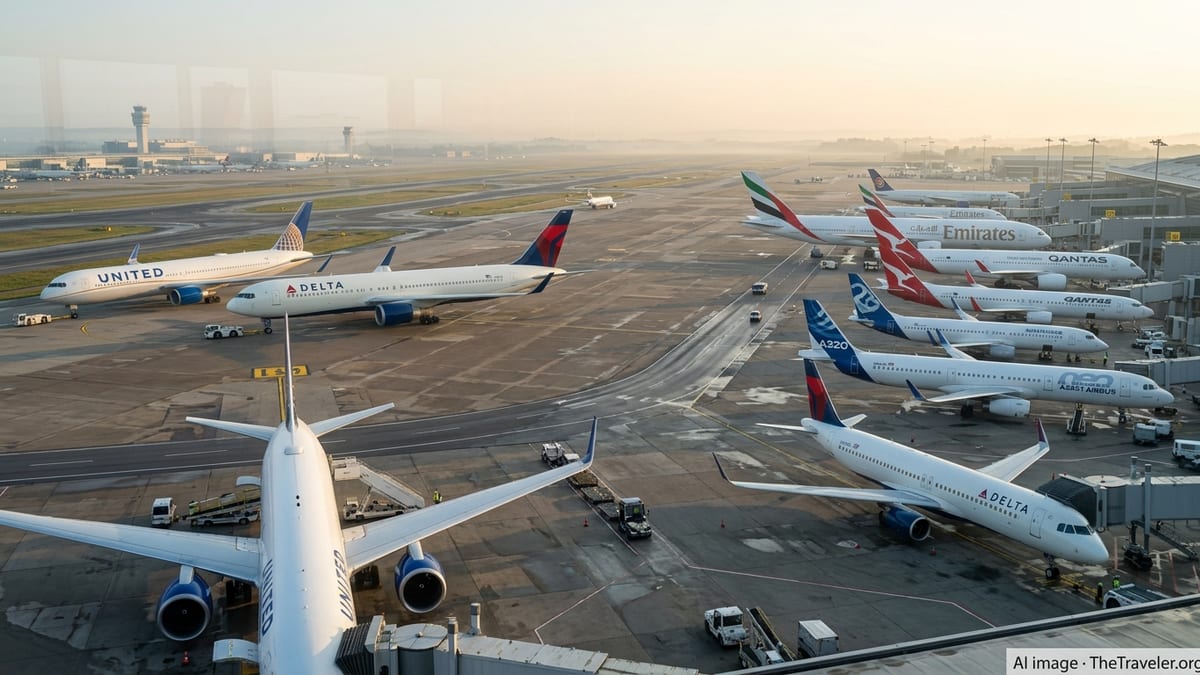
United, Delta and Qantas Double Down on Premium Growth
Publicly available information shows that United Airlines is pressing ahead with one of the largest fleet renewal and growth programs in the industry, centered on new-generation narrowbody and widebody aircraft with higher proportions of premium seats. Industry coverage of United’s long-term order book highlights hundreds of Boeing 737 MAX and Airbus A321neo family jets, alongside additional Boeing 787 Dreamliners, intended to support both network expansion and denser premium cabins on key transcontinental and long haul routes.
Delta Air Lines is taking a different but complementary approach, aligning fleet decisions with a granular rethinking of cabin products. Recent reports describe plans to introduce “basic” first and business class fares from 2026, supported by additional Boeing 787 widebody aircraft and retrofits that increase the number of premium seats on Airbus A330 and A350 jets. The strategy aims to capture more high-yield demand while segmenting price-sensitive travelers, illustrating how fleet and fare structures are now tightly coupled.
Qantas, meanwhile, continues modernizing its international and domestic fleets, including Airbus A350s earmarked for long range “Project Sunrise” services and additional Airbus A220 and A321XLR narrowbodies for regional and domestic markets. The airline has repeatedly signaled that long haul premium cabins are a core profit driver, and its aircraft choices reflect an emphasis on range, fuel efficiency and cabin flexibility for high-yield routes linking Australia with North America, Asia and Europe.
Together, these moves indicate that large network carriers are treating premium cabins as a structural, not cyclical, trend, and are using fleet decisions to lock in that shift over the next decade.
Low Cost and Leisure Players Join the Big-Cabin Arms Race
Premium demand is no longer confined to traditional full service airlines. Mexican ultra low cost carrier Viva Aerobus has emerged as an important narrowbody customer for Airbus, with a large pipeline of A321neo aircraft intended to support dense domestic routes and expanding cross border leisure traffic. While the airline remains focused on low fares, the higher capacity and improved economics of the A321neo platform give it room to experiment with more differentiated seating and ancillary revenue models.
European group IAG, the parent of British Airways, Iberia and Aer Lingus, continues to place significant orders for both Airbus and Boeing types, including A320neo family aircraft and Boeing 787 and 777 widebodies. Public fleet plans emphasize upgauging and densification, along with long haul aircraft that can support increasingly segmented cabins from basic economy to fully enclosed business class suites.
Finnair presents another dimension in the premium story. The carrier has concentrated on long haul Airbus A350 operations linking Northern Europe with Asia and North America, and has used that platform to roll out upgraded business and premium economy cabins. Its decisions illustrate how even relatively small flag carriers are betting that well designed long haul premium products, supported by efficient new generation widebodies, can differentiate them in a crowded marketplace.
The convergence of low cost, hybrid and legacy airlines on similar aircraft types and cabin strategies underscores how central fleet renewal has become to capturing premium revenue in every world region.
Emirates, Regional Giants and the Widebody Showdown
In the Middle East, Emirates remains one of the most influential widebody customers and a bellwether for long haul demand. Recent coverage from major news agencies describes fresh orders for both Boeing 777-9 aircraft and additional Airbus A350-900 jets, reflecting the carrier’s twin focus on very long haul trunk routes and more flexible long range missions. These decisions reinforce the importance of large twin engine widebodies at the top end of the market, even as older four engine types are retired.
Other Gulf and regional carriers are also reshaping their fleets with an eye on premium growth. Announcements from airlines in the region and from lessors such as AviLease point to sizeable commitments for A320neo family and A350 aircraft, many of which will operate with high shares of business and premium economy seats. These orders are intended to capture connecting traffic flows between Europe, Asia and Africa, where affluent leisure and corporate travel have rebounded strongly since the pandemic.
In the Asia Pacific region, Qantas is joined by other carriers that are steadily renewing widebody fleets, often replacing older Airbus A330s and Boeing 767s with Airbus A350s and Boeing 787s. The common thread across these investments is a desire to deploy fuel efficient jets capable of supporting upscale cabins while mitigating volatility in fuel prices and environmental policy.
The resulting competition places widebody programs from Airbus and Boeing at the center of a high stakes contest for long haul premium travelers, with each new order sending signals about airline confidence and manufacturer momentum.
Airbus, Boeing and Embraer: Who Leads the Race
Beneath the high profile airline announcements, the balance of power among manufacturers continues to evolve. Airbus ended 2025 with what company disclosures describe as a record commercial aircraft backlog of around 8,754 units and delivered just under 800 jets in the year, maintaining a leadership position in total deliveries and orders outstanding. Industry analysis notes that much of this backlog is concentrated in the A320neo and A321neo families, which have become central to fleet strategies at United, Delta, Viva Aerobus, IAG carriers and Qantas.
Boeing, recovering from earlier production and certification challenges, increased its own deliveries to roughly 600 aircraft in 2025, according to financial and trade press coverage, and secured more gross orders than Airbus for the year. The 737 MAX remains the workhorse of its order book, while renewed interest in the 787 and sizable commitments for the forthcoming 777-9 point to a stronger position in the widebody segment, particularly among airlines such as Emirates and major US carriers.
Embraer occupies a different but increasingly important niche. Company statements for 2025 show a record order backlog of about 29.7 billion dollars across commercial, executive and defense segments, supported by demand for E2 regional jets and specialized platforms. While Embraer cannot match Airbus or Boeing in absolute volume, its regional jets are central to connectivity strategies in North America, Europe and Latin America, and many are being delivered with upgraded premium cabins or extended extra legroom sections.
Analysts tracking the sector describe a nuanced picture. Airbus continues to lead on overall backlog and narrowbody dominance, Boeing is reasserting itself on new orders and widebody relevance, and Embraer is consolidating its role as the preferred supplier in the regional and small mainline segment. The fleet plans of United, Delta, Viva Aerobus, Finnair, IAG, Emirates and Qantas suggest that all three manufacturers will remain deeply embedded in the global premium travel ecosystem over the next decade.
Premium Demand Keeps Backlogs at Record Levels
Across the industry, premium demand is helping to sustain record long order books. Analysis from international aviation bodies and financial institutions indicates that global aircraft orders reached almost 17,000 units at the end of 2024, well above historical norms, as airlines sought to secure delivery slots through the early 2030s. This backlog is stretching production capacity at Airbus and Boeing and limiting airlines’ ability to pivot quickly between manufacturers.
For airlines such as United, Delta, Finnair and IAG carriers, the constrained supply picture reinforces the value of early, large scale commitments that lock in access to the most in demand aircraft types and earliest delivery windows. For Viva Aerobus and other low cost operators, it raises the strategic importance of fleet commonality and efficient asset utilization, particularly when experimenting with new cabin products.
For manufacturers, the premium travel boom is both an opportunity and a challenge. Airlines are demanding aircraft that can reliably support sophisticated cabin layouts, lower unit costs and improved environmental performance, leaving little room for delays or missteps. As of early 2026, the emerging consensus from industry data is that Airbus currently leads on overall backlog and deliveries, Boeing is regaining ground on new orders and widebody strength, and Embraer is translating regional jet demand into record financial visibility.
How United, Delta, Viva Aerobus, Finnair, IAG, Emirates and Qantas continue to refine their orders and cabin plans over the next few years will determine whether that balance of power shifts further, or solidifies into a new long term equilibrium in the global aircraft market.