

More news on this day
Air passengers across multiple continents faced mounting disruption today as 244 flight delays and 12 cancellations rippled through Dallas–Fort Worth, Sydney, Doha, London and several major US cities, affecting operations at American Airlines, Qatar Airways, Delta Air Lines and Emirates just as spring and late-summer travel demand intensifies.
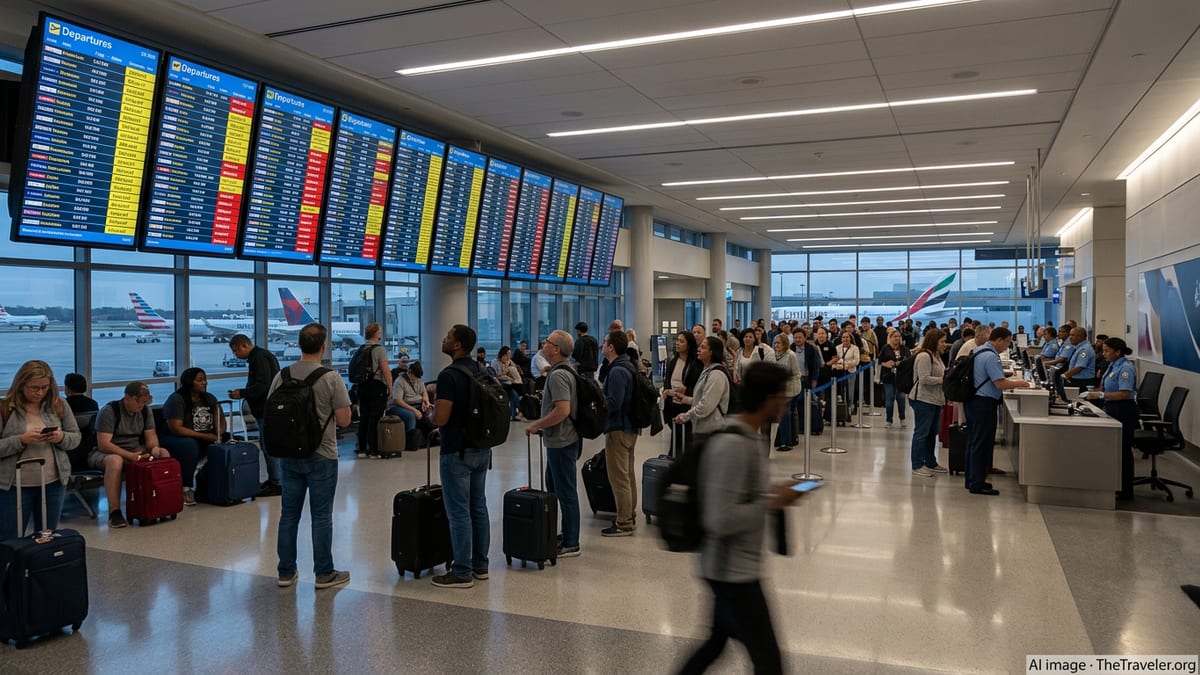
Delays Mount at Dallas–Fort Worth and Major US Hubs
Dallas–Fort Worth International Airport emerged as one of the focal points of today’s disruption, with a combination of weather knock-on effects, crew-availability issues and broader network congestion slowing departures and arrivals for American Airlines, Delta and other US carriers. Travelers reported rolling departure-time revisions, tight connections and long lines at customer service desks as airlines worked to rebook missed onward flights across the country.
The disruption in Texas comes on the heels of a difficult week for US aviation. Severe storms over parts of the Midwest and South in recent days left schedules fragile, and even as conditions improved, residual aircraft and crew imbalances continued to push new delays into Sunday and Monday operations. For passengers in Dallas, that meant secondary impacts on routes to major coastal gateways including New York, Los Angeles and Chicago, amplifying the sense of a nationwide slowdown.
Operational stress was not limited to Dallas. Data from aviation tracking services showed delays stacking up at key hubs such as Atlanta, Houston and Orlando, with late-arriving aircraft from earlier in the day forcing airlines to compress already tight turnarounds. Even where cancellations remained relatively limited, the sheer volume of delayed flights left many passengers in limbo, unsure whether to wait out revised departure times or request alternative itineraries through already crowded hubs.
Airlines operating at DFW signaled that they were prioritizing mainline transcontinental and international departures, in some cases holding shorter domestic feeder legs to keep long-haul operations intact. While that strategy can reduce the overall scale of cancellations, it tends to shift the burden of disruption onto connecting passengers and those traveling on smaller regional routes.
Sydney and Doha Feel the Strain of Global Network Shocks
In the Asia-Pacific region, Sydney Kingsford Smith Airport again found itself grappling with heavy congestion as a backlog of delayed services spilled over from earlier days. Passengers reported late-night and early-morning departures that stretched airport staffing and ground-handling resources, with ripple effects on both domestic and international connections. For long-haul travelers heading to North America and Europe, even modest schedule slippage in Sydney created a high risk of missed onward flights.
Qatar Airways and Emirates, both key players in the Australia to Europe market via their Gulf hubs, were contending with the ongoing impact of airspace instability and capacity constraints in West Asia. While some scheduled services continued to operate, tightened routings and slot restrictions have made it harder for carriers to recover when a single rotation runs late. That dynamic was visible today in marginally delayed departures from Sydney and other regional gateways, delays that then propagated into Doha and Dubai bank structures.
At Hamad International Airport in Doha, passengers connecting between Asia-Pacific and European or North American destinations reported longer-than-usual ground times and occasional last-minute gate changes. Although outright cancellations remained relatively limited compared with earlier phases of the Middle East crisis, the cumulative effect of rolling delays underscored how sensitive global hub-and-spoke systems remain to upstream disruption.
For Qatar Airways in particular, the challenge has been to balance constrained long-haul capacity with the need to maintain a reliable skeleton schedule. That has meant occasional consolidation of lightly booked services and short-notice retiming of flights, leaving travelers reliant on push notifications and airport displays to track fast-evolving departure boards.
London and Transatlantic Routes Caught in the Crossfire
Transatlantic traffic between the United States and Europe also felt the knock-on impact of today’s operational stress. Flights linking Dallas–Fort Worth and other major US hubs with London Heathrow and Gatwick departed in some cases behind schedule, as aircraft arriving late from domestic rotations forced carriers to compress ground-handling windows. Even modest delays at departure risked bumping transatlantic arrivals into early-morning congestion at London’s already saturated airports.
American Airlines, which maintains a significant presence on Dallas to London routes, faced the added complication of aligning delayed US origin services with tightly timed overnight arrivals into the UK capital. Airline operations teams sought to preserve the integrity of overnight eastbound departures by preemptively slowing or retiming some feeder flights, a move that may have helped limit outright cancellations but left domestic passengers subject to extended gate holds.
Emirates and Qatar Airways services operating into London from their Gulf hubs encountered similar challenges. When late departures from Sydney, Southeast Asia or Africa cascade into delayed arrivals at Doha and Dubai, the knock-on impact falls on peak Europe-bound waves, where runway and gate capacity are rigidly allocated. As a result, even airlines that avoided cancellations still delivered many passengers into London significantly behind schedule, complicating onward rail and short-haul connections across the continent.
For travelers, the practical effect was a patchwork of missed meetings, rebooked regional hops and extended stays in airport hotels around London’s main gateways. Ground staff warned passengers with close connections to approach airline desks as early as possible, while advising those with flexible plans to consider accepting voluntary rebooking options in exchange for travel credits to ease pressure on oversubscribed flights.
Major US Cities See Security Bottlenecks and Staffing Gaps
Elsewhere in the United States, airport performance was further hampered by an emerging staffing crunch at security checkpoints. Travelers moving through some major terminals reported waits approaching or exceeding two hours at peak periods, as Transportation Security Administration staffing adjusted to the effects of a partial federal funding lapse and increased absenteeism. Those bottlenecks compounded flight delays by slowing passenger throughput to departure gates, forcing airlines in some cases to hold aircraft for late-arriving customers.
Houston, New Orleans and other large origin airports feeding into Dallas, Atlanta and Orlando saw particularly sharp spikes in wait times, creating a domino effect that extended throughout already strained airline networks. For carriers such as Delta and American, the convergence of security slowdowns with residual weather-related disruptions left limited room to maneuver, especially where aircraft and crews were already running behind rotation.
In New York, Chicago and Los Angeles, airport authorities urged travelers to arrive significantly earlier than usual, recommending at least three hours for domestic departures and even more for international flights. The guidance reflected not only longer security lines but also the possibility of rapid schedule changes, with airlines swapping aircraft or re-timing services at short notice in an effort to keep their networks roughly aligned with crew duty-time limits.
Delta, which operates large hubs in Atlanta, Detroit and Minneapolis in addition to substantial operations at New York’s John F. Kennedy and LaGuardia airports, spent much of the day juggling affected flights to minimize cancellations. While the airline succeeded in keeping most of its schedule intact, many departures left later than planned, contributing to the tally of 244 delays recorded across the affected carriers.
What Today’s Disruption Means for Upcoming Travel
With only 12 outright cancellations reported among the airlines most directly affected, today’s events were notable less for the volume of scrapped flights than for the breadth of delay impacts across continents. For many travelers, the distinction offered little comfort. Long holds on the tarmac, missed connections and extended queues at rebooking counters turned what should have been routine journeys into day-long ordeals.
Industry analysts noted that the pattern of disruption highlights just how little slack remains in global airline networks. Aircraft utilization is running high as carriers chase strong demand, and crew rosters are finely tuned to match tight schedules. In that environment, a combination of adverse weather, geopolitical airspace constraints and staffing bottlenecks can quickly produce the kind of multi-region ripple effect seen today, even when the raw number of cancellations remains modest.
Travelers scheduled to fly through Dallas–Fort Worth, Sydney, Doha, London or major US hubs over the coming 24 to 48 hours were advised to monitor their bookings closely and to make use of airline apps for real-time notifications. Re-accommodation options, including free same-day changes and limited waivers on fare differences, were being offered selectively where disruption was most concentrated, though availability was tightening on popular routes as the day progressed.
For airlines, the immediate focus now shifts to restoring regular operations before the next wave of peak demand. With spring break in the United States and shoulder-season holiday travel in other regions ramping up, carriers such as American Airlines, Delta, Qatar Airways and Emirates face the twin challenge of clearing today’s backlog while convincing wary passengers that their upcoming journeys will run to schedule.