

More news on this day
Widespread flight disruptions across Asia are stranding passengers at major international hubs, as a spike in delays and cancellations involving China Southern Airlines, Batik Air, Cambodia Angkor Air and other regional carriers ripples through Beijing, Jakarta, Phnom Penh and connecting airports.
Get the latest news straight to your inbox!
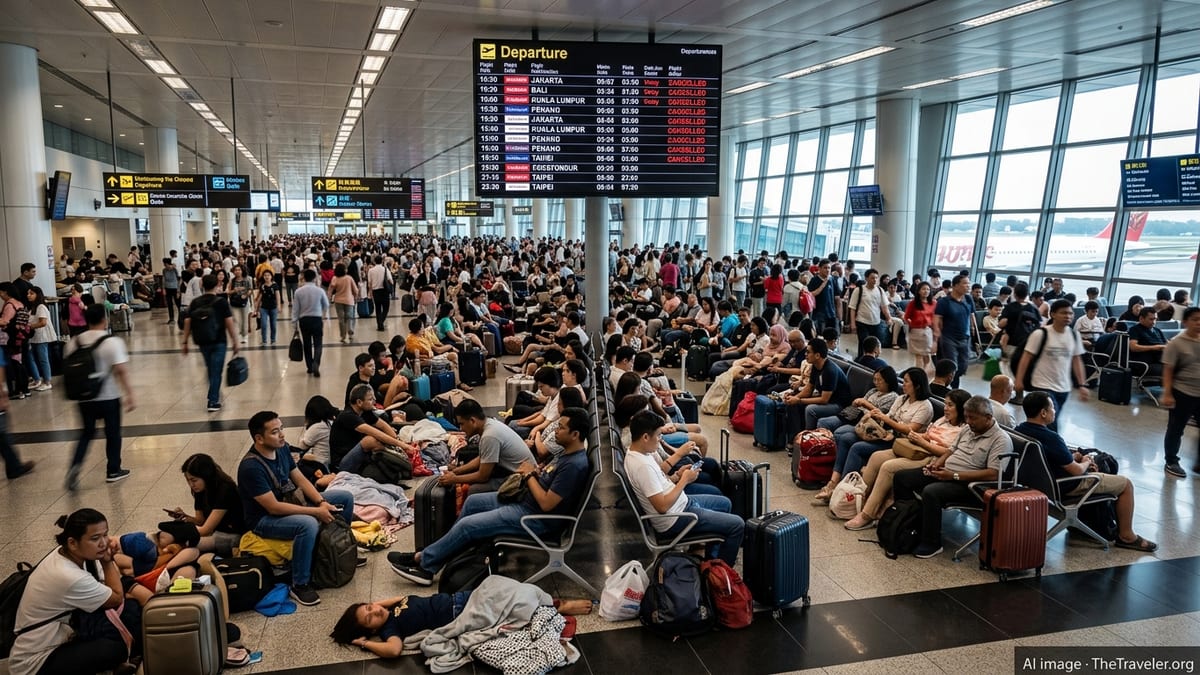
Patchy Operations Across Beijing, Jakarta and Phnom Penh
Publicly available flight tracking data and regional aviation coverage indicate mounting disruption across several Asian gateways, with hundreds of delays and dozens of cancellations reported in recent days. While the exact tally of 703 delays and 37 cancellations reflects a moving target that shifts by the hour, the pattern points to sustained operational strain rather than a short, isolated incident.
In Beijing, where China Southern maintains a significant presence on trunk routes to cities such as Changsha and Guangzhou, schedule performance has deteriorated on some services. Flight analytics platforms show elevated delay averages on select China Southern routes out of the Chinese capital, with individual flights arriving several hours behind schedule, amplifying knock-on effects for onward connections.
Jakarta’s Soekarno Hatta International Airport is facing a similar squeeze. Recent regional coverage notes waves of disruptions affecting Indonesian and Malaysian carriers, including Batik Air, with dozens of flights cancelled and hundreds delayed across Jakarta, Bali, Makassar, Kuala Lumpur and other hubs over the past week. Reports indicate that even limited clusters of cancellations have cascaded into wider congestion as aircraft and crews fall out of position.
Phnom Penh and Cambodia’s other international gateways, now recovering strongly from the pandemic era, are also feeling the strain. Industry data show flight schedules being compressed and reworked across routes into Cambodia, with some services consolidated or rescheduled at short notice. Travelers connecting through Phnom Penh to regional destinations report missed onward flights and extended waits as limited fleets and tight turnaround times leave airlines with little room to absorb disruption.
Multiple Causes Behind the Latest Wave of Disruptions
Available coverage and data suggest that no single trigger is responsible for the current wave of delays and cancellations. Instead, a combination of heavy seasonal demand, constrained fleets, staffing pressures and localized weather has created a fragile operating environment in which minor shocks quickly escalate.
In Indonesia, recent reporting highlights how a surge in travel demand around holiday periods has coincided with infrastructure and staffing limits at major airports. Even when flight numbers remain within historical ranges, high utilization of aircraft and ground resources leaves little buffer, so any technical fault or crew rotation issue can force an airline such as Batik Air to delay or cancel multiple services down the line.
Across China, complex airspace management and pockets of adverse weather continue to challenge on-time performance for large carriers. For airlines like China Southern that operate dense domestic and regional networks, a delay on a single Beijing departure can ripple through several subsequent sectors, compounding disruption throughout the day. Historic data on some China Southern routes show elevated average delay lengths, underscoring the difficulty of restoring normal flow once a backlog forms.
In Cambodia and neighboring states, fuel availability, airport transitions and evolving route networks have periodically forced airlines to compress or retime schedules. Carriers linked to the former Cambodia Angkor Air brand and its successors operate relatively small fleets, so removing even one aircraft for maintenance or repositioning can require broad timetable adjustments that passengers experience as late-notice delays or cancellations.
How China Southern, Batik and Cambodia-Based Carriers Are Affected
China Southern’s extensive domestic and regional network makes it particularly exposed when system-wide disruptions occur. On some routes from Beijing, recent performance data show a notable share of flights arriving significantly behind schedule, suggesting heavy congestion and tight turnarounds. Passengers connecting from long-haul services into China Southern’s domestic banks face heightened risk of missed connections when delays exceed two to three hours.
Batik Air, operating both domestic and regional services from Jakarta and other Indonesian cities, has been prominently featured in recent travel disruption reports. Coverage from regional travel outlets describes clusters of cancellations and hundreds of delays concentrated at Soekarno Hatta and several secondary hubs, including Surabaya and Medan, over the past weeks. These disruptions have followed earlier scrutiny of the carrier’s on-time performance, with academic and industry analyses citing high historical delay ratios compared with some competitors.
Cambodia Angkor Air, now effectively succeeded by new branding and corporate structures in the Cambodian market, remains associated in traveler accounts and historical reporting with frequent schedule changes and customer service challenges. As Cambodia’s aviation sector rebounds and new operators ramp up routes from Phnom Penh and Siem Reap, publicly available information suggests that managing rapid growth with limited aircraft has kept schedules volatile. Consolidated flights, retimed departures and sporadic cancellations are recurring themes in recent traveler reports.
Together, the performance of these carriers feeds into a wider picture of systemic vulnerability across Asian aviation. When one airline cancels or heavily delays flights, others are often unable to absorb displaced passengers quickly, leading to crowded terminals, long rebooking queues and rising frustration among travelers in Beijing, Jakarta, Phnom Penh and beyond.
What Stranded Passengers Are Experiencing on the Ground
Travelers caught up in the latest disruptions describe a familiar pattern: rolling departure time changes, limited information at departure gates and scarce options for immediate rebooking. Social media posts and forum discussions from March 2026 highlight passengers in Jakarta and other affected airports facing delay extensions from a few hours to most of a day, often with sparse updates on the underlying cause.
In some cases, flights that initially appear delayed are later removed from departure boards altogether as cancellations, leaving passengers scrambling for alternatives. Publicly available accounts involving China Southern and Batik Air suggest that communication can vary significantly by airport, with some travelers receiving timely digital notifications and others learning of changes only upon arrival at the check in desk.
At Cambodian airports, the relatively small size of terminals does not always translate into smoother handling of irregular operations. With only a handful of counters and limited spare capacity, spikes in disruption can rapidly overwhelm staff, resulting in long lines and limited same day options for rebooking. Travelers with complex itineraries or separate tickets are especially vulnerable, as missed connections may not be automatically protected.
For many passengers, accommodation and meal support during extended delays remain inconsistent. While some airlines provide vouchers in accordance with local regulations or internal policies, public commentary indicates that support can be patchy, particularly when disruptions are attributed to weather, upstream scheduling decisions or factors described as operational constraints.
Practical Advice for Travelers Caught in the Chaos
With disruption patterns shifting daily, travelers planning to fly with China Southern, Batik Air, Cambodia Angkor Air’s successors or other regional carriers are urged by travel advisories and consumer advocates to adopt a more defensive approach to trip planning. The most consistent recommendation is to monitor flight status repeatedly in the 24 hours before departure using both airline channels and independent tracking tools.
Passengers with connections are advised to build in longer buffers, particularly when transiting through busy hubs such as Beijing and Jakarta. Travel experts recommend avoiding tight self made connections on separate tickets, as recent disruptions show how quickly a few hours of delay can erase even seemingly comfortable margins and leave travelers without automatic rebooking options.
Keeping thorough documentation remains critical. Public guidance from consumer groups emphasizes saving boarding passes, delay notifications, hotel and meal receipts, and any written communication from airlines. These records can support later claims for compensation or reimbursement where local laws or airline policies allow, especially on international itineraries that may fall under specific passenger rights regimes.
Finally, travelers are encouraged to prepare contingency plans, such as knowledge of alternative routes, nearby airports and realistic expectations about rebooking timelines when large scale disruption is underway. As the current wave of delays and cancellations demonstrates, Asia’s fast growing air travel market continues to face structural strains, and even a single disrupted flight on China Southern, Batik Air or a Cambodia based carrier can quickly turn into a prolonged and stressful journey without proactive planning.