

More news on this day
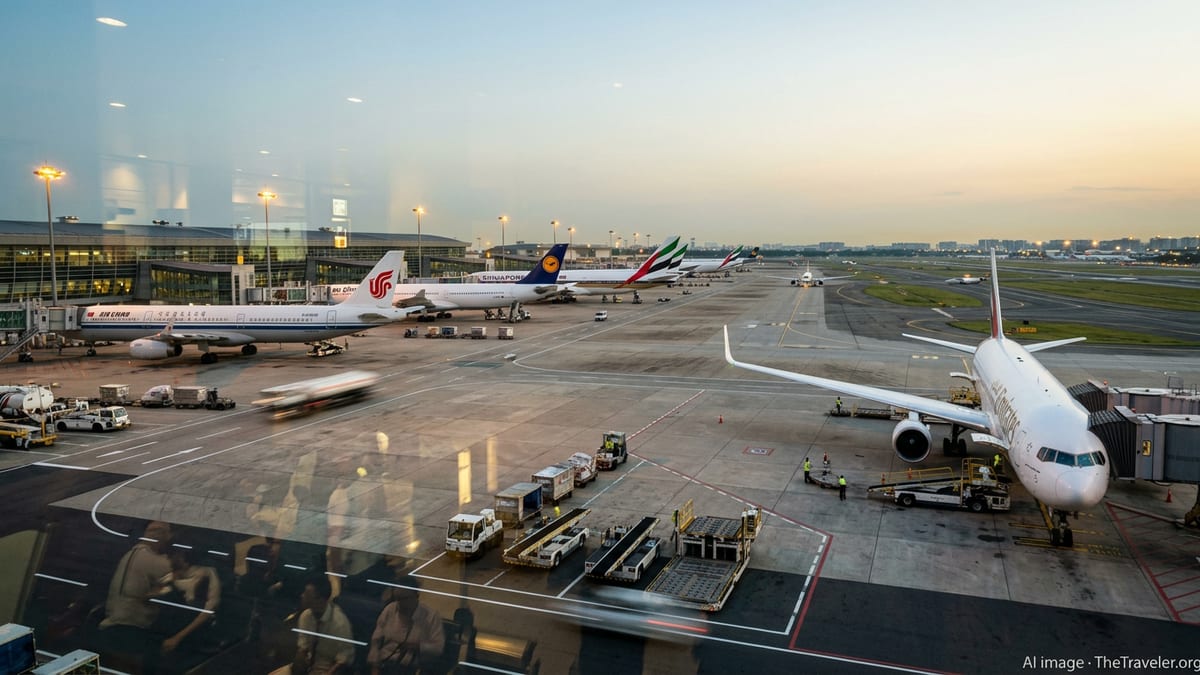
Four of the world’s most influential airlines are entering 2026 on very different post-pandemic trajectories, and their choices on capacity, pricing and networks are set to shape the next phase of global tourism and hospitality growth.
Get the latest news straight to your inbox!
From Crisis to Capacity Crunch: A New Phase of Recovery
Industry data for 2025 shows that global air travel demand has not only recovered from the pandemic shock but is now moving into a more mature expansion cycle. Figures from international airline associations indicate that passenger demand in 2025 grew faster than capacity, with international traffic particularly strong and load factors holding above pre-2020 levels. This marks a clear transition away from the volatile rebound of 2023 and early 2024 toward what many analysts describe as a more “normal” growth environment.
Yet the recovery remains uneven by region and airline. While North Atlantic and Middle East hubs have already surpassed pre-pandemic benchmarks, parts of Asia only achieved full recovery in 2024 and 2025, with China and wider North Asia catching up later than Europe or the Americas. As a result, airlines such as Air China and Singapore Airlines are still recalibrating long-haul networks and partnerships, even as carriers like Lufthansa and Emirates leverage a head start to consolidate market share on key tourism flows.
For global tourism and hospitality, this phase of recovery brings both opportunity and constraint. Strong demand is supporting record visitor numbers in destinations like Dubai and major European capitals, but lingering aircraft delivery delays, crew shortages and air traffic control bottlenecks are keeping capacity tight on some long-haul corridors. That tension is likely to influence fares, route choices and hotel performance throughout 2026.
Air China and the Return of the Chinese Outbound Traveler
The gradual normalization of China’s outbound market is one of the most closely watched developments for 2026. Domestic traffic within China surpassed pre-pandemic activity earlier, but international routes have taken longer to rebuild. Publicly available traffic data for 2025 show that flights between China and regional markets such as South Korea have approached or nearly matched pre-2020 levels, driven by visa relaxations and competitive fares, while capacity to Europe and North America is still ramping up more cautiously.
For Air China, this staggered rebound is reshaping network priorities. Industry schedules for 2025 and early 2026 point to a focus on restoring key regional links across Northeast and Southeast Asia, followed by a methodical reopening of long-haul services to Europe and selected North American gateways. Reports indicate that the carrier is rebuilding frequencies on routes that underpinned large tour-group flows before 2020, while also testing demand on secondary cities that cater to higher-spending, independent travelers.
Destinations that were once heavily dependent on Chinese group tourism, from Bangkok to Prague, are watching these adjustments closely. Tourism boards and hotel groups are using 2026 to rebalance their source markets, courting travelers from India, the Middle East and Europe while they wait for Chinese volumes to fully normalize. As Air China and its domestic rivals restore more capacity, observers expect a surge of pent-up outbound demand, but with a traveler profile that may be more digital, more independent and more focused on experiential stays than before the pandemic.
Lufthansa’s Tourism Push and Europe’s Capacity Realignment
Lufthansa Group entered 2026 with a solid financial base and growing confidence in leisure demand. The group’s latest annual report for 2025 highlights increased traffic volumes, strong load factors and a positive operating result across all major business segments, supported by sustained appetite for holiday travel to Mediterranean, Atlantic and long-haul sunshine destinations. Management guidance for 2026 points to expectations of a further earnings uplift as new aircraft arrive and productivity gains filter through.
Strategically, Lufthansa is leaning into tourism rather than treating it as a marginal segment. Capacity is being channeled through both full-service brands and leisure-focused subsidiaries, allowing the group to reach price-sensitive holiday travelers while maintaining premium products on core trunk routes. Recent expansion plans suggest a continued emphasis on North American, Caribbean and Indian Ocean destinations, often timed around peak European holiday periods to maximize aircraft utilization.
For European tourism and hospitality, this strategy effectively turns Lufthansa’s Frankfurt, Munich, Zurich, Vienna and Brussels hubs into even more powerful gateways. Higher frequencies and better connectivity mean that secondary destinations in Southern Europe, North Africa and the Middle East can attract more long-haul visitors year-round, not just in summer. However, persistent capacity constraints at busy European airports and air traffic control limitations risk pushing fares higher during peak seasons, which could encourage travelers to shoulder seasons and alternative airports in 2026.
Singapore Airlines at the Crossroads of Premium and Price Pressure
Singapore Airlines heads into 2026 in a position that combines financial strength with mounting competitive pressure. The group recently reported record profits for the 2024/25 financial year, supported by robust travel demand, high load factors and a one-off accounting gain related to its investment in the Air India and Vistara merger. At the same time, published financial commentary points to falling passenger yields as regional capacity expands and rival carriers restore networks across Southeast Asia and the broader Asia Pacific.
The carrier’s strategy centers on defending its premium positioning while adapting to a more price-sensitive, choice-driven market. Network updates in 2025 and early 2026 show continued investment in long-haul services to Europe and North America, supported by partnerships that funnel traffic through Singapore’s Changi Airport. On regional routes, the balance between Singapore Airlines and low-cost subsidiary Scoot is being recalibrated, with more attention paid to connecting flows that feed long-haul cabins and support hub hotel occupancy.
For tourism and hospitality players in Southeast Asia, the group’s decisions on capacity and scheduling have outsized impact. A dense web of connections through Changi can lift visitor arrivals not only to Singapore but also to resort destinations in Indonesia, Thailand and Vietnam. At the same time, downward pressure on yields suggests that travelers may benefit from more competitive fares in 2026, even as airlines face higher costs from fuel, staffing and sustainability investments. The net effect is likely to be strong passenger volumes but tighter margins, encouraging airlines and hotels alike to focus on ancillary revenue and higher-value customer segments.
Emirates, Mega-Hubs and the Tourism Boom in the Gulf
Emirates enters 2026 as one of the clearest beneficiaries of the post-pandemic travel surge. The airline and its parent group have reported successive record or near-record profits since 2023, citing strong demand across both passenger and cargo segments. The flagship hub at Dubai International Airport handled more than 95 million passengers in 2025, according to recent airport data, surpassing its pre-pandemic levels and reaffirming its status as the busiest global hub for international travel.
Network announcements through 2024 and 2025 indicate that Emirates is using this momentum to deepen its reach into Asia and emerging tourism markets. New routes to secondary cities in China and Southeast Asia, along with increased capacity to European and African destinations, are designed to capture rising demand from both leisure travelers and diaspora communities. This strategy is closely aligned with Dubai’s broader ambition to grow visitor numbers and length of stay, with hotel and real estate development running in parallel to airline expansion.
The Gulf region’s tourism and hospitality sectors are feeling the impact. High hotel occupancy rates, rising average daily rates and steady growth in visitor arrivals across Dubai and other hubs such as Doha and Abu Dhabi are closely tied to the connectivity provided by mega-carriers like Emirates. For 2026, analysts expect continued growth in stopover tourism, with more travelers opting for short city breaks in the Gulf as part of longer itineraries between Europe, Asia and Australasia.
What 2026 May Hold for Global Tourism and Hospitality
Across Air China, Lufthansa, Singapore Airlines and Emirates, a few common themes are emerging that will matter for tourism and hospitality providers in 2026. First, demand is expected to remain strong, supported by resilient leisure travel, growing middle-class spending in Asia and the normalization of corporate and conference travel. Industry forecasts suggest that global passenger numbers in 2025 exceeded five billion for the first time, and early indications for 2026 point to further, if more moderate, growth.
Second, capacity constraints are likely to persist in pockets, as airlines grapple with aircraft delivery delays, maintenance bottlenecks and labor imbalances. This may keep fares elevated on certain long-haul routes, even as competition pushes prices down in well-served regional markets. Hotels and destination managers will need to watch these patterns closely, matching room inventory and pricing strategies to shifting air access rather than relying solely on historical booking curves.
Finally, each of the four carriers is sharpening its role in the global tourism ecosystem. Air China is central to the revival of Chinese outbound travel, Lufthansa is positioning itself as a European tourism engine, Singapore Airlines is anchoring premium connectivity across Asia, and Emirates is reinforcing the Gulf as a global crossroads. Their combined network and fleet decisions in 2026 will help determine which destinations see record visitor numbers, which struggle to keep pace, and how travelers around the world experience the next chapter of post-pandemic exploration.