

More news on this day
Escalating confrontation involving Iran is rippling through global medical tourism in 2026, sharply reducing patient flows from West Asia to India and accelerating a wider geographic realignment of cross-border healthcare travel.
Get the latest news straight to your inbox!
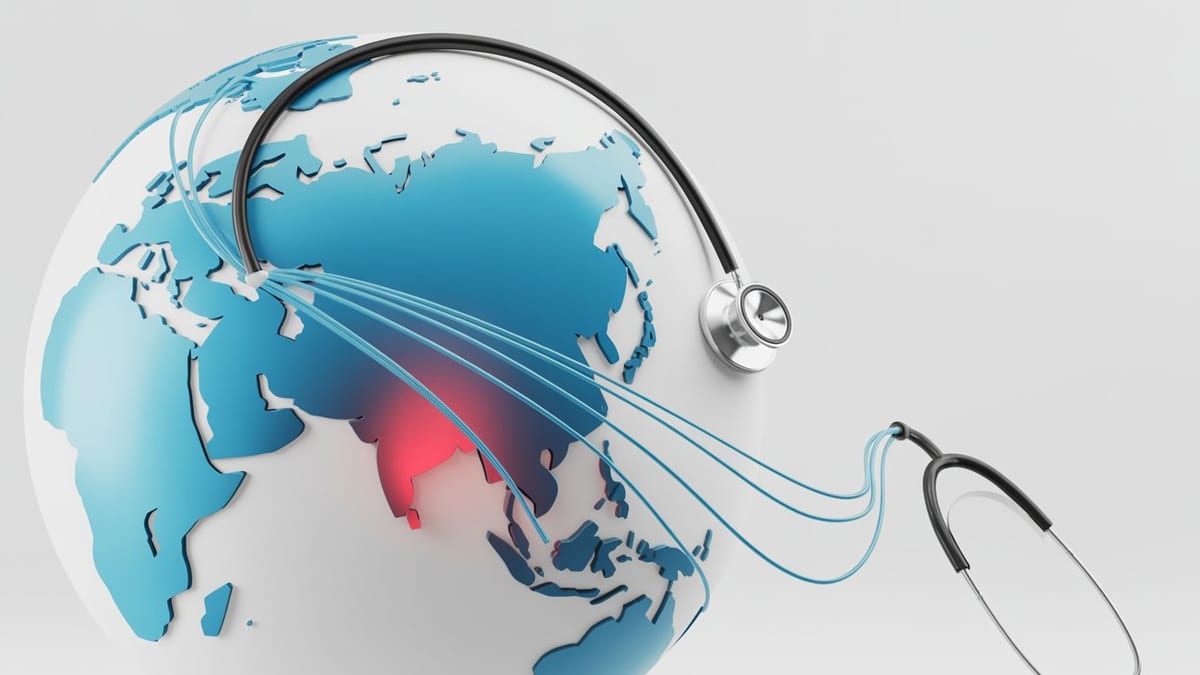
Image by Travel And Tour World
India’s Medical Tourism Engine Stalls Under West Asia Shock
India has spent the past decade building a reputation as one of the world’s most cost-competitive destinations for complex procedures, from cardiac surgery to oncology. Before the latest Iran related escalation, publicly available Indian tourism and industry data suggested that foreign patient arrivals generated a multibillion dollar market, with roughly one in five medical travelers coming from the broader Middle East. Those flows helped fill beds in major private hospital chains across Delhi, Mumbai, Chennai and Bengaluru.
That picture has changed abruptly since late 2025, as the conflict environment involving Iran, Israel and proxy actors across West Asia intensified. Sector analyses and recent trade coverage indicate that leading Indian hospital groups have recorded a 50 to 75 percent decline in new international patients from Oman, Saudi Arabia, Iran, Iraq and Yemen in recent months, largely attributed to airspace uncertainties, higher insurance risk perceptions and a spike in travel disruptions across the region.
Reports tracking India’s “medical value travel” segment suggest that this downturn has hit high-margin lines first. Oncology, organ transplants and advanced cardiac care, which traditionally see longer inpatient stays and higher average bills, have experienced some of the steepest drop-offs in Middle Eastern demand. Travel planners note that some patients are postponing non-urgent procedures altogether, while others are diverting to destinations perceived as less exposed to the current security environment.
Industry observers point out that the setback comes just as India’s medical tourism market appeared poised for a new growth phase, supported by recent relaxations in medical visa rules and efforts under the government’s Heal in India campaign. Instead of a smooth expansion, hospital finance teams are now reworking revenue projections, and travel facilitators that focused heavily on West Asian corridors are scrambling to re-balance their portfolios.
Hospitals Pivot Toward Africa, Central Asia and Western Markets
In response to the sudden softening of demand from West Asia, Indian providers are accelerating a pivot that had already been under discussion: diversification beyond traditional feeder markets. Coverage in travel and healthcare trade media in March 2026 describes how prominent chains are stepping up outreach in Africa, Central Asia and parts of Southeast Asia, including patient roadshows, tie-ups with local clinics and new international marketing offices.
Nigeria, Kenya, Tanzania and Ethiopia are repeatedly cited as priority targets, reflecting both rapid growth in urban middle classes and constrained high-end healthcare capacity at home. Central Asian republics such as Uzbekistan and Kazakhstan are emerging as another focus, with facilitators promoting India as an English-speaking alternative for complex surgeries at a fraction of European or Gulf prices.
There is also renewed emphasis on higher-spending but underpenetrated markets in Europe and North America. Analysts note that discussions around potential visa-on-arrival or simplified e-medical entry for selected Western countries, combined with aggressive airline pricing, could modestly increase the share of patients arriving from the United Kingdom, continental Europe and the United States over the next few years. For now, however, most experts expect volume growth to come from regional developing economies rather than long-haul travelers.
Digital platforms are playing a central role in this pivot. Indian-founded facilitators have recently expanded through acquisitions and partnerships that extend their reach into Africa, Southeast Asia and Eastern Europe. These companies market multi-country options to patients, presenting India alongside other hubs such as Turkey and Thailand and reinforcing the sense that medical tourism is becoming a more distributed, multi-polar market.
Turkey, Malaysia and Thailand Capitalize on Perceived Stability
While India navigates a sharp, conflict-linked downturn from West Asian patients, several emerging and established hubs are moving quickly to capture displaced demand. Industry research published in early 2026 highlights Turkey, Thailand, Malaysia, South Korea and selected Latin American destinations as key beneficiaries of the current realignment.
Turkey in particular is frequently singled out for rapid expansion. Sector reports for 2025 and 2026 describe a medical tourism market attracting millions of patients annually, anchored by large private hospital groups, extensive international accreditation and continued investment in specialized infrastructure. Istanbul and Ankara are being marketed heavily for cosmetic surgery, orthopedics and oncology, with travel intermediaries emphasizing that the country, while in a sensitive neighborhood, is not a direct theater of the current Iran centric conflict.
In Southeast Asia, Malaysia and Thailand continue to reinforce their long-standing reputations for combining hospitality with advanced care at mid-range prices. Recent disclosures from the Malaysia Healthcare Travel Council, for example, point to strong post-pandemic recovery in foreign patient revenues and a growing push to court higher-acuity cases beyond cosmetic and dental work. Thailand, meanwhile, is leaning on decades of experience with international patient departments and bundled “surgery plus stay” offerings that appeal to travelers wary of transiting volatile air corridors.
Specialist observers argue that as patients, insurers and corporate benefits managers reassess risk, proximity to conflict zones and perceived route safety are becoming as important as price and clinical outcomes. For destinations that can couple competitive costs with political stability and direct air links, the present disruption is creating an unexpected window to climb the medical tourism rankings.
Risk Perception, Insurance and Air Connectivity Rewire Patient Choices
The Iran linked conflict is not only affecting traditional origin-destination pairs, it is also changing how patients and intermediaries calculate risk. Analysts tracking travel insurance and aviation note that some carriers have reduced or rerouted services over contested airspace, lengthening journey times between West Asia and parts of South Asia. Higher fuel and war-risk insurance costs are feeding into ticket prices, potentially eroding some of the savings that once made India the automatic choice for cost-sensitive patients.
At the same time, medical travel brokers report a rise in inquiries about what constitutes a “safe” destination for major surgery. Online forums and facilitator advisories increasingly flag considerations such as geopolitical exposure, redundancy of critical infrastructure, and the ability of hospitals to maintain operations if regional tensions worsen. Countries that can convincingly present themselves as insulated from the immediate fallout of the Iran centric crisis are benefiting from this shift in perception.
Insurance is another pressure point. In several Gulf and West Asian markets, corporate and state-linked insurers that once routinely approved treatment in India are reassessing preferred networks, with some policies now steering patients toward Turkey, Europe or Southeast Asia. Publicly available market commentary suggests that if these contractual patterns persist for several years, they could lock in new flows that will be difficult for India to fully reclaim even after the security situation stabilizes.
For individual patients contemplating elective procedures abroad, the net effect is a more complex decision matrix. Price differentials remain significant, but safety, connectivity, and ease of reimbursement are carrying greater weight than in the pre-conflict era. This is likely to reinforce the broader trend of diversification in global medical tourism, where no single country dominates every segment or region.
Longer-Term Recalibration of the Global Medical Tourism Map
Looking beyond the immediate disruption, market forecasts still point to robust growth for the global medical tourism industry through the early 2030s, supported by aging populations, rising chronic disease burdens and widening healthcare cost gaps between developed and emerging economies. Within that expansion story, however, the Iran conflict and its spillovers appear to be catalyzing an earlier-than-expected rebalancing of where patients travel and which hubs capture the value.
India is unlikely to relinquish its role as a leading provider of complex, high-value treatment. Its extensive pool of specialists, English-speaking workforce, and relative cost advantages remain powerful structural strengths. Yet the events of 2025 and 2026 are underscoring the vulnerability that comes from relying heavily on a set of neighboring source markets that can be disrupted by regional conflict or diplomatic friction.
For newer hubs from Turkey to Malaysia, the current moment underscores a different lesson: diversification of services and continued investment in credibility are paying off. Countries that built reputations in narrower niches such as cosmetic surgery or dental tourism are now moving deeper into cardiology, oncology and fertility, positioning themselves as full-service alternatives when established giants face headwinds.
As the conflict involving Iran continues to influence perceptions of regional risk, medical tourists and the companies that serve them are spreading their bets across more destinations. The result is a more competitive, multi-centered landscape in which India must work harder to retain its lead, and where emerging hubs see both opportunity and responsibility in handling the next wave of cross-border patients.