

More news on this day
South Africa’s aviation sector is confronting a fresh wave of jet fuel cost increases as global conflicts, shipping disruptions and lingering domestic supply constraints collide to push operating expenses sharply higher.
Get the latest news straight to your inbox!
Middle East Conflict Sends Oil and Jet Fuel Prices Soaring
Escalating conflict in the Middle East and renewed disruption around the Strait of Hormuz have sent global oil benchmarks sharply higher in March 2026, with analysts warning that prices could remain elevated if supply routes stay constrained. Published coverage of the Iran war’s economic impact indicates that the shock has more than doubled the price of kerosene-based products such as diesel and jet fuel, as refineries scramble to secure suitable crude and adjust output.
Industry analysis shows that around one fifth of the world’s oil supply typically moves through the Strait of Hormuz. As tankers divert or delay voyages, volatility has spilled over into refined product markets, lifting jet fuel prices across major trading hubs. International aviation bodies report that jet fuel benchmarks have spiked faster than during some previous geopolitical crises, increasing cost pressure on airlines as they head into the busy northern summer travel season.
The turbulence comes on top of earlier price shocks linked to the war in Ukraine and past Red Sea disruptions, which had already raised South Africa’s exposure to swings in global energy markets. Economic research cited by African and international media notes that previous spikes in crude oil prices translated into fuel price increases of more than 25 percent at South African pumps within months, underlining the country’s vulnerability to external shocks.
South African Jet Fuel Costs Jump at Coastal Airports
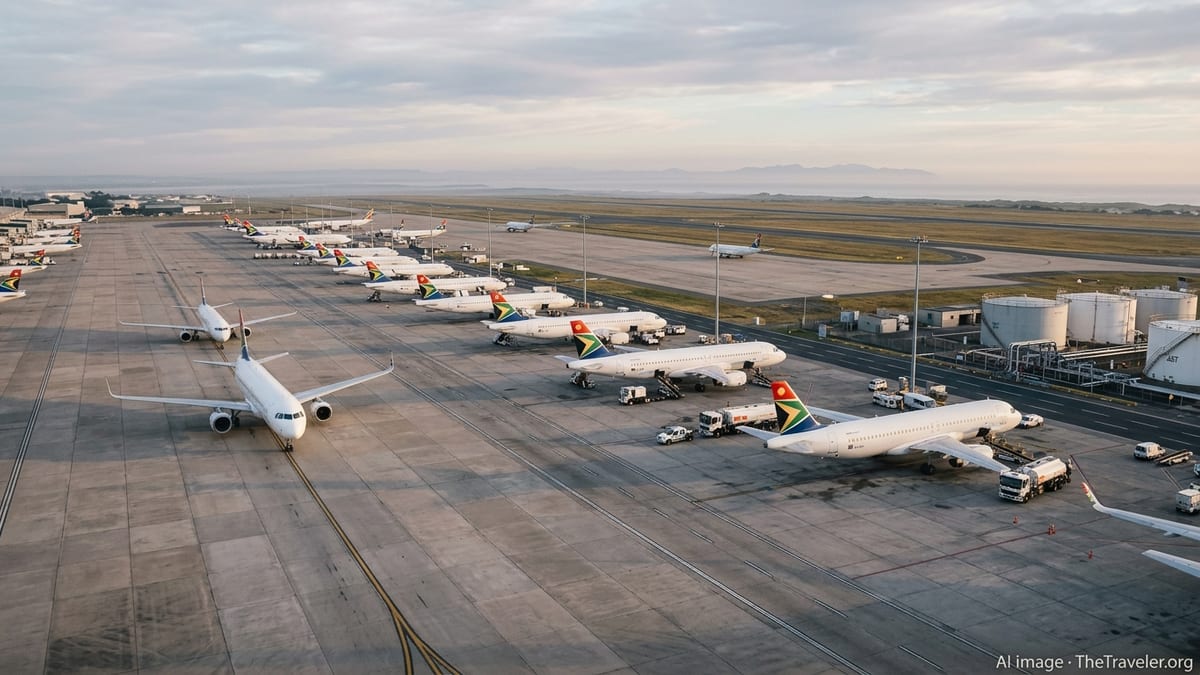
The latest global turmoil is feeding directly into South African jet fuel bills. Recent regional coverage reports that Jet A1 prices at coastal airports have jumped by roughly 70 percent in the space of a single week, a surge attributed to the Middle East crisis and the knock-on impact on seaborne oil supplies. Coastal hubs such as Cape Town and Durban rely heavily on imported product, leaving airlines particularly exposed when freight rates and cargo insurance premiums climb alongside crude.
Low-cost carrier FlySafair, the country’s largest domestic airline by frequency, has already begun passing a portion of these higher fuel costs on to passengers. According to published reports, the airline has raised ticket prices on selected routes, arguing that the steep and sudden rise in jet fuel prices cannot be absorbed without risking long-term sustainability. Other carriers, including South African Airways, have indicated that fare adjustments are likely as they recalibrate budgets for the months ahead.
For travellers, the immediate effect is creeping airfares on popular domestic and regional routes, particularly those served from coastal gateways. Aviation analysts quoted in recent coverage say that while competition may limit the scale of near-term increases, sustained fuel inflation typically feeds through to ticket prices over time, especially in markets where fuel makes up a high share of operating costs.
Local Refinery Setbacks and Structural Supply Fragilities
External shocks are colliding with local bottlenecks in South Africa’s fuel infrastructure. In early 2025, a fire at the Natref refinery, one of the country’s key suppliers of aviation fuel, forced an extended shutdown of critical units and raised the risk of shortages at Johannesburg’s OR Tambo International Airport. Public statements at the time from airport and industry stakeholders described a scenario in which on-site stocks could have covered only about a week of demand without urgent intervention.
Airports Company South Africa and fuel industry bodies responded by accelerating imports through the port of Durban and coordinating rail and pipeline logistics to move product inland. Government communications and subsequent media coverage indicate that more than 100 million litres of jet fuel were earmarked for import to stabilise supply to Gauteng, averting widespread flight cancellations but at the cost of extra transport and storage expenses.
These episodes have exposed the structural fragilities of South Africa’s jet fuel supply chain, from aging refinery infrastructure to dependence on a limited number of import routes. Industry reports highlight that OR Tambo alone consumes several million litres of jet fuel per day, leaving little margin when a major refinery or pipeline goes offline. Even when outright shortages are avoided, the additional logistics required to reroute fuel tend to push up the final cost per litre paid by airlines.
Recent annual reporting by regional airline associations also points to rising regulated pipeline and handling tariffs for jet fuel, which are ultimately passed through to carriers. Combined with higher international benchmark prices, these domestic charges have contributed to a notable increase in the average fuel price paid by South African airlines during the 2024–2025 financial year.
Ripple Effects on Airlines, Fares and Tourism Demand
The combined impact of global and local pressures is reshaping cost structures for South African carriers. Fuel is typically one of the largest single operating expenses for airlines, and industry data shows that a sustained rise in jet fuel prices can quickly erode margins, particularly for budget operators with thin profit buffers. To manage the current spike, airlines are weighing options ranging from selective fare increases to tighter capacity management and fuel-saving operational measures.
Publicly available financial commentary suggests that larger carriers may use limited hedging strategies to cushion short-term volatility, locking in fuel volumes at pre-agreed prices. However, not all South African airlines hedge, and even those that do are usually covered for only a portion of their needs. As a result, if elevated prices persist through the year, more widespread fare adjustments on both domestic and regional routes appear likely.
The tourism sector is watching developments closely. South Africa’s major tourist gateways, including Cape Town and Johannesburg, rely heavily on affordable regional and long-haul air links to sustain visitor arrivals. Higher jet fuel costs and the possibility of longer routings to avoid conflict zones on certain intercontinental flights risk pushing up total travel costs for inbound tourists. Travel industry observers warn that price-sensitive leisure travellers might shorten stays, opt for alternative destinations, or shift to shoulder seasons if airfares remain high.
At the same time, there are concerns about knock-on effects for business travel and regional connectivity across southern Africa, particularly on thinner routes where higher operating costs could make services marginal. Any reduction in frequencies or capacity would challenge efforts to deepen trade and tourism ties at a time when policymakers are promoting intra-African travel as a growth driver.
Search for Long-Term Resilience and Alternative Fuels
Against this backdrop, South African industry bodies and policymakers are revisiting long-term strategies to reduce vulnerability to imported fossil-based jet fuel. Recent technical papers and association reports describe growing interest in developing local production of sustainable aviation fuel, using domestic feedstocks such as agricultural residues or municipal waste. Analysts caution, however, that current estimates place the cost of producing advanced SAF well above conventional jet fuel, at least in the near term.
Regulatory changes in key source markets for South African tourism, particularly in Europe, are also influencing the discussion. Mandates that require a minimum share of SAF in jet fuel uplifted at European airports are expected to raise airlines’ average fuel bill over the coming years, which could indirectly affect pricing on routes to and from South Africa even if the sustainable fuel is not produced locally.
Infrastructure upgrades are another piece of the resilience puzzle. Airport documentation and aviation industry coverage reference planned investments in additional jet fuel pipelines and storage capacity serving Johannesburg and Cape Town, including projects scheduled around 2025 and 2026. These expansions aim to diversify supply routes, reduce bottlenecks, and create more flexibility to respond when a refinery or shipping lane is disrupted.
For now, however, South African airlines remain heavily exposed to global energy markets and geopolitical risk. As conflicts reshape shipping patterns and push up oil benchmarks, the cost of jet fuel is likely to remain a key variable for the country’s aviation and tourism outlook, influencing everything from route economics to the affordability of a holiday flight along the Cape coast.