

More news on this day
As countries rewrite daylight saving rules, phones silently jump between time zones and travel apps misread local clocks, a new kind of disruption is stalking global tourism: time itself. From Middle East commuters finding their devices suddenly synced to Tehran time to rail passengers in the United States missing departures after wallet tickets showed incorrect schedules, a growing tangle of digital and political time-keeping is turning routine journeys into high-stakes guessing games about what hour it really is.
Get the latest news straight to your inbox!
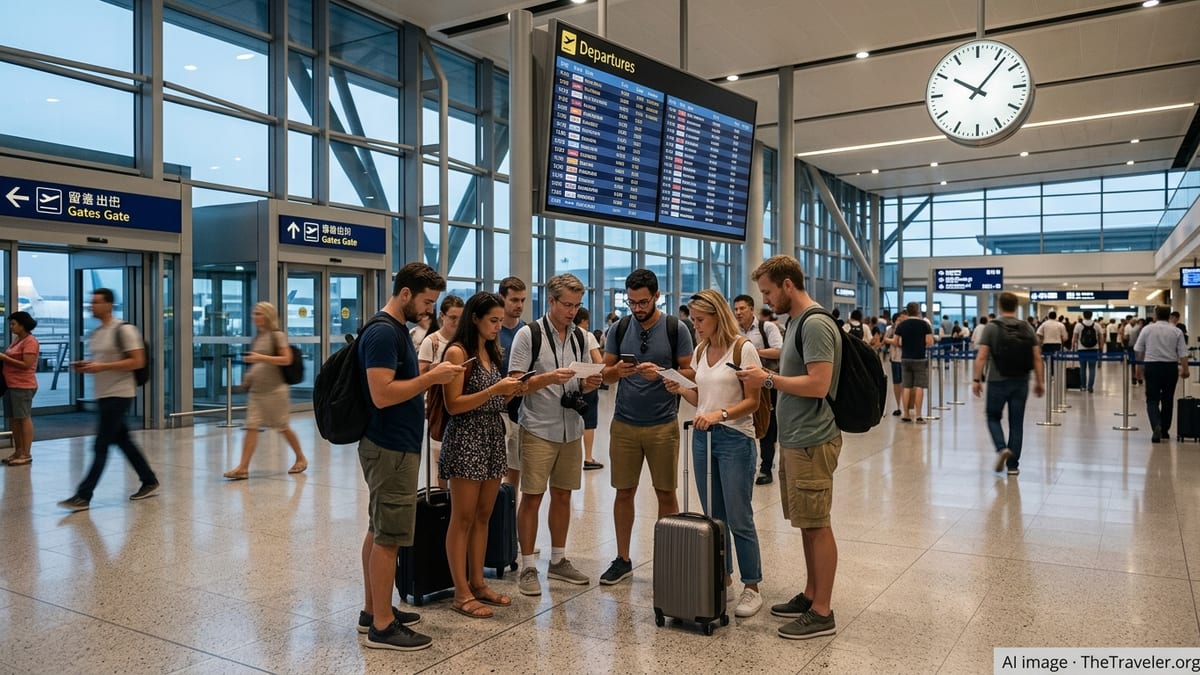
A Perfect Storm of Time Rules, Databases and Politics
Behind every departure board and booking app lies a complex web of time data that has to be constantly updated as governments redraw time zones and adjust daylight saving policies. The Internet Assigned Numbers Authority’s time zone database, widely used by operating systems and travel platforms, released its latest update in March 2026 to reflect recent political changes to local time rules. Publicly available technical notes describe how these changes can alter UTC offsets and daylight saving transitions for entire regions with just a few weeks’ notice.
When countries move time zone boundaries or cancel seasonal clock changes, every system that calculates local time has to be updated in lockstep. If one part of the chain lags behind, the same flight or train can appear to leave at different hours depending on which device a traveler checks. Industry analyses warn that booking engines, calendar tools and airline apps may interpret outdated time zone data differently, creating phantom overlaps or gaps in itineraries that do not exist in reality.
Technology blogs and software documentation stress that many consumer apps still store times as simple local clock readings rather than linking them to an authoritative time zone record. When those underlying rules change, the app can no longer reliably translate a “16:00” departure into the correct moment in real time. The result is a subtle but serious risk: itineraries that look fine on screen yet are offset by an hour or more once travelers are on the move.
For tourism, where connections are often tight and delays ripple quickly, such discrepancies can cascade into missed flights, forfeited hotel nights and rebooked tours, even when the original ticket itself remained valid all along.
Smartphones and Travel Apps: Convenience With Hidden Traps
Modern travelers increasingly rely on phones and wearables as their primary clocks, expecting them to adjust seamlessly to local time. Yet user reports from device support forums and travel communities show that automatic time zone detection can fail or produce inconsistent results, especially near borders or during daylight saving transitions. Accounts from North America and the Middle East describe devices jumping to a neighboring country’s time zone without warning, leaving alarms, calendar events and transit departures misaligned with reality.
Travel itinerary apps introduce another layer of complexity. Technical explainers from software providers highlight recurring problems when flight times are stored without explicit time zone information or when data from airlines is imported inconsistently. In these scenarios, an itinerary that was correct when booked in one country can appear shifted when opened later from a different time zone, showing departures on the wrong day or compressing layovers that are, in fact, several hours long.
Rail and airline passengers have also shared recent incidents in which digital tickets stored in mobile wallets displayed outdated or incorrect departure times. In at least one widely discussed case involving a U.S. rail operator, a traveler reported missing a train after trusting a wallet pass that did not match the operator’s own schedule display at the station. Commenters speculated that a daylight saving adjustment or back-end time zone logic was to blame.
These episodes underscore a growing disconnect: while transport providers typically schedule services correctly in their core systems, the ecosystem of connected apps, widgets and notifications that travelers see every day can fall out of sync, especially when software glitches collide with evolving time rules.
Daylight Saving Switches and the Science of Jet Lag
Daylight saving time has long been criticized for complicating daily life, and travel magnifies those effects. Reference material on daylight saving practices notes that seasonal clock changes regularly disrupt transport timetables, meeting schedules and digital records, sometimes at significant cost. When a flight or overnight train crosses a border in the hours around a clock change, even professionals can struggle to describe the journey without confusion.
At the same time, crossing multiple time zones induces jet lag, a physiological condition in which the body’s internal clock falls out of sync with local time. Scientific summaries describe how travelers experience daylight and darkness at odd hours, disrupting sleep, mood and alertness. This biological lag can make it even harder for passengers to spot timing inconsistencies in their itineraries, particularly during the first days after arrival when concentration is already impaired.
Specialized jet lag and sleep-planning apps promise to solve part of this problem by giving users step-by-step schedules for light exposure, naps and caffeine. Yet app reviews and expert comparisons caution that such tools are only as accurate as the flight and time zone data they ingest. If an underlying departure time is off by an hour, the guidance on when to sleep or seek bright light may push a traveler’s body clock in the wrong direction, prolonging jet lag rather than easing it.
For destinations positioning themselves as long-haul getaways, this interplay between clock changes, digital schedules and human biology is becoming a strategic concern. A vacation that begins with missed transfers and amplified jet lag can sour perceptions of a place before visitors even see the city center or beach.
GPS Jamming, Spoofed Time and Regional Hotspots
Time zone confusion is not only a matter of software design or government decrees. Interference with satellite signals is emerging as another factor that can warp local clocks and navigation. Investigations by technology outlets have documented waves of GPS jamming and spoofing in regions of political tension, where devices suddenly report locations dozens or hundreds of kilometers away from their true position.
Coverage from the Middle East and eastern Europe has highlighted cases in which phones began reporting locations inside neighboring countries, automatically switching to the corresponding local time. In some documented incidents, commuters and travelers found their devices aligned with foreign time zones despite never crossing a border, introducing the risk of showing up early or late for departures that still followed the correct local schedule.
Security researchers presenting at technical conferences warn that many consumer devices treat satellite signals as trustworthy by default. When those signals are distorted, location and time can shift together, and everyday apps from ride-hailing services to digital boarding passes inherit the wrong assumptions. While aviation authorities and commercial airlines use additional safeguards and dedicated systems, individual tourists navigating by phone remain exposed to these distortions on the ground.
Tourism boards in affected regions have begun publishing general advisories about potential GPS anomalies, encouraging visitors to verify key times directly with transport operators and not rely solely on a single smartphone or navigation app when planning tight transfers.
What Travelers Can Do Before the Next Departure
As the technical and geopolitical landscape grows more complex, publicly available consumer guidance increasingly emphasizes redundancy and verification. Travel industry explainers on itinerary conflicts recommend checking that departure and arrival times in booking confirmations are clearly labeled with their local time zones, and cross-referencing those against carrier schedules close to departure. Analysts note that the risk is greatest when connecting services operated by different companies or booked through third parties, where each system may interpret time data differently.
Digital security and software experts urge travelers to treat automated time updates and travel apps as helpful tools rather than single sources of truth. One recurring recommendation is to confirm at least one critical event, such as a long-haul departure or a final connection of the day, against an independent reference like an airport’s official schedule display or a recent confirmation message from the carrier. If times differ, passengers are advised to assume that the system tied most closely to the actual operation of the service is more likely to be correct.
Device support communities also suggest practical steps: disabling experimental time features when abroad, avoiding manual “time travel” adjustments on phones that can confuse apps, and being especially cautious around the days when daylight saving rules change in either the origin or destination. Some users report success with setting backup alarms on simple, non-connected clocks when a morning departure falls in the hours immediately after a scheduled clock change.
For now, global travel is entering a period where the reliability of time can no longer be taken for granted. With governments altering time rules, software makers racing to keep databases current and new forms of signal interference appearing in key transit corridors, a few extra checks on what the clock says may spell the difference between a seamless connection and a dream holiday that unravels on the airport concourse.