

More news on this day
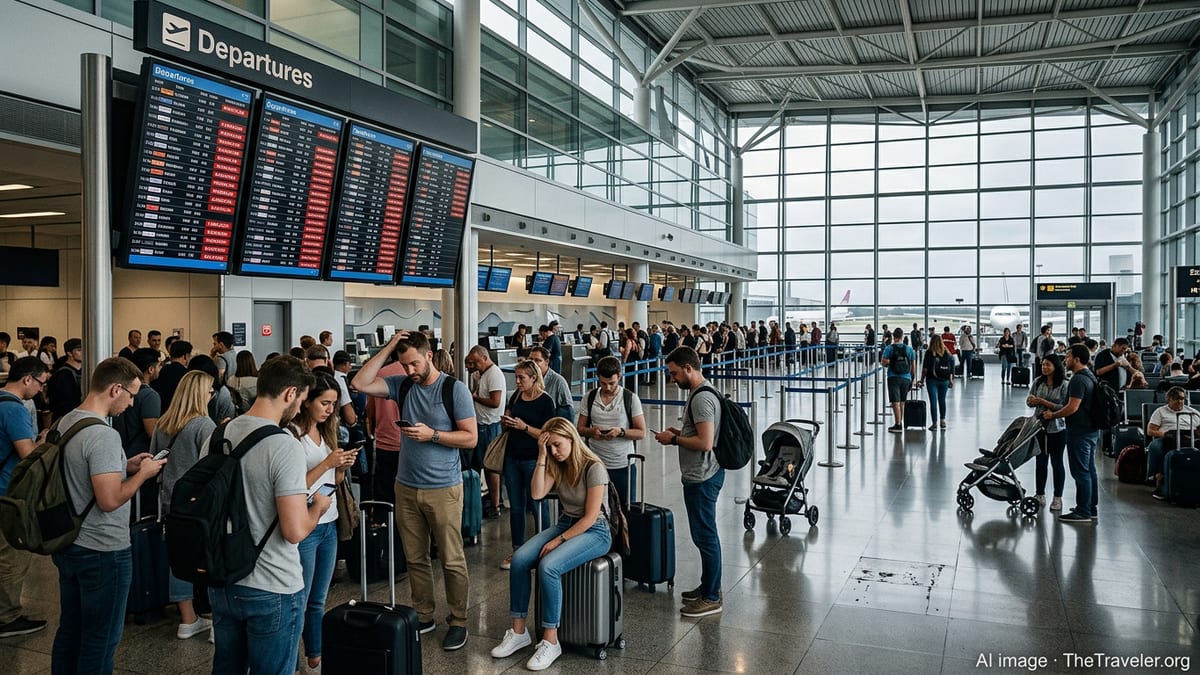
Global tourism is entering 2026 in a paradoxical state: international travel volumes are setting records, yet rising costs and recurring waves of flight cancellations are straining airlines, frustrating passengers, and forcing destinations to rethink how they attract visitors.
Get the latest news straight to your inbox!
Record Demand Collides With Higher Prices
International tourism has surged past pre-pandemic levels, with UN tourism data showing that global arrivals in 2025 were several percentage points above 2019 and momentum carrying into early 2026. Airlines, backed by forecasts from industry bodies, expect more than 5 billion passengers to fly this year, underscoring the strength of pent-up demand for leisure and business travel alike.
That rebound comes with a growing price tag. Industry analyses for 2025 and 2026 point to average ticket prices that remain above pre-COVID norms, especially on long-haul and premium routes. While some markets are seeing mild fare corrections after steep increases in 2022 and 2023, business travel forecasts still show incremental price rises through 2026 in North America and parts of Europe, driven by strong demand, limited capacity growth, and structural cost pressures.
Travelers are feeling the squeeze most acutely on intercontinental routes. Recent data from airfare trackers highlight that flights linking Asia with Europe and Australia remain among the most expensive, as airlines route around closed airspace and absorb longer flight times. For families planning multi-stop trips, these increases can add thousands of dollars to a single holiday, prompting many to shorten itineraries, shift to shoulder seasons, or trade flagship destinations for cheaper alternatives.
Yet despite high prices, surveys of consumer sentiment indicate that many travelers are unwilling to give up international travel entirely. Instead, they are cutting back elsewhere: downgrading hotel categories, shortening stays, or focusing spending on one marquee experience rather than multiple smaller outings.
Fuel, Sustainability and the Cost of Keeping Planes in the Air
Rising operating costs lie at the heart of the 2026 travel affordability crunch. Jet fuel remains one of the most volatile elements in airline budgets, and a recent spike in aviation fuel prices, particularly on routes affected by geopolitical tensions and airspace closures, has intensified pressure on carriers. Some analyses show fuel costs on key Asia–Europe sectors roughly doubling compared with earlier baselines, driving extraordinary fare increases on certain city pairs.
At the same time, airlines are being pushed to accelerate their energy transition. Sustainable aviation fuel, which still trades at a substantial premium to conventional jet fuel, is slowly scaling up but adds hundreds of millions of dollars in extra costs industry-wide. While governments in Europe, North America and parts of Asia are introducing mandates and incentives to support cleaner aviation, much of the immediate financial burden is filtering through to ticket prices.
Supply chain disruptions are compounding the challenge. Aircraft delivery delays, shortages of critical spare parts, and older fleets staying in service longer than planned have driven up maintenance and leasing expenses. Industry economic outlooks published in late 2025 note that average fleet ages have crept higher, while airlines resort to using larger aircraft on some routes than demand strictly justifies, undermining efficiency and keeping unit costs elevated.
The result is a fundamental tension: global carriers are forecasting healthy profits for 2026, yet their cost base remains structurally higher than a decade ago. Executives insist that continued investment in fuel-efficient jets, digital systems and decarbonization is essential, but for now, passengers are helping foot the bill.
Staffing Turmoil and Operational Shocks Drive Cancellations
Even as travelers pay more, they are not necessarily getting more reliable service. After a series of headline-grabbing disruptions in 2025, operational resilience is emerging as one of the biggest concerns for 2026. Government shutdowns, winter storms, infrastructure maintenance and staffing shortfalls have combined to trigger rolling waves of delays and cancellations across key hubs.
In the United States, a prolonged federal government shutdown in late 2025 forced the Federal Aviation Administration to temporarily cut air traffic by around 10 percent in dozens of major markets. That decision, taken to relieve pressure on overworked air traffic controllers, led to thousands of cancellations and knock-on disruptions at airports from Newark to Chicago and Philadelphia. Travelers were urged by some carriers to buy backup tickets, highlighting how fragile the system had become.
Elsewhere, airlines have been hit by labor disputes and regulatory changes. In Canada, a strike by flight attendants at the country’s largest carrier in August 2025 led to thousands of canceled flights and left well over 100,000 passengers scrambling to rebook. In India, a late-2025 scheduling crisis at the nation’s biggest airline, triggered by new crew duty rules, saw domestic operations unravel during peak wedding season, with more than a thousand flights scrapped in a matter of days.
Severe weather remains a recurring wild card. Successive winter storms in North America during early and late 2025 forced mass cancellations across multiple airlines, with some days seeing nearly one in five flights disrupted. Industry analysts warn that climate-driven extremes, from heat waves affecting runway performance to storms battering coastal hubs, are likely to increase the frequency of such shocks in the coming years.
Destinations and Travelers Adapt to a More Volatile Market
For tourism-dependent economies, the combination of higher costs and operational volatility is both a risk and an opportunity. Mediterranean and Middle Eastern destinations that benefited from strong demand in 2024 and 2025 are now working to protect their competitiveness through targeted subsidies, flexible booking policies and marketing campaigns that emphasize value rather than low headline prices.
Some long-haul destinations in Asia and the Pacific, where fares have risen fastest, are pivoting toward high-spend segments such as sports tourism, wellness retreats and major events, betting that travelers who do make the journey will stay longer and spend more. Others are putting greater emphasis on regional and domestic markets, hoping that shorter, cheaper flights within the same time zone can partially offset any slowdown in arrivals from Europe or North America.
Travelers, too, are changing their behavior. Online search data for 2026 indicate a shift toward secondary cities, off-peak months and alternative airports, as consumers seek better deals and more reliable schedules. Travel insurers report increased uptake of policies that specifically cover disruptions linked to strikes, air traffic control issues and extreme weather, reflecting growing anxiety about getting stranded en route.
At the same time, many travelers are building more slack into their itineraries, adding buffer days before major events or cruises and avoiding tight connections through historically congested hubs. While this approach adds to the total cost of a trip, it is increasingly seen as a necessary hedge in an unpredictable system.
Can 2026 Be the Year of More Resilient Travel?
Industry bodies and regulators argue that 2026 could mark a turning point, if the lessons of recent crises are acted upon. In early March, new data from the International Air Transport Association showed global passenger demand up nearly 4 percent year-on-year, but also highlighted persistent cost pressures from infrastructure charges, regulatory burdens and the energy transition. The group has urged governments to invest in modernizing air traffic control, streamline airport fee structures and provide clearer policy frameworks for sustainable fuel production.
Some reforms are already under way. Airport authorities in North America and Europe have begun revising slot rules and coordination procedures to cut back on unrealistic scheduling that leaves no margin for disruption. Several carriers are rethinking their network strategies, trimming marginal routes and focusing on improving on-time performance at a smaller set of core hubs.
For now, the reality for travelers is a complex mix: unprecedented choice in destinations, airlines forecasting record revenues, but an ecosystem under strain from costs, climate and capacity limits. The defining question for global tourism in 2026 is whether the industry can translate this demand boom into a more resilient, predictable travel experience, rather than allowing higher prices and recurring cancellations to erode public trust.