

More news on this day
Global tourism entered 2026 at record volumes but under growing strain, as stubbornly high travel costs, fresh waves of flight cancellations and geopolitical tensions collide with still-robust demand for holidays and business trips.
Get the latest news straight to your inbox!
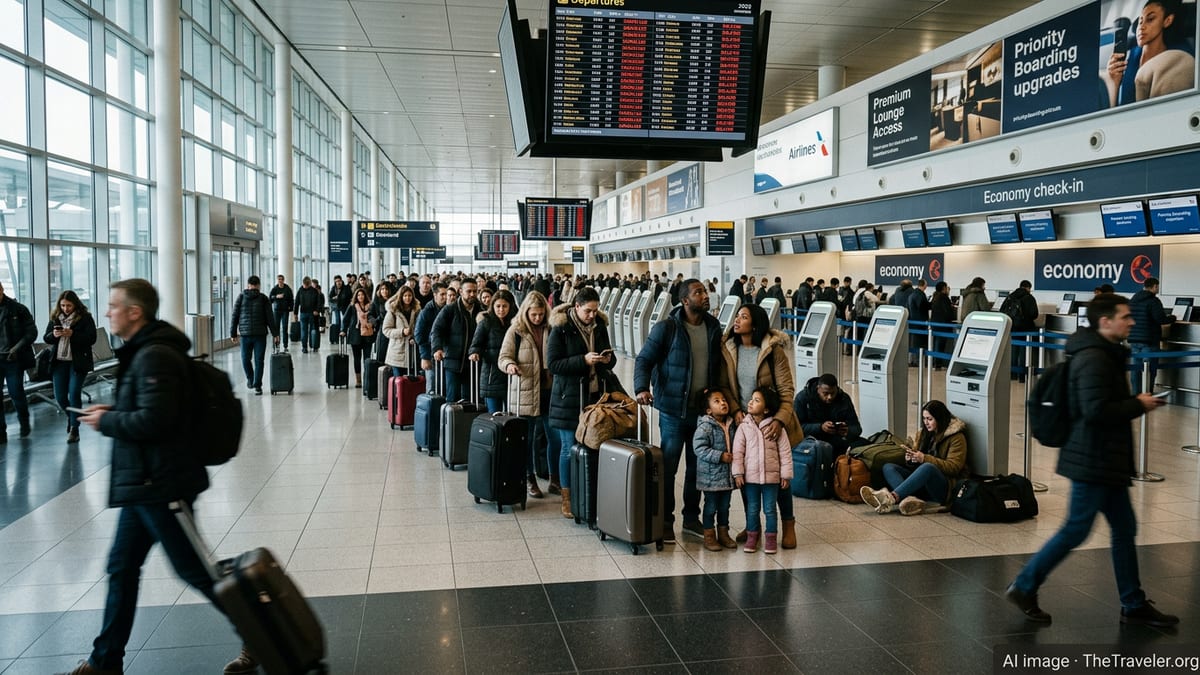
Record Demand Meets a New Cost Squeeze
International tourism is starting 2026 from a position of apparent strength. UN Tourism estimates that global arrivals reached roughly 1.52 billion in 2025, surpassing pre-pandemic levels and extending a rapid rebound in travel. Airlines and hotels reported strong revenues, and tourism’s share of global economic output is on track to match or exceed its 2019 peak. Yet behind the headline numbers, travellers and industry executives describe an environment where every trip feels more expensive, and every budget more stretched.
Air travel remains the biggest single pressure point for many consumers. Industry forecasts from associations and major travel management companies point to modest headline changes in average ticket prices this year, with some expecting flat or even slightly lower airfares in real terms. But the picture on the ground is more complex: the cost of premium cabins, last-minute bookings and peak-season seats continues to climb, while fees for baggage, seat selection and schedule changes have become entrenched. For many families and small businesses, the all-in price of flying in 2026 is higher than the pre-pandemic norm, especially once inflation in other parts of the trip is factored in.
Rising hotel rates are compounding the squeeze. A 2026 outlook from one global travel management firm projects accommodation prices to rise by roughly 2 to 4 percent worldwide this year, on top of steep increases since borders reopened. Urban centres and resort destinations where supply remains tight are seeing the sharpest gains. Corporate travel buyers report that negotiated rates deliver less value than before, while leisure travellers are trading down in star category or shortening stays to keep trips affordable.
Underlying these price dynamics are structural cost pressures that show little sign of easing. Airlines face persistently high labour costs, as carriers have had to raise wages to recruit and retain pilots, cabin crew and ground staff in tight job markets. Sustainable aviation fuel, central to governments’ emissions-reduction strategies, remains several times more expensive than conventional jet fuel, adding billions to industry costs even as crude oil prices moderate. At the same time, airport charges, navigation fees and regulatory compliance costs are edging upward in many markets.
Flight Cancellations and Operational Turbulence
Alongside higher prices, reliability has emerged as a defining concern for travellers in 2026. Data from aviation consultancies tracking global operations show that cancellation and delay rates, while lower than during the chaotic reopening period of 2022, remain elevated in several key regions. Seasonal spikes linked to weather events, industrial action and air-traffic control bottlenecks continue to ripple through airline networks, routinely upending travel plans.
Europe remains a focal point for disruption. In 2025, Eurocontrol warned of persistent delays driven by staffing shortages and congested airspace, and early 2026 traffic patterns suggest many of those constraints remain. Airport worker strikes and air traffic control slowdowns periodically force carriers to cancel thousands of flights, particularly during school holidays and peak summer weekends. Travellers face long queues, missed connections and uncertainty, with compensation rules guaranteeing some redress but not restoring lost time.
In Asia, isolated crises have highlighted the fragility of regional connectivity. A major scheduling breakdown at India’s largest carrier in late 2025 led to the cancellation of thousands of flights and prompted regulators to intervene, underscoring how quickly operational stress can cascade when airlines run near capacity. At the same time, a diplomatic dispute between China and Japan has triggered large-scale cancellations of tickets on routes between the two countries, with analysts estimating multi-billion-dollar losses in visitor spending if the boycott extends further into 2026.
North America is wrestling with its own reliability challenges. The United States saw significant delays during the federal government shutdown in late 2025, when staffing gaps at key air traffic control facilities forced ground stops and lengthy hold times at major hubs. While operations have largely normalised since funding was restored, airlines and regulators acknowledge that the system has little slack. Any new shock, from severe storms to industrial disputes, risks renewed waves of cancellations as carriers struggle to recover tightly scheduled networks.
Uneven Impacts Across Regions and Travellers
The combined effects of rising costs and operational uncertainty are not being felt evenly. In high-income markets, pent-up desire to travel, high employment and accumulated savings have so far sustained demand. Many travellers are absorbing higher prices or reallocating spending from other categories to maintain their holiday and business travel plans. But in emerging economies, where household budgets are more constrained and airfares account for a larger share of income, even modest price increases can put international trips out of reach.
Industry outlooks for 2026 stress that price sensitivity is especially acute in parts of Africa, South Asia and Latin America. There, low per-capita incomes and weaker currencies make foreign travel highly responsive to cost changes. Airlines serving these regions report slower growth in discretionary travel and a tilt toward visiting friends and relatives, a segment that tends to book far in advance and fly in lower-yield cabins. That dynamic threatens to slow the broader integration of emerging markets into global tourism flows.
The squeeze is also reshaping behaviour within wealthier economies. Surveys of European and North American consumers show travellers cutting back on frequency rather than abandoning trips altogether, opting for one longer holiday instead of several short breaks. Others are staying closer to home, swapping long-haul flights for regional destinations reachable by car or train. Some are delaying bookings in hopes of last-minute deals, only to discover that capacity constraints and strong demand leave little room for discounting.
Business travel is in a delicate balance. Research from global business travel associations and investment banks indicates that corporate trips are projected to grow again in 2026, with many companies budgeting for higher volumes and acknowledging the continued value of in-person meetings. Yet cost control ranks as the top concern for travel managers, who face airfares and hotel rates expected to climb by low single digits this year. Companies are tightening approval processes for premium cabins, encouraging virtual meetings for internal gatherings and scrutinising itineraries for opportunities to combine multiple meetings into a single trip.
Geopolitics and Climate Policy Add New Risks
Beyond pure economics and operations, global tourism in 2026 is increasingly shaped by geopolitical tension and climate policy. Regional conflicts in parts of the Middle East and Eastern Europe have disrupted air corridors, forced rerouting and, in some cases, led to partial suspensions of flights. Freight and passenger carriers serving conflict-adjacent hubs report capacity constraints and schedule reductions, as safety concerns and insurance costs rise.
Diplomatic rifts are also altering traditional travel flows. The ongoing boycott of the United States by some Canadian travellers, sparked in 2025 by political disputes, has translated into double-digit declines in cross-border trips by air, with some Canadian tour operators reporting sharp drops in demand for U.S. packages. Similarly, the China–Japan dispute has chilled what had been one of Asia’s most important bilateral tourism corridors, hitting airlines, hotels and retailers that had banked on a full recovery of Chinese outbound travel.
Climate policy is an additional wildcard. While aviation bodies expect average fares to fall in inflation-adjusted terms over the long run, the near-term rollout of environmental taxes, emissions trading schemes and mandatory blending quotas for sustainable aviation fuel in Europe and parts of North America is adding incremental costs to tickets. Some destinations are weighing or expanding visitor taxes aimed at managing overtourism and funding local sustainability projects, drawing criticism from travel industry groups that warn of unintended consequences for affordability.
At the same time, climate-related disruptions themselves are mounting. More frequent extreme weather events are contributing to airport closures, route diversions and last-minute cancellations, complicating network planning and heightening the sense of uncertainty for travellers. Insurance providers report rising claims related to travel disruption, a trend that could feed back into higher premiums for consumers and businesses.
Industry Response: Flexibility, Technology and Tough Choices
Faced with these intertwined pressures, travel companies and destinations are racing to adapt. Airlines are investing in more flexible scheduling tools and artificial intelligence systems designed to predict and mitigate disruptions, from reallocating crews to preemptively rebooking passengers when storms threaten key hubs. Some carriers are adding slack into their timetables, trimming marginal routes and holding more aircraft in reserve to improve resilience, even at the cost of lower utilisation.
Hotels and destination marketing organisations, meanwhile, are shifting their messaging to emphasise value and certainty. Flexible booking policies, clear communication about local conditions and targeted discounts outside of peak periods are becoming standard tools. Tourism boards in regions heavily exposed to geopolitical risk are working to diversify their source markets, courting visitors from countries less directly affected by diplomatic disputes.
Technology platforms are seeking to bridge the gap between volatile operations and traveller expectations. Online travel agencies and corporate booking tools now highlight real-time reliability scores for routes and carriers, prioritise itineraries with longer connection buffers, and surface options that balance cost with reduced disruption risk. Travel management companies are advising corporate clients to budget more conservatively, build redundancy into critical trips and negotiate stronger protection clauses in airline and hotel contracts.
For travellers, the new reality of 2026 is a trade-off between the exhilaration of a world once again within reach and the frustration of higher prices and unpredictable journeys. For the global tourism industry, the challenge will be to protect hard-won gains in demand while addressing structural vulnerabilities that rising costs and flight cancellations have laid bare.