

More news on this day
The UK’s Foreign, Commonwealth and Development Office has sharply expanded its highest-level travel warnings across the Middle East in early March 2026, as a fast-escalating war involving Iran, Israel and the United States disrupts airspace, strands hundreds of thousands of passengers and forces tour operators to redraw their global maps.
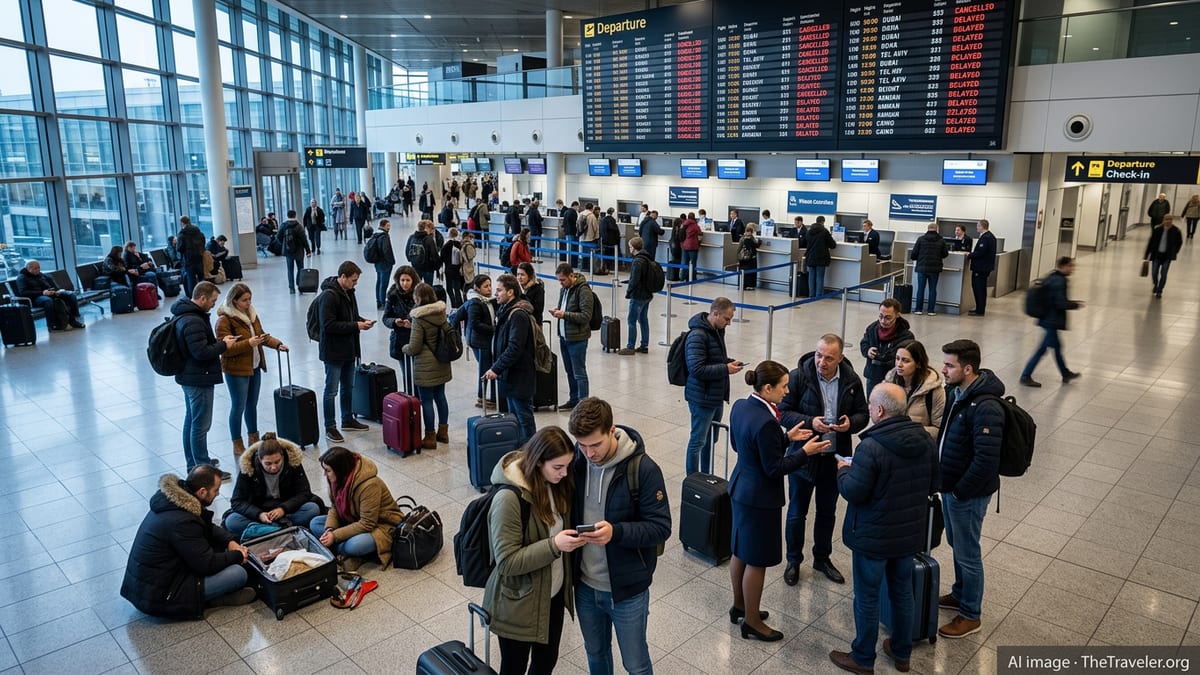
FCDO Tightens Advice as Conflict Spreads Across the Region
In the days following joint Israeli and United States strikes on Iran on 28 February 2026 and subsequent Iranian missile and drone attacks around the Gulf, the FCDO has moved several Middle Eastern destinations into its most severe risk categories. Updated advisories issued on 2 March now include explicit warnings against all travel to Iraq and expanded restrictions on neighboring states as the conflict widens.
Officials in London have framed the changes as a rapid response to a fluid security picture that now includes Iranian strikes on the United Arab Emirates, Hezbollah attacks on northern Israel and a declared resumption of Houthi threats against commercial shipping in the Red Sea. British consular staff across the region have been instructed to review evacuation plans and to communicate “shelter in place” guidance where airports and borders are closed.
The tougher language aligns the UK’s stance more closely with that of the United States, which this week urged its citizens to leave a broad swathe of the Middle East “immediately” using any available commercial options. While the systems and scales differ, both countries are now effectively treating much of the region as unsuitable for discretionary travel.
Travel industry analysts say the pace of change in advisories is unusually fast, with risk ratings for some destinations being revised twice within a matter of days. They warn that further escalations, particularly any direct confrontation involving Gulf energy infrastructure, could trigger another round of restrictions affecting millions of annual journeys.
Airspace Closures Leave Tourists and Transit Passengers Stranded
The sharpest shock for travelers has been the near-overnight disruption to air corridors that link Europe and North America with Asia and Africa through Gulf hubs. Following the first waves of strikes, countries including Israel, Qatar, Syria, Iran, Iraq, Kuwait and Bahrain temporarily closed their airspace, while the United Arab Emirates and Qatar imposed severe restrictions around key airports.
Major carriers such as Emirates, Qatar Airways and Etihad have cancelled or rerouted hundreds of flights since 28 February, with aviation trackers reporting effectively no normal operations over large parts of the region during peak alert periods. Analysts estimate that well over 300,000 passengers have been disrupted in less than a week, many of them long-haul transit travelers who never intended to enter the Middle East in the first place.
Airlines are scrambling to re-chart routes that avoid conflict zones, cutting through alternative corridors over Central Asia, North Africa or southern Europe. These diversions are adding significant time to journeys and sharply increasing fuel costs at a moment when oil prices are already climbing on war-related fears.
Industry consultants say travelers should brace for a sustained period of longer flight times, higher fares and sold-out routes on popular East–West connections. With certain Middle Eastern hubs off-limits or operating at reduced capacity, carriers in Europe and Asia are stepping in to capture displaced demand, further reshaping global traffic flows.
Red List Status Raises Insurance and Package Holiday Risks
For British holidaymakers and business travelers, the practical impact of an FCDO warning often extends far beyond the question of whether flights are operating. When a destination is placed in the “advise against all travel” or “advise against all but essential travel” category, most standard travel insurance policies become invalid for new trips, leaving would-be visitors without medical or cancellation cover.
Tour operators are also closely bound to FCDO guidance. Several UK-based adventure and group tour companies have already announced that departures to affected Middle Eastern destinations are suspended at least through mid-March, with further reviews scheduled if official advice does not ease. Some have begun offering fee-free rebooking to alternative destinations or later dates, while others are processing refunds in line with package travel regulations.
Insurance specialists warn that travelers who choose to ignore the FCDO’s red list status could face substantial financial exposure if they are caught up in violence, stranded by border closures or require emergency evacuation. A growing niche of specialist “high risk” policies is emerging, but premiums remain steep and coverage is tightly defined, often excluding war-related incidents altogether.
The expanding red list is also having a chilling effect on corporate itineraries and humanitarian work. Large multinationals with staff in the Gulf and Levant are activating duty-of-care protocols, reviewing security contractors and, in some cases, extracting non-essential personnel. Aid agencies, faced with both security and insurance hurdles, are warning that access to vulnerable communities may be further constrained.
Knock-on Effects for Nearby Destinations and Overland Routes
The security crisis is not confined to countries under direct bombardment. Neighboring states that were previously marketed as stable gateways to the wider region are now confronting spillover risks and shifting traveler perceptions. Some have seen their own advisories tightened as authorities weigh the possibility of cross-border attacks, demonstrations or cyber disruptions.
Tourism boards in parts of North Africa, the eastern Mediterranean and the Caucasus are monitoring developments closely, concerned that proximity alone could discourage visitors. In several cases, the FCDO has stopped short of a full travel warning but introduced more explicit language around terrorism threats, unrest near borders and the potential for sudden airspace closures.
Overland routes that once provided alternatives to air travel are also affected. Long-distance coach services and cross-border rail links through conflict-adjacent corridors are operating under heightened security or being suspended altogether when tensions spike. Backpackers and independent travelers following traditional “Silk Road” or Levant itineraries are being urged to build in greater flexibility and to prepare for last-minute detours.
Regional economists note that if the conflict and its associated travel restrictions persist into the peak summer season, the hit to tourism revenues could be severe for several economies already classed as fragile. Hotels, small tour operators and informal workers such as guides and drivers are particularly exposed to sudden drops in international arrivals.
What Travelers Should Do as the Situation Evolves
For now, travel experts stress that the most important step for anyone with existing bookings involving the Middle East is to stay closely informed. They advise checking FCDO country pages frequently, monitoring airline alerts and ensuring contact details are up to date with both carriers and tour operators so that rebooking options can be offered promptly if routes are disrupted.
Passengers currently in affected countries are being urged to register with consular services, follow local security instructions and identify multiple exit options where possible. In some cases, commercial flights are operating intermittently, allowing a narrow window for voluntary departure before any further deterioration.
Those planning future trips that transit through Gulf hubs are being told to consider alternative routings that avoid the most volatile zones, even if that means longer journeys or slightly higher upfront costs. Booking flexible or refundable tickets, scrutinising insurance wording for war and terrorism exclusions, and keeping essential documents and medications in cabin baggage are all being framed as prudent steps in an unusually uncertain environment.
With no clear timeline for de-escalation and the FCDO’s red list still evolving, the only constant for global travellers in early 2026 is volatility. For now, the expansion of the UK’s highest-level warnings underlines how deeply the latest Middle East crisis is reshaping not just regional security, but the very architecture of international travel.