

More news on this day
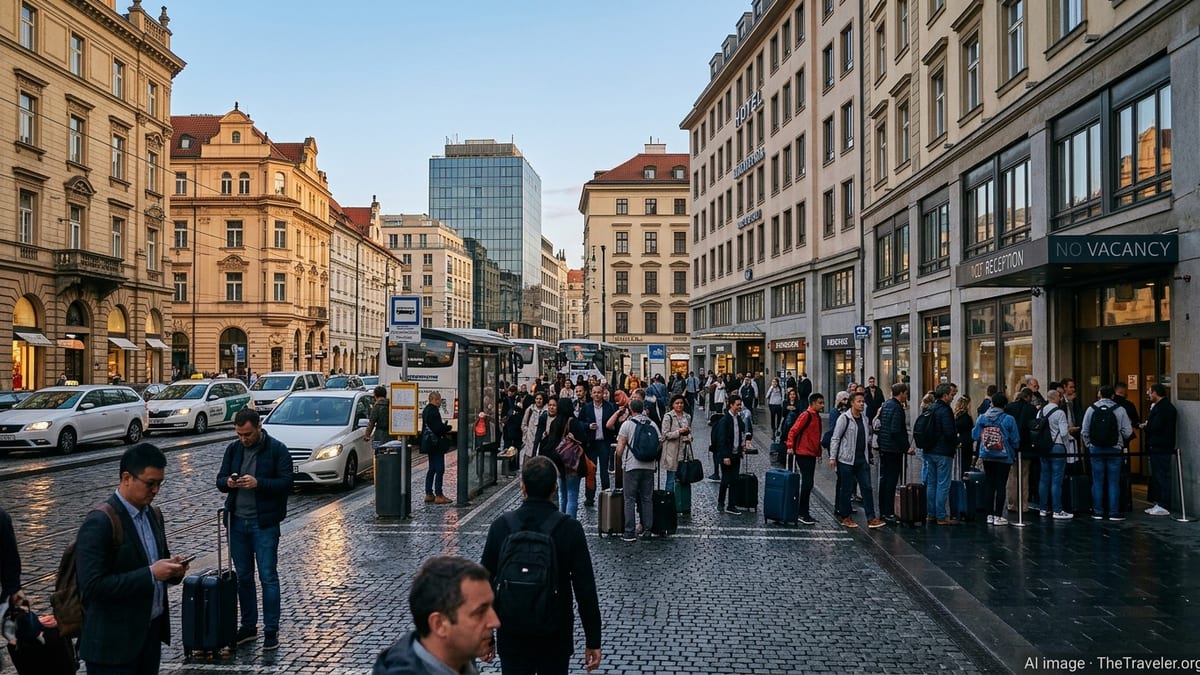
A powerful rebound in global travel is reshaping the 2026 tourism season, with record air passenger volumes in Europe, Asia and the United States colliding with limited hotel supply and pushing many destinations to the brink of a room shortage.
Get the latest news straight to your inbox!
Air Travel Surges Past Pre-Pandemic Benchmarks
Recent air traffic data points to a structural shift in global mobility rather than a short-lived rebound. Industry analysis for 2025 and early 2026 shows passenger demand growing faster than capacity, with load factors staying in the mid-80 percent range and aircraft operating close to full. Passenger traffic in 2024 was already estimated at roughly 9.4 billion journeys worldwide, and forecasts suggest another step up through 2025 and into 2026 as more routes are restored and new markets open.
Forecasts from international aviation bodies now project global passenger traffic growth of around 5 percent in 2026, on top of strong gains in 2024 and 2025. Revenue passenger kilometers are expected to stand comfortably above 2019 levels, while airline departures and seat supply struggle to keep pace with demand due to aircraft delivery bottlenecks and staffing constraints. With limited slack in the system, even modest spikes in demand around holidays, major events or school breaks are translating into very high load factors and compressed booking windows.
Airports in growth markets are reporting record or near-record throughput as the new year unfolds. Industry summaries highlight Asia Pacific’s return to the top of the capacity league tables, with the region slightly surpassing 2019 seat volumes by 2024 and adding more frequencies into 2025. In Australia, for example, Adelaide Airport reported its busiest international month on record in January 2026, with international passenger traffic up more than 20 percent year on year. Similar patterns are emerging in North American and European hubs, underscoring how far demand has raced ahead of pre-pandemic baselines.
While airlines welcome the revenue, the imbalance between rapidly rising passenger numbers and more modest capacity growth is cascading into other parts of the travel ecosystem, particularly hotels. High load factors and fuller planes are delivering more people into cities and resort regions that lack equivalent growth in room stock, sharpening competition for beds in peak periods.
Europe’s Record Tourism Nights Meet Tight Room Supply
Europe remains at the epicenter of the accommodation crunch. According to recent statistics from European institutions, 2025 was another record-setting year for the bloc’s tourism sector, with nearly 3.1 billion nights spent in tourist accommodation across the European Union. That figure represents a clear increase on 2024 and stands well above 2019 levels, confirming that visitor appetite for cities, coasts and countryside destinations has not only recovered but expanded.
National tourism agencies report that in key markets such as Italy, advance hotel bookings for the 2025 summer season were already close to saturation, with as many as eight out of ten rooms reserved for August months ahead of peak travel dates. Projections indicated that seaside, mountain and cultural destinations would reach at least 90 percent occupancy at the height of summer. France also registered another strong tourism year in 2024, with published coverage describing robust revenue growth per available room along the Côte d’Azur and Atlantic coast, even as smaller inland cities struggled to capture the same momentum.
New supply is coming, but not fast enough to absorb the surge. Industry pipeline reports indicate that Europe has hundreds of projects and roughly a quarter of a million additional hotel rooms planned or under construction through the mid-2020s. However, the pace of openings is constrained by labor shortages, higher financing costs and planning hurdles. At the same time, short-term rentals have expanded sharply, underscoring the scale of excess demand but also fueling political pressure in cities grappling with housing affordability.
This combination of record guest nights, slow hotel expansion and mounting local concerns about overtourism is leaving travelers exposed. Reports from southern European hotspots describe peak-season scenarios where visitors arriving on full flights find conventional hotels sold out, pushing them into higher-priced last-minute options, more distant suburbs or stays shortened for lack of availability.
Asia Pacific Rebound Strains Popular Hubs
Across Asia and the Pacific, a rapid rebound in both domestic and international travel is creating its own version of the squeeze. Capacity analysis from aviation data providers shows that the region surpassed its 2019 seat volumes by 2024, positioning Asia Pacific as the world’s most competitive aviation market by 2025. As border restrictions eased and long-haul links were restored, outbound travel from major markets such as China, India and South Korea accelerated, while inbound tourism from Europe and North America rebounded in parallel.
Forecasts for the next several years suggest that Asia Pacific outbound tourism will grow at two to three times the rate of many Western markets through 2026 and beyond. That trajectory is already visible in rapidly rising searches and bookings for beach destinations in Vietnam, Thailand, Indonesia and the Philippines, as well as major city hubs such as Singapore, Tokyo and Seoul. Airlines are adding frequencies and widebody capacity where possible, but delivery delays and high capital costs are limiting how quickly the region can add seats.
The hotel sector, meanwhile, is still catching up after a period of curtailed investment and project delays during the pandemic years. In several Southeast Asian and Northeast Asian destinations, development pipelines are active but weighted towards upscale and luxury projects that take years to complete. In the short term, this means popular islands and heritage cities are entering the 2026 peak season with room inventories that were sized for pre-pandemic demand, even as visitor numbers climb well beyond that benchmark.
The result is an increasingly competitive booking environment. Travelers who once relied on flexible itineraries and late reservations are now finding far fewer options at reasonable prices, especially during festival weeks, public holidays and large-scale sporting or cultural events. In some destinations, the compression is driving up average daily rates, encouraging further investment but also amplifying concerns about affordability for regional travelers.
United States Faces Urban and Event-Driven Capacity Crunch
In the United States, the room squeeze is more uneven but equally visible in key markets. Major coastal gateways and event cities are seeing pronounced spikes in demand that persist beyond traditional high seasons. Industry forecasts for 2026 highlight a sharp rise in event-driven travel, with hotel search data showing strong interest around major sports tournaments, concerts and cultural gatherings scheduled across the country.
Domestic air travel has largely stabilized above 2019 levels, while international arrivals continue to rebuild. Large hubs serving leisure destinations, convention centers and cruise ports are reporting sustained growth in passenger throughput. However, some urban hotel markets saw construction paused or cancelled during the pandemic, leaving central districts with fewer new rooms than originally planned. At the same time, regulatory scrutiny of short-term rentals in some cities is limiting the ability of alternative accommodation to fully absorb surging demand.
US hotel development pipelines point to considerable new capacity over the medium term, but the lag between planning and opening, coupled with rising construction and financing costs, is slowing delivery. That lag is most evident in fast-growing Sun Belt cities, national park gateways and music or sports destinations where visitor numbers have soared but zoning or infrastructure constraints cap the speed of expansion.
For travelers, the impact is clearest in pricing and availability patterns. Reports indicate that average daily rates remain elevated in popular US leisure markets, with compression effects around major events pushing some visitors to outlying suburbs or neighboring cities. Budget-conscious travelers are increasingly adjusting trip dates, shortening stays or pivoting to secondary destinations when central hotels near venues, beaches or historic districts are fully booked.
Travelers Adapt as Industry Races to Add Capacity
The interaction between surging air demand and constrained hotel supply is reshaping traveler behavior heading into the 2026 peak seasons. Online travel platforms report that searches for alternative lodging formats and less crowded destinations are rising, as visitors look beyond traditional city centers and famous beach strips. Flexible work arrangements are also encouraging some travelers to avoid classic school holiday peaks, shifting trips into shoulder seasons in search of better availability and lower prices.
On the supply side, airports and airlines are pursuing incremental capacity gains through schedule optimization, additional frequencies and the deployment of larger aircraft on high-demand routes. New infrastructure, such as Western Sydney’s forthcoming international airport with an initial capacity of up to 10 million passengers annually, is expected to relieve pressure in specific markets, although most such projects will only deliver meaningful relief later in the decade.
Hotel groups and investors are racing to expand pipelines in Europe, Asia and North America, focusing on high-demand coastal corridors, major capitals and fast-growing secondary cities. However, rising interest rates, higher construction costs and debates over urban livability mean that development is unlikely to fully catch up with current demand in the near term. Short-term rentals and hybrid accommodation concepts are filling part of the gap, but they remain the subject of regulatory discussion in many jurisdictions.
As 2026 unfolds, the global travel boom is therefore delivering a mixed experience. For destinations and operators, it brings robust revenues and renewed employment, while for many tourists it translates into higher prices, earlier booking deadlines and fiercer competition for a finite number of beds. The industry’s challenge will be to balance this powerful resurgence in mobility with sustainable growth in infrastructure and accommodation that keeps travel accessible to a broad range of visitors.