

More news on this day
From blizzards and cyberattacks to staffing crunches and shutdown showdowns, a convergence of shocks in early 2026 is exposing just how fragile global travel systems have become, with experts warning that even routine trips are now far more vulnerable to disruption.
Get the latest news straight to your inbox!
Storms, Strikes and System Failures Collide
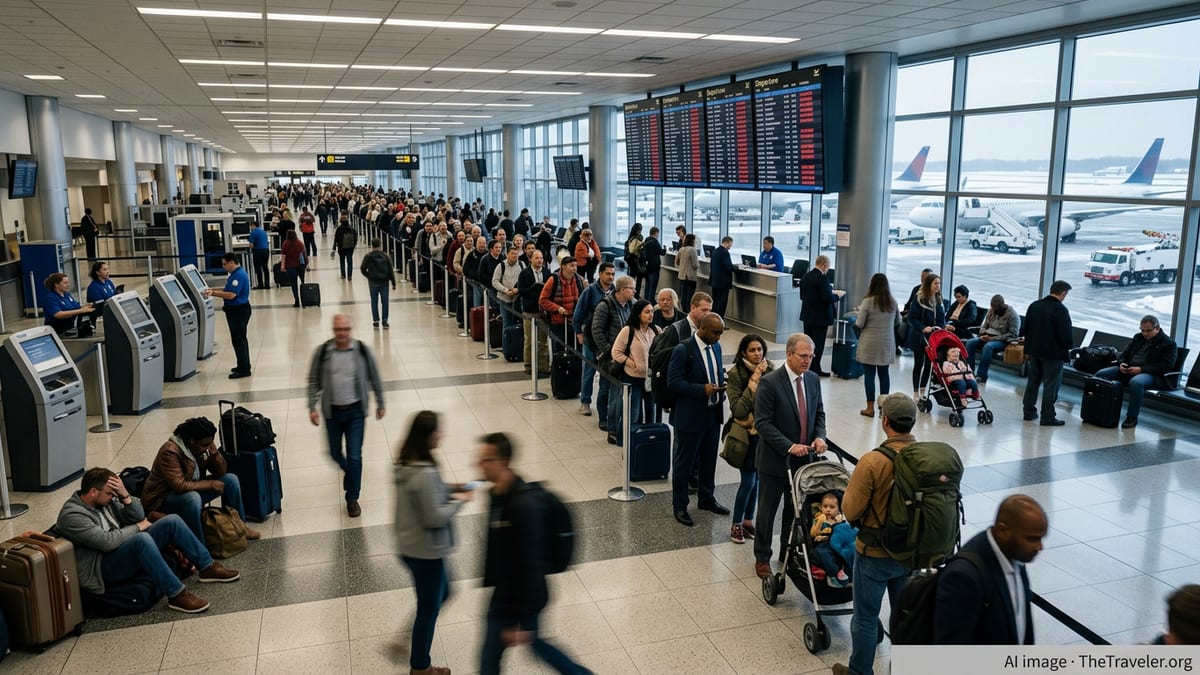
Airlines and rail operators in North America and Europe entered 2026 facing a packed schedule and increasingly unpredictable operating conditions. In late February, a historic blizzard widely described as the Blizzard of 2026 brought travel bans, airport shutdowns and widespread cancellations across the Northeastern United States, just weeks after a powerful bomb cyclone had already snarled flights in the Southeast. Published accounts describe thousands of flights canceled or delayed over several multi day periods as airports struggled with snow packed runways, fierce crosswinds and crews and passengers stranded out of position.
Across the Atlantic, winter has been equally unforgiving. In early January, severe weather linked to Storm Goretti led to rail suspensions and the cancellation of dozens of flights in northern Germany as snow and freezing rain shut down long distance trains and forced Hamburg Airport to scrap around 40 flights in a single day. Public information from European transport agencies and carriers indicates that weather related disruption is running higher than seasonal norms for the second year in a row.
Beyond the weather, industrial action continues to pile on pressure. Recent schedules compiled by travel analysts show coordinated strikes set to affect aviation in Italy, including air traffic control action in early March 2026, as well as nationwide strike activity in Belgium that is expected to hit Brussels Airport departures and connecting rail services. Travel advisory services warn that even travelers not directly flying through affected hubs could face knock on disruption as aircraft and crews are rotated through the wider European network.
Meanwhile, fragile aviation systems have been hit by technical failures. In January, a communications breakdown over Greece forced authorities to temporarily shut national airspace, grounding and diverting flights and leaving passengers stranded across the region. Just a few months earlier, a ransomware incident targeting a common check in and boarding system used by multiple European airports triggered days of disruption, with airports such as Brussels, Berlin and London Heathrow reverting to manual check in and handwriting boarding passes while hundreds of flights were delayed or canceled.
Government Shutdown Fears Rattle U.S. Travel
In the United States, the biggest threat to air travel reliability in 2026 may not be weather, but politics. After a record length federal funding lapse in late 2025 triggered significant holiday season delays, a new round of budget brinkmanship has revived fears of further disruption. Policy analyses note that during the 2025 shutdown, thousands of flights were delayed or canceled and the travel industry absorbed billions of dollars in economic losses as staffing strain hit screening lines and air traffic control facilities.
Travel trade groups and aviation observers are now tracking a partial shutdown in early 2026 that is affecting key parts of the federal system. Publicly available shutdown plans for the Federal Aviation Administration indicate that more than ten thousand staff could be furloughed in a prolonged lapse, with non safety functions such as training, modernization projects and some administrative oversight paused. Industry advocates argue that even when core safety roles continue, missed paychecks and uncertainty can fuel absenteeism and attrition, lengthening wait times and reducing flexibility when weather or technical incidents occur.
Homeland security briefings and congressional testimony in February and March 2026 have highlighted specific travel related vulnerabilities. Department of Homeland Security materials confirm that trusted traveler programs such as TSA PreCheck and Global Entry were temporarily suspended as part of shutdown contingency measures, eliminating expedited screening options for millions of frequent travelers. Aviation and security experts warn that if the shutdown extends toward peak summer travel, the combination of standard lanes only, fewer overtime hours and strained technology budgets could sharply increase airport wait times.
At the same time, travel industry groups have launched campaigns urging lawmakers to guarantee on time pay for Transportation Security Administration staff and air traffic controllers during any future funding lapses. Public statements from these coalitions point to the long queues and flight delays seen during the 2019 and 2025 shutdowns as evidence that even short gaps in funding can have an outsized impact on travel reliability.
Structural Weaknesses in Global Aviation Networks
The recent wave of disruptions is drawing attention to deeper structural weaknesses in global aviation. Data from the International Air Transport Association show that air traffic control related delays in Europe have more than doubled over the past decade, even though flight numbers have grown only modestly. Reports attribute much of this increase to chronic staffing shortages and repeated strike action by controllers in several countries, along with congested airspace and the lingering impact of conflict related airspace closures.
Eurocontrol’s latest European aviation overview for late February and early March 2026 points to continued growth in flight volumes alongside “significant operational disruption” linked to weather, military airspace constraints and infrastructure bottlenecks. Analysts note that when storms, strikes or technical failures occur at one major hub, the effects now propagate quickly across the network because airlines operate on tight schedules with limited spare capacity.
Cybersecurity has emerged as another fault line. The ransomware incident that hit a key passenger processing system in September 2025 demonstrated how a single software provider can become a critical point of failure for multiple airports and airlines. Subsequent European Union and industry briefings identified the attack as a ransomware operation targeting a common use platform that allows airlines to share check in desks and gates, underscoring how digitization and shared infrastructure, while efficient, can amplify risk when something goes wrong.
Regulators and aviation technology firms are exploring ways to build in more redundancy, including backup systems that are more clearly separated from primary networks and contingency plans that allow for rapid reconfiguration of passenger flows. Researchers are also developing advanced tools to help air traffic managers reroute aircraft around closed airspace or congested sectors, but these solutions will take time to deploy at scale.
Passport Backlogs and Documentation Pitfalls
Even before travelers reach the airport, documentation hurdles are adding to the sense of global travel chaos. Government auditors and travel advocacy organizations report that passport processing times in both North America and Europe remain elevated compared with pre pandemic norms. A review by the U.S. Government Accountability Office of the 2023 and 2024 surges found that routine passport processing averaged more than ten weeks at the peak of the backlog, with many travelers forced to cancel or rebook trips.
By early 2026, publicly available guidance from the U.S. State Department and press coverage indicate that processing times have improved, but demand has also risen again. New reporting from Washington suggests that passport applications are climbing as more travelers plan international trips and as some pandemic era extensions on identification documents expire. Travel industry experts warn that applications filed close to peak holiday periods are still at elevated risk of delays, particularly when combined with mailing issues or incomplete paperwork.
Similar patterns are appearing in Europe, where several governments are reporting heavier than expected renewal volumes heading into major events such as the 2026 World Cup and expanded summer tourism. In many cases, processing times are officially listed in the three to six week range, but consumer watchdogs continue to document outliers where applications take considerably longer, especially when additional security checks are required.
For travelers, the practical impact is that a missed passport renewal window or a minor application error can now cascade into major financial and logistical headaches. Travel insurers in multiple markets are beginning to clarify how policies treat government related documentation delays, and some are urging customers to build in wider margins between application dates and departure dates than they might have considered necessary in the past.
What Travelers Can Expect in the Months Ahead
Looking toward the Northern Hemisphere summer of 2026, most forecasters expect passenger numbers to continue climbing, driven by strong leisure demand and major sporting and cultural events. At the same time, there is little evidence that the underlying pressures on aviation and border systems will ease quickly. Air traffic control staffing remains tight in parts of Europe, cybersecurity hazards are growing more sophisticated, and the U.S. political calendar keeps the possibility of further funding standoffs in play.
Travel planning services and risk consultancies are advising clients to treat disruption not as an exception but as a baseline possibility. That shift is prompting a renewed focus on flexible tickets, longer connection times and more generous buffers between long haul arrivals and time sensitive events such as cruises or rail departures. Some corporate travel managers are also updating internal policies to discourage back to back meetings immediately after long flights, in recognition of how often schedules are now thrown off by factors beyond a traveler’s control.
For individual travelers, the latest wave of delays and cancellations reinforces a simple reality. In 2026, the vulnerability of global travel is no longer limited to sudden storms or isolated strikes. It now reflects a system under sustained strain from overlapping weather extremes, labor disputes, cyber risks, infrastructure bottlenecks, political standoffs and documentation bottlenecks. As those forces interact, even well planned trips can quickly become entangled in a web of disruptions that extend far beyond any single airline or airport.