

More news on this day
Global travel in 2026 is defined by a stark contrast: operational disruptions and capacity constraints on one side, and a powerful boom in high-end air, hotel and cruise demand on the other.
Get the latest news straight to your inbox!
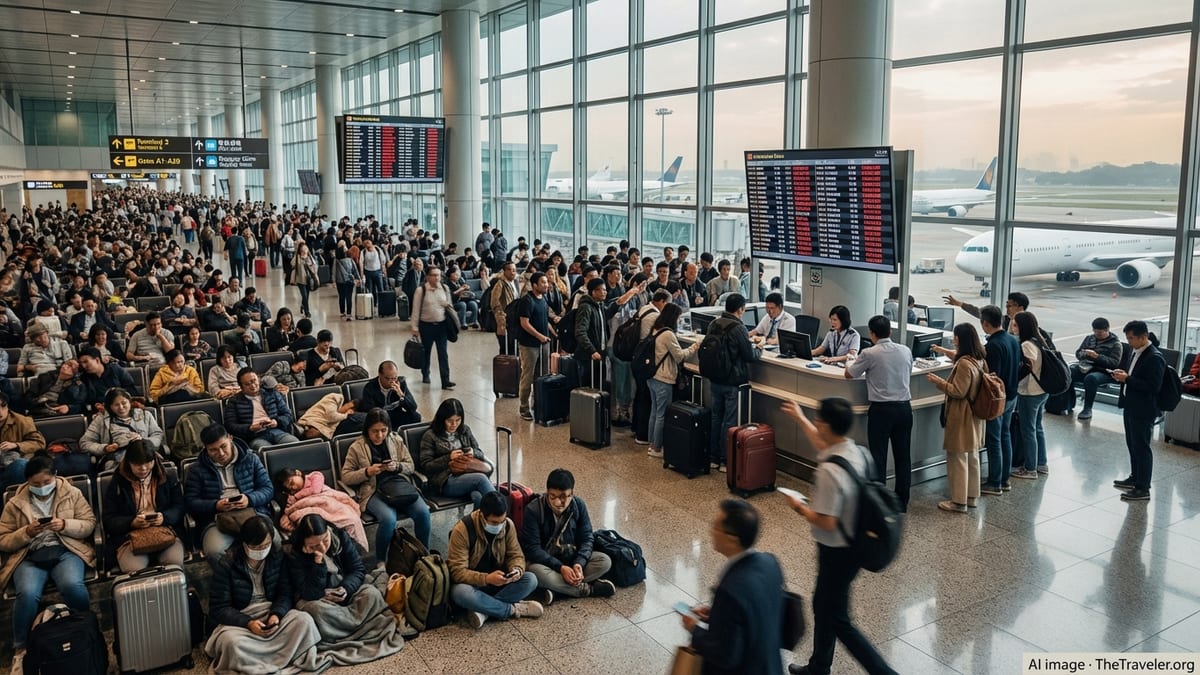
Airline Capacity Strains Meet Relentless Passenger Demand
Air travel demand is still climbing despite persistent operational challenges. Recent data from the International Air Transport Association shows global passenger traffic in February 2026 up just over 6 percent from a year earlier, extending a run of growth that began in 2024. Publicly available information indicates that leisure and visiting-friends-and-relatives trips remain the backbone of this expansion, helped by resilient labor markets and accumulated savings in major economies.
The problem for airlines is keeping up. Industry reports highlight ongoing shortages of new aircraft as manufacturers work through quality-control measures and regulatory scrutiny. Analysis from aviation consultancies notes that delivery delays for popular narrowbody jets are likely to stretch well into the second half of the decade, limiting the number of new seats entering the market even as demand holds strong.
Engine reliability issues are compounding the crunch. Carriers operating aircraft powered by Pratt & Whitney geared turbofan engines continue to keep portions of their fleets parked while inspections and repairs progress. Sector briefings suggest a full recovery of the affected fleet may not be reached until around 2030, with hundreds of aircraft projected to remain grounded through 2026. For travelers, the outcome is a tighter supply of seats on many short- and medium-haul routes, higher load factors and limited flexibility when disruptions occur.
Airlines, meanwhile, are using the constrained environment to protect yields. Corporate travel is returning more slowly, but passenger surveys show that many leisure travelers are prepared to pay more to secure preferred dates and routes. That willingness is particularly visible in the premium cabin, where capacity is growing faster than in economy.
Luxury Air Travel Outpaces the Rest of the Cabin
High-end air travel is emerging as one of the clearest winners of the current cycle. Industry features in business and consumer media describe a sharp rebound in demand for first and business class, as well as for new premium-economy products targeted at affluent leisure travelers. Airlines in North America, Europe and the Gulf are investing heavily in lie-flat business seats, private suites and dedicated premium lounges to capture this spending.
Travel data platforms and bank card analyses point to a marked divergence in travel budgets. Research highlighted in financial media indicates that the top income decile in the United States is expected to increase leisure-trip spending by more than 50 percent between 2022 and 2026, with the very wealthiest households planning multiple long-haul journeys per year and spending into the five figures per trip. Operators report that these travelers are increasingly seeking privacy, personalization and flexible booking terms, and are favoring nonstops even at noticeably higher fares.
Advisors surveyed by trade publications this spring report that overall booking volumes are mixed compared with 2025, but that luxury and ultra-luxury segments are consistently strong. Several large network carriers are responding by refitting aircraft to increase the share of premium seats and by introducing more premium-heavy narrowbodies on transatlantic and transcontinental routes. While economy passengers face higher prices and relatively modest product improvements, premium flyers are being courted with new seats, upgraded wine lists and enhanced onboard connectivity.
Forecasts from travel management companies suggest that average airfares will see only modest increases in 2026 globally, but that this masks a widening gap between cabins. Long-haul premium tickets, especially to Europe and popular island destinations, are expected to rise faster than overall averages as airlines price to match robust demand and constrained capacity.
Global Tourism Growth Masks Regional Divergences
Tourism indicators for 2025 and early 2026 show that international travel has not just recovered from the pandemic but moved into new territory. UN-linked tourism barometers reported that global arrivals rose roughly 4 percent in 2025 to around 1.5 billion, with projections for 2026 pointing to a further 3 to 4 percent expansion despite higher interest rates and geopolitical uncertainty. Source markets in Asia and the Middle East are playing a growing role in this growth story.
At the same time, the recovery is uneven. Industry coverage highlights that North America has lagged other regions, with the United States in particular seeing softer inbound figures than Europe and parts of Asia. Analysts attribute this to a combination of a strong dollar, complex visa and entry procedures, and heightened political tensions. Economic studies from global travel organizations have warned that the United States could be alone among major destinations in registering a decline in international visitor spending in 2025 and subdued growth into 2026.
Europe, by contrast, is preparing for another strong summer, although not without challenges. Tourism authorities and private-sector groups expect arrivals to rise again in 2026, partly driven by a renewed wave of Chinese and Indian travelers. However, surveys also show that some American visitors are reconsidering trips to the continent due to security concerns and budget pressures, potentially shifting demand toward closer or less expensive destinations.
In Asia and the Pacific, several markets are entering a new expansion phase. Vietnam, for example, reported record international arrivals in 2025 and is targeting further gains this year as new air routes and visa waivers take effect. Regional forums such as the ASEAN Tourism Forum, held in Cebu in January 2026, have emphasized collaboration on marketing, digital infrastructure and sustainable development to ensure growth does not overwhelm local communities.
Cruise Lines Scale Up While Pivoting to High-End Experiences
The cruise sector is also riding the luxury wave as it consolidates its post-pandemic recovery. Economic impact reports from cruise associations describe an industry that has largely restored capacity and is now returning to growth, with new ships being delivered at a steady pace. Orderbook summaries show dozens of vessels due for delivery between 2026 and 2030, including several in the 200,000-gross-ton range carrying more than 5,000 guests each.
Within that expansion, high-yield segments are growing fastest. Cruise-industry research highlights a pipeline of small, upscale and expedition ships catering to travelers drawn to remote destinations, wellness programming and bespoke shore excursions. Newbuild lists for 2025 and 2026 include multiple boutique vessels designed for fewer than 300 passengers, reflecting a focus on per-guest revenue rather than raw volume.
Major brands continue to bet on megaships at the same time. Large European shipyards have contracts for next-generation vessels for global operators, including Asian-themed ships for the fast-growing outbound market in the region. Media previews of vessels debuting in 2026 describe expanded suite-only areas, private sundecks, members-only restaurants and residential-style accommodations aimed squarely at affluent, repeat cruisers.
Pricing dynamics mirror those seen in aviation. While mass-market cruise fares remain relatively competitive, premium suites and luxury itineraries in the Mediterranean, Caribbean and polar regions are commanding record prices. Travel advisors report that many high-net-worth clients are booking signature voyages a year or more in advance, even as mainstream passengers increasingly wait until closer to departure in hopes of deals.
Shorter Booking Windows and a More Polarized Travel Market
Beneath the headline boom in luxury, agents and tour operators describe a more nuanced picture for the broader market. A recent survey of travel advisors conducted by a major trade publication found that the share of agencies reporting higher bookings for 2026 was matched by those seeing declines compared with last year, underscoring the uneven nature of the recovery. Advisors cited shorter booking windows, heightened sensitivity to airfares and lingering concerns about disruptions as key themes.
Data from online travel platforms aligns with those observations. Searches for smaller regional airports and secondary cities have risen sharply, a trend analysts interpret as travelers seeking lower fares or less crowded gateways amid airline scheduling constraints. At the same time, tools that track award flights and cash prices indicate that domestic economy fares in the United States for 2026 travel are trending well above 2025 levels, intensifying pressure on middle-income travelers.
By contrast, premium travel demand appears considerably more insulated from cost pressures. Reports from financial and travel-industry outlets describe a world in which a relatively small share of consumers account for a disproportionate share of global tourism spending, using credit-card rewards and strong asset portfolios to maintain or increase travel even as prices rise. This is contributing to what some analysts describe as a polarized travel system in which the experience gap between budget and luxury customers grows wider each season.
Hotel pricing forecasts reflect the same divide. One major travel management company projects that average daily hotel rates will climb at nearly 5 percent globally in 2026, with sharper increases in high-demand city centers and resort destinations where new five-star supply is being quickly absorbed. Limited-service properties in secondary markets are seeing more modest growth, but still face higher operating costs tied to wages, insurance and energy.