

More news on this day
U.S. citizens traveling or living abroad are facing mounting disruption as at least 19 new security alerts from American embassies and consulates warn of protests, potential violence, and partial evacuations linked to the escalating conflict involving Iran and its regional fallout.
Get the latest news straight to your inbox!
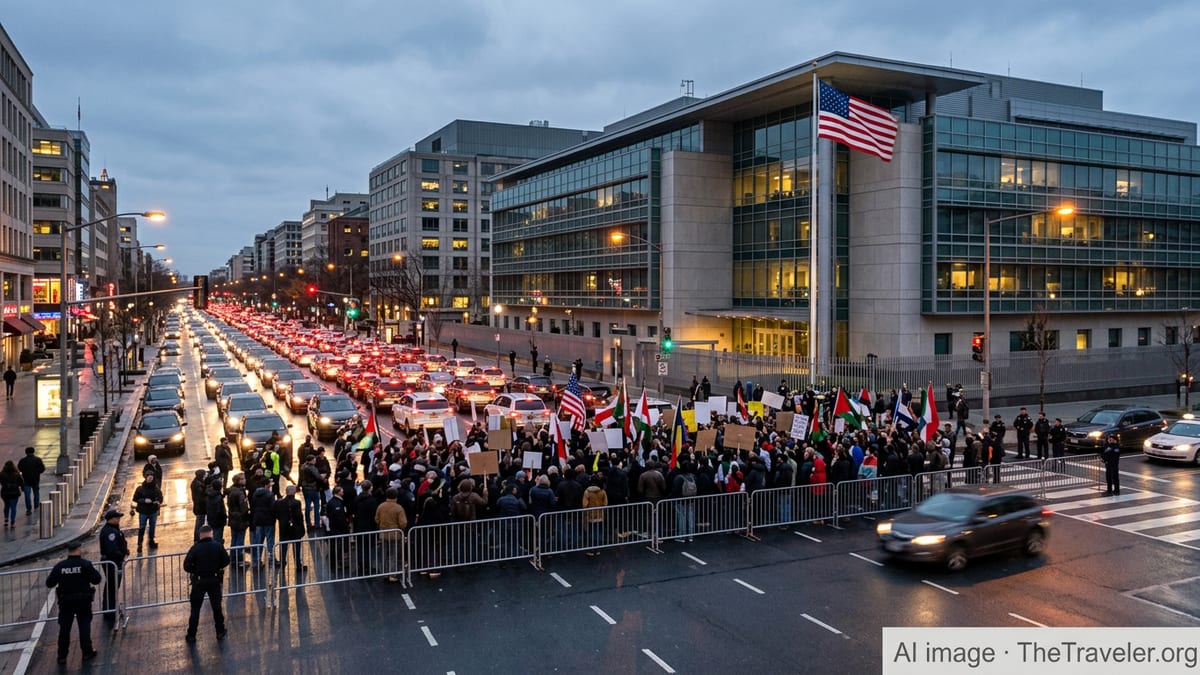
Wave of Security Alerts Spans Multiple Regions
Publicly available embassy notices and media reports show a rapid uptick in security messaging since the launch of joint U.S. and Israeli strikes on Iran at the end of February, with demonstrations, unrest, and retaliatory attacks rippling outward across the Middle East, Africa, Europe, and the Americas. In several capitals, U.S. missions have moved from routine demonstration advisories to more urgent alerts highlighting the possibility of violence near diplomatic facilities.
In Baghdad, a recent security alert described ongoing riots and protests in key areas of the city and urged U.S. citizens to avoid the embassy and consulate compounds entirely amid heightened security measures. In Pakistan, demonstrations outside the U.S. consulate in Karachi turned deadly at the start of March, prompting the U.S. Embassy in Islamabad to shutter all diplomatic posts in the country temporarily and cancel routine appointments.
The pattern is not limited to conflict zones. In London, authorities are preparing for coordinated marches near both the U.S. and Iranian embassies, while organizers in cities across the United States continue to stage large protests related to immigration policy and to the widening war, adding to a sense of global volatility that is increasingly reflected in travel advisories.
Embassy Drawdowns and Evacuations Intensify in the Middle East
The most severe disruptions are unfolding in and around the Persian Gulf, where U.S. diplomatic operations have been directly affected by missile and drone strikes, as well as by sustained street protests. According to recent coverage by major U.S. outlets, the State Department has ordered or authorized the departure of nonessential staff from at least ten missions in the broader Middle East, including posts in Saudi Arabia, Bahrain, Iraq, Jordan, Qatar, the United Arab Emirates, Lebanon, and Turkey.
Some facilities have gone further. Reporting indicates that the embassy in Kuwait has suspended operations following a series of Iranian attacks and rising security concerns, while the embassy in Saudi Arabia has reduced staffing after damage from a suspected drone strike. Regional situation reports reviewed by journalists describe contingency plans for overland evacuation of remaining personnel from high-risk locations such as Irbil in northern Iraq.
For ordinary travelers, these moves translate into fewer available consular services, more limited access to embassy compounds, and a greater reliance on remote communication for emergency assistance. Many of the newly issued alerts stress that remaining staff are prioritizing emergency support for U.S. citizens rather than routine visa or notarial appointments, and urge individuals to maintain independent evacuation plans where commercial routes remain open.
Protests Shut Down Consular Services in Nigeria and Mexico
Beyond the Middle East, U.S. diplomatic missions are also warning of politically charged demonstrations that are affecting normal operations. In Abuja, the U.S. Embassy in Nigeria issued a security alert on March 4 referencing a high potential for protests in the capital linked to the conflict with Iran. Local media report that the embassy temporarily closed for routine business and rescheduled visa services until at least March 9, citing concerns over possible unrest near the compound.
In Mexico City, the U.S. Embassy has warned of large protests near its facilities on March 7 and 8, including a march beginning at the embassy itself. The alert advises U.S. citizens to avoid protest routes, anticipate traffic and transportation disruption, and exercise increased caution around large gatherings, reflecting a broader pattern seen in demonstration notices across the region.
These advisories underscore that even in countries not directly involved in the conflict, domestic political movements and solidarity marches can still have tangible impacts on travelers. Consular sections may reduce staffing or close temporarily on short notice, while local authorities can impose roadblocks or reroute public transportation around protest hubs.
Growing Impact on Flights, Routes, and Itineraries
The cascade of alerts is increasingly affecting travel logistics, from long-haul flight paths to local transit options. Aviation and travel industry briefings describe widespread rerouting of flights to avoid Iranian and Gulf airspace, as well as intermittent closures of regional airports following missile strikes or security scares. One recent international report on the conflict highlighted that thousands of flights worldwide have been impacted by evolving military operations and airspace restrictions.
U.S. citizens in the Middle East are being urged in multiple advisories to depart using commercial options while they remain available. Travel and mobility guidance compiled by immigration and global-mobility firms notes that Level 4 “Do Not Travel” advisories and ordered departure statuses are contributing to visa processing backlogs and last-minute itinerary changes for both business and leisure travelers.
In practice, travelers may encounter sudden cancellations, limited rebooking options, and the need for extensive layovers to bypass high-risk regions. Some embassies are explicitly recommending that citizens adjust travel plans to avoid demonstration areas, border regions, and key infrastructure that could be targeted or disrupted.
What Travelers Can Expect in the Coming Days
As new protests are announced and existing movements gain momentum, the number of security alerts from U.S. diplomatic missions is expected to continue rising. Government risk assessments and predictive protest mapping published by research institutes indicate that demonstrations related to the Iran conflict and broader geopolitical tensions are planned in dozens of cities worldwide over the next week, including near U.S. embassies and consulates.
For travelers, this environment means shorter planning horizons and a greater need to monitor conditions right up to and throughout any trip. Public guidance from embassies and consulates consistently emphasizes avoiding large gatherings, staying away from protest routes and government buildings, and maintaining a low profile, particularly in areas where anti-American sentiment has surged.
Industry observers suggest that travel to many destinations will remain possible but significantly less predictable. Prospective visitors are being advised to watch for fresh alerts from local U.S. missions, confirm bookings directly with airlines and hotels, and consider flexible tickets and accommodation policies that can accommodate abrupt changes in security conditions.