

More news on this day
Governments across the globe are racing to update travel advisories, evacuate diplomats and warn citizens to leave parts of the Middle East as a dramatic military escalation between the United States, Israel and Iran sends shockwaves through aviation networks and regional security on February 28, 2026.
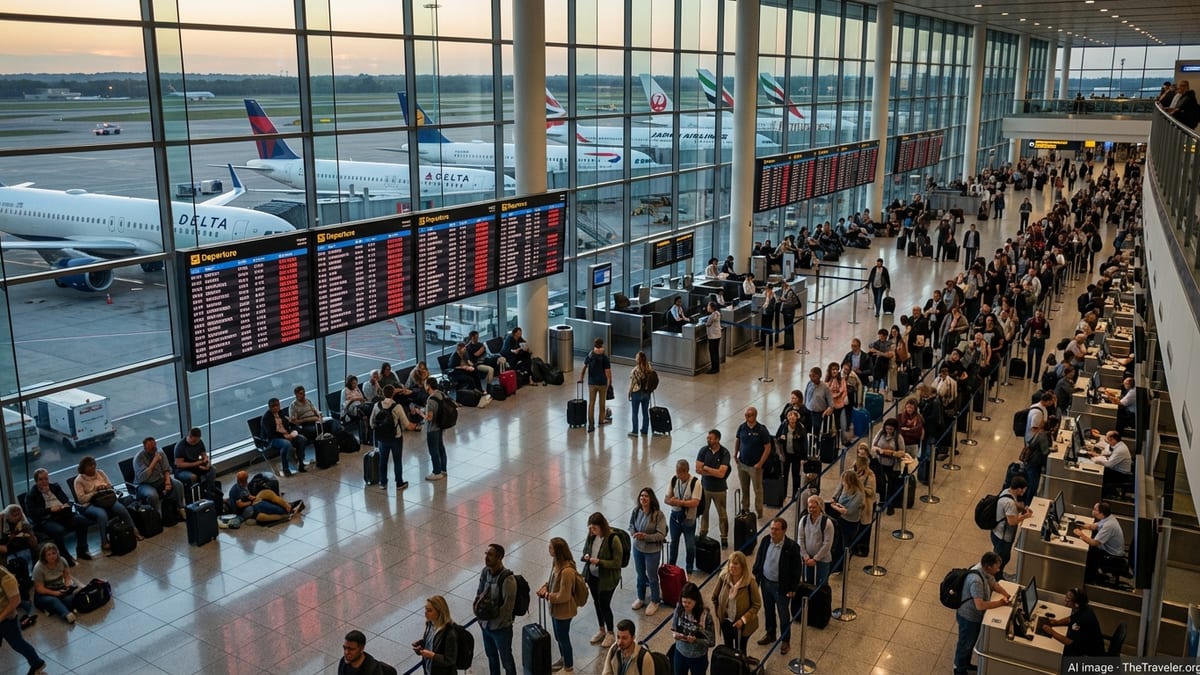
Worldwide Alerts as Conflict Spreads Beyond Iran
From Europe to Asia and the Pacific, foreign ministries are urging citizens to avoid Iran and, in many cases, to leave immediately as the security situation deteriorates. A joint United States and Israeli strike on Iranian targets, followed by Iranian missile and drone retaliation across the region, has transformed long-simmering tensions into an acute crisis with direct implications for travelers and expatriates.
Several European states, including the United Kingdom, France, Germany, Italy, Poland and the Netherlands, have tightened or upgraded their warnings for Iran and, in some cases, for Israel, Lebanon and parts of the Palestinian territories. Officials are emphasizing the risk of sudden airspace closures, flight cancellations and spillover attacks as reasons for citizens to get out while commercial options remain available.
Non European governments are taking similarly stark positions. Australia, for example, has moved its travel advice for Iran, Israel and Lebanon to the highest warning level, urging citizens already in those countries to depart if it is safe to do so, while activating crisis response mechanisms at home. Kazakhstan, Serbia, South Korea, Brazil, Singapore and China are among those advising against all travel to Iran and calling on their nationals there to leave as soon as possible.
The rapid succession of advisories reflects mounting concern that the confrontation could expand into a broader regional war. Diplomats and analysts warn that if the situation worsens further, evacuation opportunities could narrow quickly, leaving foreign nationals with few safe routes out of affected countries.
Middle East Aviation Network Under Severe Strain
Air travel across the Middle East is facing severe disruption after the strikes on Iran, with several key states temporarily closing their airspace and major carriers scrambling to reroute flights. Authorities in the United Arab Emirates, Israel and Qatar have implemented partial or full closures at various times, forcing airlines to cancel services or chart longer, more expensive paths that detour around conflict zones.
Flag carriers such as Emirates, Etihad and Qatar Airways have suspended or diverted select routes, warning passengers of delays, missed connections and limited rebooking options. At Tel Aviv’s Ben Gurion International Airport, departing passengers have repeatedly been turned back and incoming flights redirected, underscoring the fragility of a hub that normally handles a heavy flow of regional and long haul traffic.
The impact extends far beyond the Middle East. European and Asian airlines are adjusting flight paths that typically cross Iranian and Iraqi airspace on routes between Europe and Asia, a key corridor for global connectivity. Some, including KLM and Virgin Atlantic, have canceled flights into the region and instructed pilots to carry additional fuel to accommodate lengthy diversions, which will be felt in longer flight times and possible schedule knock on effects in other markets.
Aviation safety regulators are closely monitoring the use of missile and drone systems in and around Iranian and Israeli airspace, with industry experts warning that airlines may be forced into a patchwork of last minute route adjustments for days or weeks. Travelers are being urged to check flight status frequently and expect that itineraries involving the Middle East, even for transit only, may change with little warning.
Regional Flashpoints: Iran, Israel, Lebanon and Beyond
While Iran has become the primary focus of travel warnings, authorities stress that the risk landscape now stretches across multiple flashpoints. Iran’s retaliatory strikes have targeted not only Israeli territory but also areas hosting United States military assets in Bahrain, Kuwait and Qatar, along with sites in the United Arab Emirates, increasing anxiety across Gulf states that normally promote themselves as secure transit and tourism hubs.
Israel, already facing security pressures on several fronts, has seen a series of tightened advisories from foreign governments. France and Germany have expanded earlier partial warnings into broader cautions covering Israel, Jerusalem and parts of the West Bank, in some cases advising against non essential travel and highlighting the possibility of rocket attacks, civil unrest and sudden restrictions on movement.
Lebanon, long vulnerable to regional spillover, is also in focus. Australia and Poland, among others, are telling their nationals to consider leaving Lebanon while flights are still operating, citing political volatility and the danger that cross border exchanges involving armed groups aligned with Iran could intensify. Some countries are also discouraging travel to Iraq and to border areas near Gaza, Egypt and southern Lebanon, where miscalculation or localized clashes could quickly escalate.
Even states not directly involved in the confrontation are assessing secondary risks, including large protests, cyber incidents and supply shortages. Governments are warning that consular services may be scaled back or relocated with little notice if embassies are forced to reduce staffing or withdraw personnel for security reasons.
How Major Governments Are Adjusting Their Presence
Diplomatic footprints across the Middle East are shifting alongside the new wave of travel advisories. The United States has authorized the departure of non essential staff and family members from its embassy in Israel and has previously reduced its presence in Lebanon. Officials have told employees and private citizens alike to consider leaving while commercial flights are available, underlining that future options cannot be guaranteed.
In Tehran, the representation of many Western governments is now sharply limited or fully withdrawn. The United Kingdom has temporarily pulled staff from Iran, operating its embassy functions remotely. Several European Union members have either closed their missions or kept only minimal teams in place, insisting that those who remain are subject to stringent security procedures and movement restrictions.
Australia has suspended embassy operations in Iran and earlier ordered dependents of diplomats to leave Israel and Lebanon, while allowing voluntary departures from posts in the United Arab Emirates, Jordan and Qatar. Smaller states, from Cyprus and Greece to Kazakhstan and Serbia, are relying heavily on honorary consuls, regional embassies or third country partners to provide assistance to citizens still in high risk areas.
These measures highlight a broader shift from normal peacetime engagement to crisis management mode. Foreign ministries are urging citizens to register their contact details, keep identity documents with them at all times, and maintain regular communication with family members in case mobile networks are disrupted or curfews imposed without notice.
What Travelers and Expatriates Need to Do Now
For tourists, business travelers and expatriates currently in or planning to transit the Middle East, officials say the most important step is to stay informed and realistic about the pace of change. Governments are stressing that conditions can deteriorate faster than they can organize evacuations, especially if airspace is closed or airports are damaged or overwhelmed by demand.
Travelers are being urged to monitor official advisories from their own foreign ministries, as well as local news and airline updates, and to be prepared to adjust itineraries at short notice. Those in Iran, Israel, Lebanon and other high risk locations are being advised to keep travel documents, cash and essential supplies ready, to avoid large gatherings and sensitive sites, and to identify more than one potential exit route in case their primary airport shuts down.
Insurance and ticket flexibility are also coming under scrutiny. Many policies exclude coverage for acts of war, and some airlines are limiting compensation for disruptions caused by security events, leaving travelers exposed to unexpected costs. Officials recommend reviewing policy terms carefully and speaking with agents or carriers about rebooking options before routes become too constrained.
Even for those whose journeys do not touch the Middle East directly, ripple effects may show up in higher fares, longer flight times and tighter capacity on certain corridors as aircraft and crews are reassigned. With the trajectory of the US Iran confrontation still uncertain, governments and airlines alike are signaling that this is a fast moving situation that could reshape regional travel patterns for weeks, and possibly months, to come.