

More news on this day
A 79-strong group of international travelers from Russia, Türkiye, Kazakhstan and India is spotlighting Azerbaijan’s Karabakh and East Zangezur regions, as packed Turkish Airlines and Azerbaijan Airlines flights signal growing global curiosity about one of the South Caucasus’ most closely watched post-conflict tourism frontiers.
Get the latest news straight to your inbox!
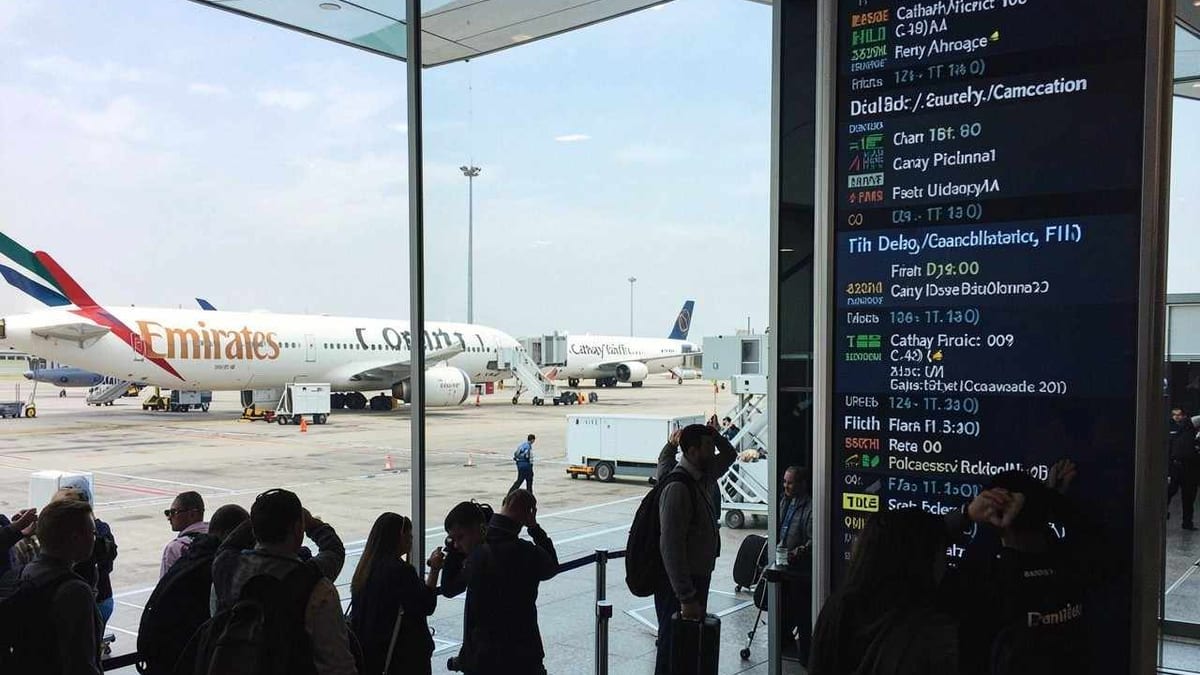
Image by Latest International / Global Travel News, Breaking World Travel News
Organized Expedition Showcases a New Phase of Openness
The organized visit by 79 global explorers is the latest in a series of carefully managed trips designed to introduce foreign travelers to territories that only a few years ago were off limits. Reports indicate that since 2021, international travel clubs and niche tour operators have coordinated multiple expeditions to the liberated areas, with itineraries tightly aligned to new infrastructure and security protocols.
The current group’s composition highlights Azerbaijan’s key source markets. Recent tourism data show that visitors from Russia, Türkiye, India and Kazakhstan rank among the fastest-growing segments for the country, and officials have repeatedly signaled plans to deepen air connectivity and joint promotion in these markets. Industry observers say the presence of experienced “extreme” and “country counting” travelers is intended to generate word-of-mouth visibility that traditional advertising struggles to match.
The expedition is also being read as a soft indicator of confidence in the region’s stability after the Armenia–Azerbaijan peace deal and subsequent reconstruction push. Travel trade publications note that the number of familiarization and themed trips to Karabakh and East Zangezur has steadily increased over the past four years, often timed to coincide with new road openings, hotel launches and restoration milestones.
For Azerbaijan’s wider tourism strategy through 2026, such group arrivals are viewed as a bridge between the current, highly managed access model and a longer-term goal of integrating Karabakh and East Zangezur into mainstream Caucasus travel circuits.
Flights Fill as Turkish Airlines and AZAL Expand Access
Interest in the latest tour has been driven in part by competitive air links into Baku. Turkish Airlines connects key cities in Türkiye and beyond with the Azerbaijani capital, while Azerbaijan Airlines, or AZAL, has been expanding its regional and long-haul network. AZAL already operates domestic routes into Fuzuli, providing direct access to the Karabakh heartland from Baku’s Heydar Aliyev International Airport.
Travel media monitoring shows that departures from Russia, Türkiye, Kazakhstan and India into Azerbaijan have risen in tandem with new route launches and schedule increases. Seats on Baku-bound flights linked to this 79-person tour were reported to be near capacity, underscoring how group movements can temporarily tighten availability on popular days, even outside traditional holiday peaks.
Tour planners say the combination of full-service flag carriers and regional connections makes it feasible to route travelers through Baku for short, high-impact itineraries focused on the liberated regions. From there, chartered coaches and, in some cases, domestic flights take visitors onward to Karabakh and East Zangezur’s emergent hubs, including Fuzuli, Shusha and Lachin.
Analysts point out that air connectivity will remain decisive if Azerbaijan hopes to scale up arrivals. With tourism authorities targeting higher-spend segments such as culture seekers, wellness travelers and business event delegates, regular, year-round frequencies from major feeder markets are seen as crucial to sustaining interest beyond headline-making expeditions.
Unseen Post-Conflict Landscapes Become Travel Talking Points
Once synonymous with frontline footage and contested narratives, Karabakh and East Zangezur are now increasingly framed in travel coverage as destinations of rugged scenery and layered history. Published reports describe the region’s alpine meadows, forested slopes and river valleys as a strong fit for ecotourism, hiking and rural stays, while mineral springs and mountain air lend themselves to spa and health-focused products.
The 79-person tour is expected to follow a route that threads together restored urban centers, newly constructed highways and villages undergoing phased resettlement. Travelers are typically shown panoramic viewpoints over rebuilt townships, renovated mosques and churches, and cultural landmarks in Shusha, which Azerbaijan promotes as a “cultural capital” for the Turkic and Islamic worlds.
At the same time, the visible scars of conflict remain a defining part of the experience. Many itineraries include controlled visits to ruined districts, memorial sites and partially cleared neighborhoods, where demining and reconstruction are still underway. Travel and tourism outlets describe this as a blend of heritage, reconstruction and so-called dark tourism, with operators and officials alike underlining the need for sensitivity around sites linked to displacement and loss.
For seasoned travelers, the appeal lies partly in witnessing a territory in transition, where cranes, construction camps and newly paved roads sit alongside abandoned foundations and war-damaged structures. That juxtaposition has become a recurring theme in online trip reports and social media posts emerging from the region.
Security, Logistics and the Controlled Opening of a Former War Zone
Despite the surge of interest, access to Karabakh and East Zangezur remains tightly regulated. Publicly available guidelines specify that trips must be pre-registered and that foreign visitors travel only with authorized guides and on approved routes. Registration platforms provide briefings on landmine risks and require passport data in advance of travel.
Tourism planners stress that these controls are not only a safety measure but also a way to phase in tourism without overwhelming fragile infrastructure. Roads, power lines, water systems and digital networks are still being rebuilt, and hotel capacity, while growing, remains limited compared with established destinations such as Baku, Ganja or the Caspian coast.
Large groups like the current 79-person contingent are therefore seen as test cases for the region’s readiness to handle more complex logistics. Coordinating airport arrivals, security escorts, accommodation blocks and local transport for dozens of high-profile visitors offers a real-time stress test of systems that, until recently, were theoretical.
Observers note that Azerbaijan is simultaneously advancing its “Great Return” program to support the resettlement of former internally displaced people in the same territories now being marketed to tourists. Balancing the needs of returning residents with those of short-stay visitors is emerging as one of the most sensitive questions in the design of Karabakh and East Zangezur’s tourism model.
New Hotels, Niche Tours and the Race to Define the Narrative
Alongside high-profile tours, investment in visitor infrastructure is accelerating. Recent coverage in regional business and travel outlets highlights newly opened or planned hotels in cities such as Aghdam, Fuzuli and Shusha, often framed as symbols of a broader economic revival. Many of these properties target a mixed clientele of construction contractors, government delegations and early-stage tourists.
Specialist operators are moving in to carve out niche products, from multi-day trekking circuits in East Zangezur’s mountain ranges to photography-focused journeys through reconstructed town centers. Health resorts centered on thermal springs and clean mountain air are being positioned as a natural extension of Azerbaijan’s existing spa traditions in regions like Naftalan and Gabala.
At the same time, debates continue over the ethics and optics of promoting leisure travel in a territory still marked by recent displacement and political tension. Commentaries in regional and international media flag concerns over how tours frame history, whose stories are told on the ground, and whether the rapid rollout of visitor programs risks overshadowing unresolved humanitarian issues.
For now, the arrival of 79 travelers from Russia, Türkiye, Kazakhstan and India encapsulates the opportunity and controversy bound up in Karabakh and East Zangezur’s tourism push. As carriers such as Turkish Airlines and Azerbaijan Airlines funnel more passengers into Baku and onward to the liberated regions, the question is not only how many will come, but how the story of this transformed landscape will be presented to the world.