

More news on this day
GO7 has unveiled a new “Orchestrated Virtual Interlining” platform designed to let airlines build and control their own multi-carrier networks, a move industry observers say could reshape global air connectivity, unlock fresh tourism flows and give travelers more seamless options on complex routes.
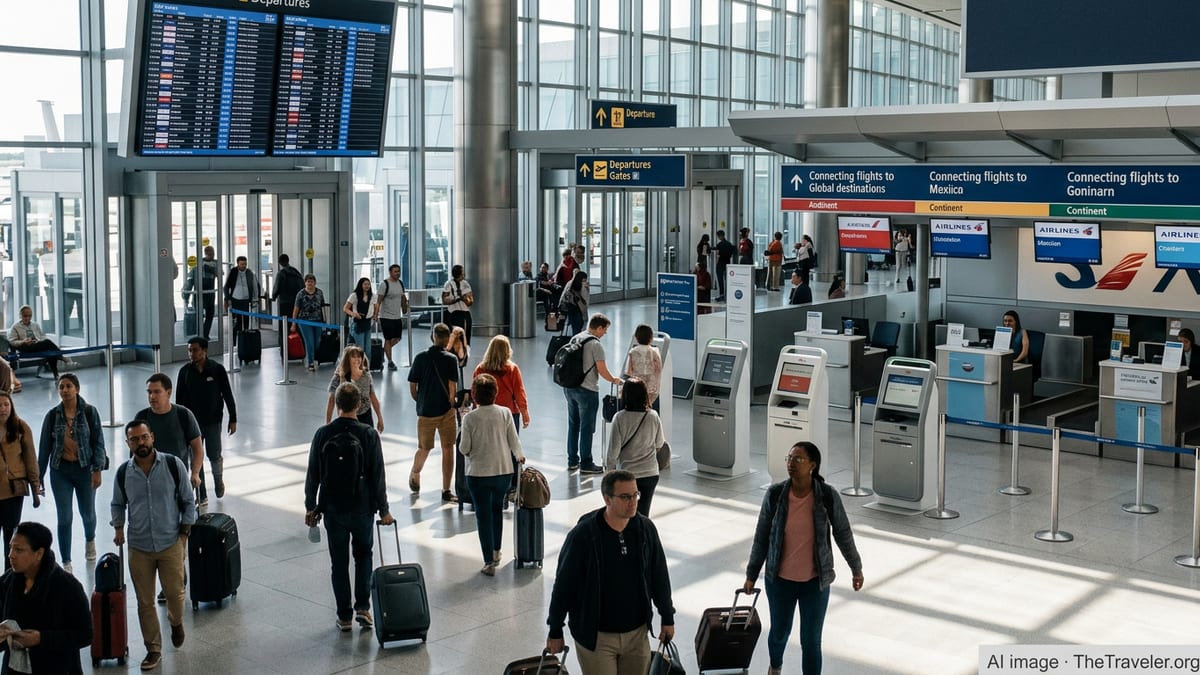
From Virtual Interlining to Airline-Led Orchestration
The launch of Orchestrated Virtual Interlining marks a shift in how connected journeys are created and sold. Traditional virtual interlining has largely been driven by aggregators and online travel agencies, which combine separate tickets into a single self-connecting itinerary. GO7’s model instead puts the airline at the center, allowing carriers to design, price and manage these connections as if they were classic interline or codeshare arrangements, but without the lengthy bilateral deals.
According to GO7’s product overview, the new platform enables carriers to pick their preferred partners, set commercial rules and own the customer relationship, including payment and settlement flows. This contrasts with earlier models where intermediaries controlled much of the booking, servicing and data. By moving to an orchestrated approach, airlines can craft virtual networks that extend far beyond their own metal, while retaining control of brand experience and ancillary revenue.
The system is built to work with existing airport and industry processes, meaning carriers do not need to overhaul ground operations to participate. GO7 positions the technology as an evolution of virtual interlining that aligns more closely with airline retailing trends, IATA-led modernization of offers and orders, and a push toward more flexible distribution architectures across the industry.
Seamless Bags, Protected Connections and Real Interline Feel
One of the biggest limitations of early virtual interline products was that passengers were effectively self-connecting, often forced to reclaim and recheck bags during transit and left exposed if delays caused missed onward flights. GO7 aims to address these pain points with what it describes as a more “interline-like” experience powered by integrated baggage handling and disruption management.
Its patent-protected ThruBag functionality is designed to allow baggage to be checked through to the final destination across participating airlines, using the same airport tools and processes employed for traditional interline transfers. Instead of leaving travelers to manage their own luggage mid-journey, bags follow a continuous path, removing one of the most stressful aspects of complex itineraries.
On the resilience side, GO7’s ConnectProtect service provides built-in disruption handling for orchestrated itineraries. When delays or cancellations threaten a connection, the platform searches for viable alternatives and supports predefined coverage rules that airlines can adjust by route or airport. In practice, this is intended to offer travelers reassurance closer to that of a legacy interline ticket, despite the itinerary being assembled from multiple carriers who may not have formal alliance ties.
By combining through-checked baggage, coordinated disruption support and a single booking path, the orchestrated model seeks to close the gap between convenience and cost. Travelers gain access to a wider range of city pairs and price points, while airlines and tourism partners can market the journeys as cohesive products rather than a string of loosely connected legs.
Implications for Global Tourism Flows and Secondary Hubs
For tourism boards and secondary hubs, the potential of orchestrated virtual interlining lies in how easily it can stitch together new origin and destination pairs. Instead of relying solely on major alliance gateways, regional and niche carriers can connect their networks virtually, creating one-stop access to emerging destinations that might otherwise require awkward multi-stop journeys or separate tickets.
Industry analysts note that virtual interlining has already helped unlock demand for self-connect itineraries, particularly among price-sensitive travelers willing to navigate complex journeys. With orchestration handled by airlines and technology providers like GO7, the same concept can now be tuned for broader market segments, including families and business travelers who expect a more managed experience.
Destinations with growing aviation ambitions, from island tourism economies to fast-developing regional cities, stand to benefit from new flows of visitors who can reach them more easily via multi-carrier combinations. Airlines can test new markets and feeder patterns virtually before committing aircraft or entering full interline agreements, lowering risk while giving tourism stakeholders early access to international arrivals.
As more carriers adopt hybrid distribution models that blend global distribution systems, new distribution capability channels and direct online agency partnerships, orchestrated virtual interlining slots into a broader effort to make content more flexible. For travelers, the result could be a richer menu of routes and schedules, with previously obscure combinations surfacing in mainstream search and booking paths.
How Airlines Gain Commercial Control and New Revenue
Commercial teams at airlines are being promised a quicker, lower-cost path to network growth. GO7’s materials emphasize that carriers can unlock new origin-destination combinations using existing schedules, rather than adding aircraft or launching traditional joint ventures. By setting their own participation rules, fares and ancillaries for each partner and route, airlines can design offers that suit their strategy, whether they prioritize volume, yield or ancillary income.
The platform supports flexible settlement, including industry-grade clearing through the IATA Clearing House and multi-merchant split payments. This is significant because settlement complexity has often slowed down or limited deeper cooperation between carriers using virtual models. With more standardized tools, airlines can experiment with new virtual partnerships while keeping financial risk and back-office workload contained.
Ancillary cross-selling across multiple carriers is another focus. By aligning extras such as seat selection, baggage, meals or priority services across the itinerary, orchestrated virtual interlining seeks to overcome the limitations of legacy systems that struggled to handle add-ons across more than one airline. That in turn opens additional revenue streams at a time when airlines are increasingly treating ancillaries as a core part of their business model.
Critically, GO7 positions the solution as quick to implement, using either a white-label booking engine or software development kits that can be embedded into an airline’s existing digital storefront. That approach reflects a wider travel technology trend toward modular systems, where carriers can plug in specialist capabilities rather than replacing entire platforms.
What Travelers Can Expect on Future Multi-Carrier Journeys
For passengers, much of the innovation behind orchestrated virtual interlining will remain invisible, surfacing instead as more choice and smoother experiences on multi-carrier trips. At the front end, a traveler searching a participating airline’s site could see an expanded set of one-stop or two-stop options that quietly combine different carriers, while being sold and serviced as a single journey.
Behind the scenes, baggage should flow through without additional check-in at transfer points where ThruBag is active, and disruption policies defined through ConnectProtect are intended to ensure that missed connections trigger structured support rather than leaving travelers to negotiate with each airline separately. While the exact level of coverage and rebooking options will vary by carrier and market, the overall aim is to narrow the gap between a virtual interline ticket and a classic interline itinerary.
Travelers may also notice more coherent ancillary offers across the trip, with consistent seat maps, baggage logic and optional services presented in a unified checkout. As more airlines join orchestrated ecosystems, there is potential for fares that blend low cost and full-service segments in novel ways, offering both competitive prices and integrated servicing.
The launch of Orchestrated Virtual Interlining comes as the wider travel sector experiments with new forms of connected retailing and modular infrastructure. If adoption grows, the model could help redraw global connectivity maps, elevate tourism to lesser-known regions and give passengers more confidence to choose complex journeys that were once considered too risky or cumbersome.