

More news on this day
Brazil’s busiest air corridor suffered a fresh setback this week as GOL Linhas Aéreas and LATAM Airlines reported four flight cancellations and dozens of delays touching São Paulo’s two main airports, amplifying pressure on a network already strained by Carnival crowds, summer storms and a disruptive drone incident at Guarulhos.
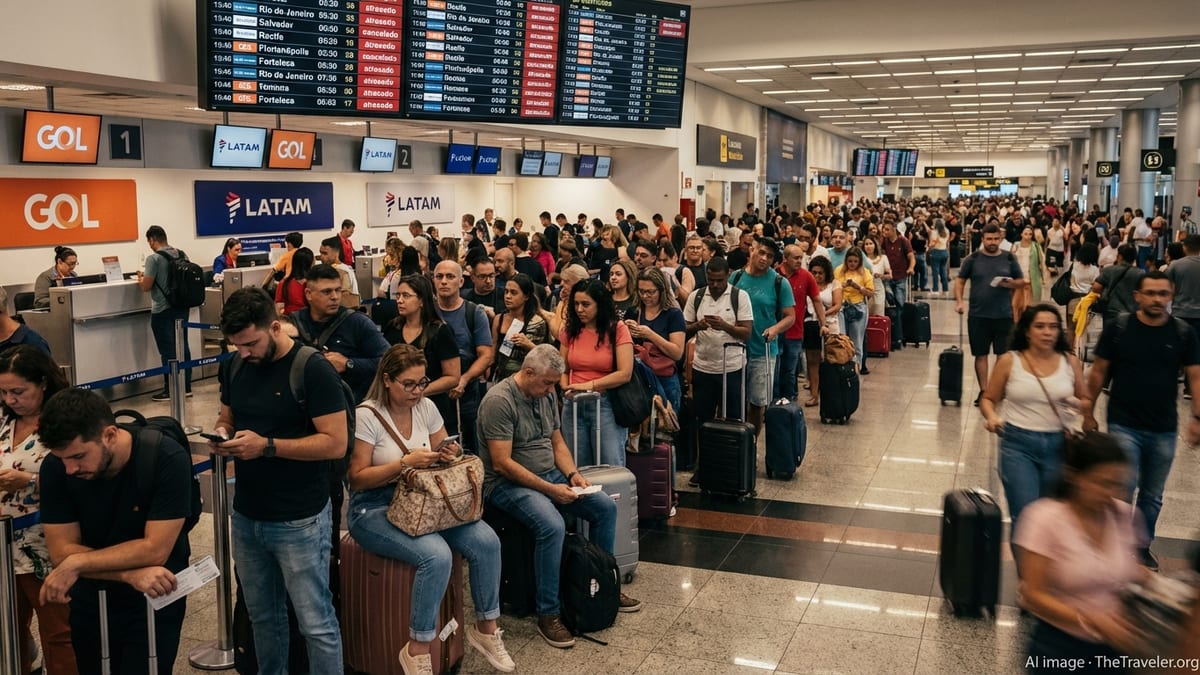
Fresh Disruptions Hit Guarulhos and Congonhas
Operational data from flight-tracking and passenger-rights platforms on February 16 and 17 point to a cluster of cancellations and late departures involving GOL and LATAM services linked to São Paulo’s Guarulhos and Congonhas airports. At least four GOL-operated flights involving São Paulo were fully cancelled on February 16 alone, on routes such as São Paulo to Porto Seguro and Juiz de Fora, while additional services to and from Guarulhos were scrubbed or heavily delayed. LATAM, meanwhile, has continued to work through residual knock-on delays after recent operational incidents and weather-related constraints at Guarulhos.
For passengers, the disruption translated into snaking lines at check-in and customer service counters, packed boarding areas and rolling announcements of schedule changes. Morning and late-afternoon banked departures, which are central to how both carriers feed connections across Brazil, were particularly affected, with some travelers reporting delays of more than two hours, missed onward flights and overnight rebookings. The pattern confirms that even a small number of cancellations in São Paulo can have an outsized impact as the shockwaves ripple through domestic networks.
Airport displays at Guarulhos, Brazil’s main international gateway, and at centrally located Congonhas showed a dense band of amber and red status alerts during peak periods, underscoring how limited slack remains in the system. While some flights recovered later in the day, the backlog extended into subsequent rotations, affecting passengers far beyond the country’s largest city.
Carnival Crowds and Drone Chaos Compound Strain
The latest wave of disruptions came just as Brazil entered the peak of the Carnival holiday period, historically one of the heaviest weeks for air travel in the country. Hotels in major destinations were reporting near-full occupancy, and airlines had loaded ambitious summer schedules to capitalize on robust leisure demand. That left carriers such as GOL and LATAM with relatively thin buffers of spare aircraft and crew to absorb irregular operations.
Compounding the pressure, authorities at São Paulo’s Guarulhos airport were forced to halt operations for roughly three hours on Sunday, February 16, after at least seven drones were spotted in the vicinity of the runways. The shutdown diverted more than 30 flights and led to at least eight cancellations, according to Brazilian media reports, scattering aircraft and crews to alternate airports in Rio de Janeiro, Campinas and other cities. Although the drone disruption primarily affected international operators, its timing created fresh congestion just as domestic holiday traffic surged.
A similar drone-related incident at Guarulhos in June 2025 had already highlighted vulnerabilities in the airport’s perimeter security and airspace management. This month’s recurrence, arriving in the middle of Carnival, intensified the operational challenge facing airlines attempting to run tight turnarounds and protect critical connection banks at Brazil’s largest hub.
GOL Passengers Bear the Brunt of Targeted Cancellations
Among Brazilian carriers, GOL Linhas Aéreas appears to have shouldered a disproportionate share of the outright cancellations connected to São Paulo during the latest disruption window. Flight-status logs for February 16 show multiple GOL flights involving Guarulhos and Congonhas listed as cancelled, including services linking São Paulo with leisure destinations such as Porto Seguro and Ilhéus, as well as feeder routes to and from regional cities like Presidente Prudente and Juiz de Fora.
These targeted cancellations fit a pattern of GOL trimming select rotations when faced with operational headwinds ranging from weather disruptions to aircraft availability and crew rostering challenges. While such decisions can help stabilize the broader schedule and avoid even larger meltdowns, they leave affected passengers scrambling for alternatives, often on days when remaining seats are scarce and fares high due to holiday demand.
Consumer complaints filed in recent months also point to frustration among GOL customers over perceived frequent schedule changes, extended delays and limited rebooking options, particularly when entire family itineraries are impacted. Travelers report that even when flights do operate, late departures can turn relatively short hops into all-day odysseys because of missed connections and long layovers at hubs such as São Paulo and Brasília.
LATAM Grapples With Knock-On Effects at Its Brazilian Hub
LATAM Airlines, which uses Guarulhos as one of its principal hubs in South America, has faced its own set of challenges keeping the operation running smoothly. Earlier in February, a LATAM Brasil Boeing 777 bound for Lisbon was forced to abort takeoff at high speed at Guarulhos, prompting an emergency response and the evacuation of passengers onto the taxiway. Although there were no injuries, the high-profile incident required aircraft inspections and schedule reshuffling, constraining LATAM’s ability to deploy widebody aircraft exactly as planned in the days that followed.
While the company has emphasized its commitment to safety and has continued to expand profitably across the region, irregular operations at a busy hub like Guarulhos quickly cascade through LATAM’s dense network of domestic and international connections. Even when only a handful of flights are cancelled, the resulting aircraft swaps, crew reassignments and maintenance checks can generate rolling delays that touch routes far beyond the original problem flight.
Industry analysts note that LATAM enters 2026 in comparatively strong financial health after transporting more than 87 million passengers in 2025 and posting solid profits. That stability gives the airline additional resources to invest in resilience measures, from spare aircraft to crew reserves and digital tools for real-time rebooking. However, the events of the past week underscore that no carrier is immune when systemic factors such as drone incursions, air traffic flow restrictions and extreme holiday demand collide over a single mega-hub.
São Paulo’s Central Role Magnifies National Travel Pain
São Paulo’s airports sit at the core of Brazil’s aviation system, connecting business travelers, tourists and regional communities across a country that spans a continent. Guarulhos handles the lion’s share of long-haul traffic and intercontinental links, while Congonhas functions as a high-frequency shuttle point for short-haul corporate routes to cities like Rio de Janeiro and Belo Horizonte. When operations at either airport falter, the repercussions spread quickly through airline networks nationwide.
Over the past several months, recurring episodes of severe weather, staffing constraints and infrastructure bottlenecks have led to multiple days with more than 200 delayed flights and several dozen cancellations across Brazil. On many of those days, São Paulo appears as the epicenter of turbulence, with disturbances there radiating outward to destinations from Porto Alegre in the south to Recife and Fortaleza in the northeast.
The most recent sequence of four cancellations and widespread delays involving GOL and LATAM fits into this broader pattern. When flights from São Paulo to regional cities are cut or depart significantly late, passengers in those cities can lose not only their direct link to the country’s financial capital, but also their same-day access to onward domestic or international connections. Aircraft and crews stranded at outstations, in turn, force additional cancellations on subsequent days, making recovery a multi-day exercise rather than a one-off fix.
Passengers Face Long Lines and Limited Options
For travelers on the ground, the operational complexities translate into a simpler reality: long waits and limited choices. At Guarulhos, where GOL and LATAM share terminal space with a host of other carriers, Sunday and Monday’s delays left customer service counters backed up, with some passengers queuing for hours to secure hotel vouchers, meal credits or alternative flights. Families traveling with children and elderly relatives were particularly affected, often forced to remain in crowded halls while rebooking options were negotiated flight by flight.
At Congonhas, whose compact footprint magnifies the perception of crowding, boarding areas filled quickly as departures to Rio de Janeiro’s Santos Dumont and other trunk routes rolled back. Business travelers accustomed to tight same-day turnarounds found themselves reworking meeting schedules, while leisure travelers risked losing prepaid hotel nights and tour bookings at coastal resorts and interior destinations.
Compensation policies and rebooking rules vary depending on the cause of disruption and applicable consumer protection frameworks. In some circumstances, especially when delays are attributable to factors within the airline’s control, passengers may be entitled to hotel accommodation, meals or refunds. However, many travelers say the immediate priority is clear and timely information rather than retrospective compensation, and they criticize what they describe as inconsistent communication via apps, text messages and airport announcements.
Airlines and Authorities Seek Longer-Term Fixes
In response to mounting public frustration, both airlines and aviation authorities are under pressure to demonstrate that they are learning from each disruption and building sturdier systems for future peak periods. Industry observers say carriers such as GOL and LATAM are reviewing schedule design, crew rostering practices and aircraft utilization to restore greater operational buffers that were squeezed during the rapid post-pandemic rebound in demand.
On the infrastructure side, airport operators and regulators are intensifying efforts to harden airport perimeters and protect critical airspace from drone incursions. The repeated closure of Guarulhos due to rogue drones has energized calls for stricter enforcement, better detection technology and stiffer penalties for operators who put commercial flights at risk. Enhanced coordination between law enforcement, air traffic control and airport management is seen as essential to prevent a handful of devices from again paralyzing Latin America’s busiest hub during marquee travel weekends.
Consumer advocates, meanwhile, are urging clearer rules on passenger rights and more proactive outreach when disruptions occur. They argue that Brazil’s travelers have become increasingly sophisticated and digitally connected, expecting real-time updates, automatic rebooking where possible and easier access to refunds or vouchers. For GOL and LATAM, whose brands are deeply intertwined with domestic mobility, addressing these expectations will be central to maintaining customer loyalty in a market where reputational damage can spread quickly across social media.
What Travelers Should Do in the Days Ahead
With Carnival travel still in full swing and return flows set to peak over the coming days, aviation experts recommend that passengers flying with GOL, LATAM or any other carrier in Brazil build extra flexibility into their plans. Checking flight status frequently before leaving for the airport, allowing additional time for security and boarding, and keeping essential items such as medications and chargers in carry-on luggage can mitigate some of the stress if schedules shift unexpectedly.
Travelers with tight connections at Guarulhos should pay particular attention to minimum connection times and consider rebooking onto earlier feeder flights when possible, especially if traveling to or from regions prone to afternoon thunderstorms. Those heading to high-demand leisure destinations may want to reconfirm hotel check-in policies and transfer arrangements, given the heightened risk of late arrivals.
For now, the four cancellations and widespread delays tied to GOL and LATAM in São Paulo serve as another reminder that Brazil’s aviation recovery, while robust in passenger numbers and financial performance for leading carriers, remains vulnerable to external shocks and internal bottlenecks. Until new capacity, infrastructure upgrades and stricter airspace protections catch up with demand, even minor disruptions at Guarulhos and Congonhas are likely to continue reverberating across the country’s skies.