

More news on this day
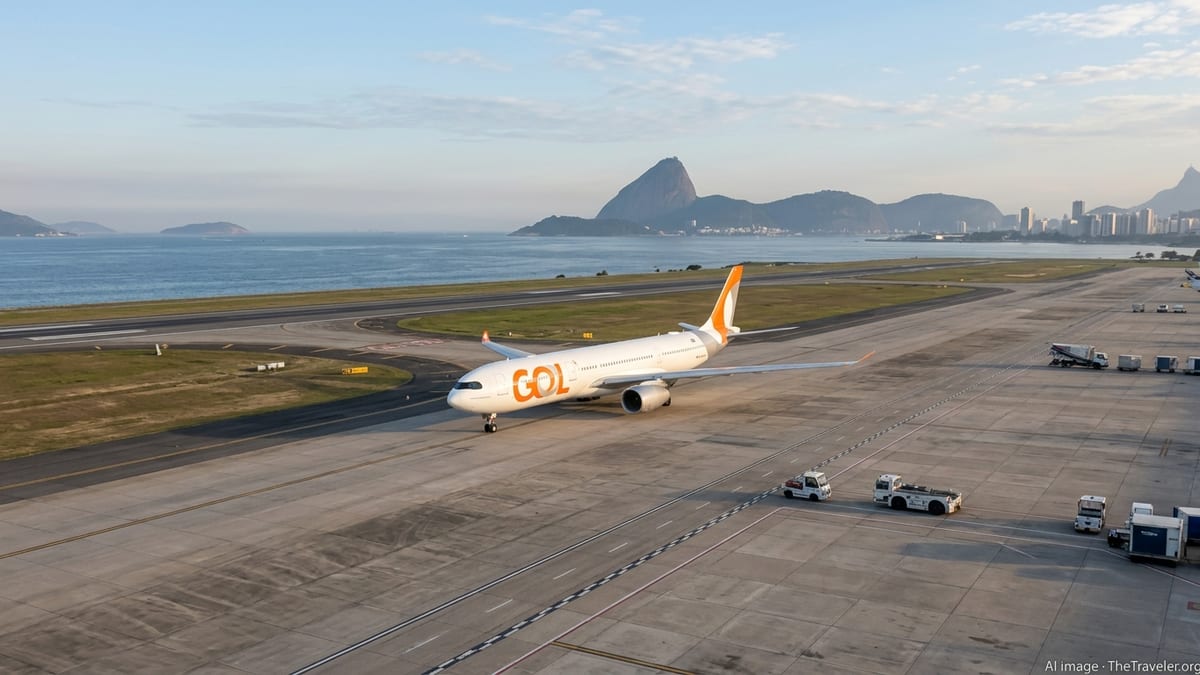
Brazilian carrier GOL is reshaping its international strategy by adding Airbus A330neo widebody aircraft and positioning Rio de Janeiro as a new long-haul gateway with planned nonstop links to Lisbon, New York, Paris and Orlando.
Get the latest news straight to your inbox!
New Widebody Era for a Traditionally Domestic Player
Publicly available information shows that GOL has committed to leasing up to five Airbus A330neo aircraft, marking the first time the airline will operate widebody jets after two decades built around a single Boeing 737 narrowbody fleet. Industry reports indicate the aircraft are scheduled to join the carrier progressively from 2026, providing the range and capacity required for true long-haul operations across the Atlantic and to North America.
The shift follows GOL’s restructuring process under Chapter 11 protection in the United States, completed in 2025, during which the airline outlined a more diversified network strategy. The A330neo introduction is emerging as a cornerstone of that plan, enabling GOL to move beyond its traditional role as a low-cost domestic and regional operator and compete directly with Azul, LATAM and foreign airlines on major intercontinental routes.
Data compiled from fleet disclosures and aviation news outlets suggests that the A330-900 variant selected by GOL will feature around 300 seats in a two-class layout, giving the airline a step change in capacity versus its 737 fleet. The aircraft’s operating economics and commonality with the broader Airbus family are seen by analysts as key to making long-haul flying financially viable for a carrier that has historically focused on high-frequency short-haul routes.
Rio de Janeiro Positioned as Long-Haul Launchpad
While GOL is also planning new services from São Paulo, recent schedule filings and slot requests point to Rio de Janeiro’s Galeão International Airport emerging as a central piece of its long-haul play. Aviation industry coverage indicates that GOL has already confirmed a nonstop Rio de Janeiro to New York service as its first long-haul route, to be operated with the A330-900neo and marketed as a flagship connection between Brazil and the United States.
The Rio to New York flight is expected to begin with several weekly frequencies before ramping up as more aircraft arrive, giving GOL a foothold at a competitive transcontinental gateway. The move is strategically significant for Galeão, which has seen periods of underutilization compared with São Paulo’s Guarulhos, and now appears set to regain relevance as a hub for intercontinental traffic.
According to published coverage, GOL’s broader network plan envisions Rio as one of two pillars for long-haul flying, complementing São Paulo while serving as Brazil’s postcard entry point for many international visitors. Positioning long-haul flights out of Galeão taps into Rio’s strong tourism appeal while also distributing traffic away from the heavily congested São Paulo airspace.
Lisbon, Paris and Orlando in Focus for 2026 Rollout
Preliminary IATA season documents and Brazilian aviation reports indicate that GOL has secured or requested slots that would allow nonstop services from Brazil to Lisbon, Paris and Orlando as early as the northern summer 2026 season. The filings suggest a daily pattern of flights that would place these cities at the heart of the airline’s first wave of long-haul destinations.
Lisbon is viewed by analysts as a natural choice, given strong Brazil–Portugal ties and the presence of connecting traffic onward to Europe and Africa. Entering the Lisbon market would place GOL in direct competition with existing operators but could also create new one-stop itineraries for secondary Brazilian cities via its domestic network.
Paris is another high-profile target, reflecting the importance of France as both a tourism and corporate market for Brazil. Publicly available slot data and route planning reports signal GOL’s intention to link Brazil to Paris Charles de Gaulle, enabling connectivity into one of Europe’s largest aviation hubs and a wide network of onward European and global flights.
On the leisure side, Orlando remains one of the most sought-after destinations for Brazilian travelers. Industry coverage from late 2025 describes proposed nonstop services between Rio de Janeiro and Orlando as part of GOL’s long-haul blueprint, designed to capture family and holiday traffic to central Florida’s theme parks and shopping outlets with a direct, widebody product.
Airbus A330neo at the Center of a Competitive Shift
The Airbus A330neo platform sits at the core of GOL’s new international strategy, and recent Airbus data highlights why. The type offers long range, fuel-efficient engines and a modern cabin, allowing airlines to operate routes of more than 10 hours while keeping operating costs under control. For GOL, which has no previous experience with widebody aircraft, the A330neo provides a ready-made solution to enter the long-haul segment without building an entirely new fleet family from scratch.
Analysts note that the move dramatically changes the competitive balance in Brazil’s long-haul market. Until now, widebody intercontinental flying from the country has been largely concentrated in the hands of Azul, LATAM and foreign carriers such as TAP Air Portugal and European and North American airlines. By deploying A330neos to Europe and the United States, GOL positions itself as a fourth serious player with a network designed to feed intercontinental flights through strong domestic connectivity.
Reports further suggest that GOL’s new long-haul services align with a broader trend in Latin American aviation, where carriers are selectively adding efficient widebodies to improve connectivity to key global cities. The A330neo, with its mix of capacity and range, is seen as particularly well suited to Brazil–Europe and Brazil–U.S. East Coast routes, which offer strong demand but require careful cost management to remain profitable.
Implications for Passengers and Brazil’s Global Connectivity
For passengers, GOL’s long-haul debut from Rio de Janeiro promises greater choice and potentially more competitive fares on some of Brazil’s most popular intercontinental city pairs. Expanded nonstops to New York, Lisbon, Paris and Orlando would add options for both leisure and business travelers who currently rely heavily on existing Brazilian or foreign carriers via São Paulo or other hubs.
Travel industry commentators point out that additional widebody capacity from Brazil’s second-largest city could also help diversify inbound tourism flows. Direct links to major North American and European gateways from Rio are expected to make it easier for visitors to plan itineraries centered on the city’s beaches, culture and natural landscapes rather than transiting through São Paulo.
As GOL’s A330neo fleet arrives and routes are phased in through 2026 and beyond, observers will be watching how successfully the airline balances its low-cost DNA with the service expectations of long-haul travelers. The decision to elevate Rio de Janeiro as a long-haul hub, paired with targeted links to Lisbon, New York, Paris and Orlando, signals a clear ambition: to embed Brazil more firmly into the global air network while redefining GOL’s role on the international stage.