

More news on this day
Brazilian carrier GOL Linhas Aéreas is expanding its international footprint with a new nonstop route linking Rio de Janeiro’s Galeão International Airport and New York’s John F. Kennedy International Airport, a move poised to strengthen business and leisure ties between Brazil and the United States.
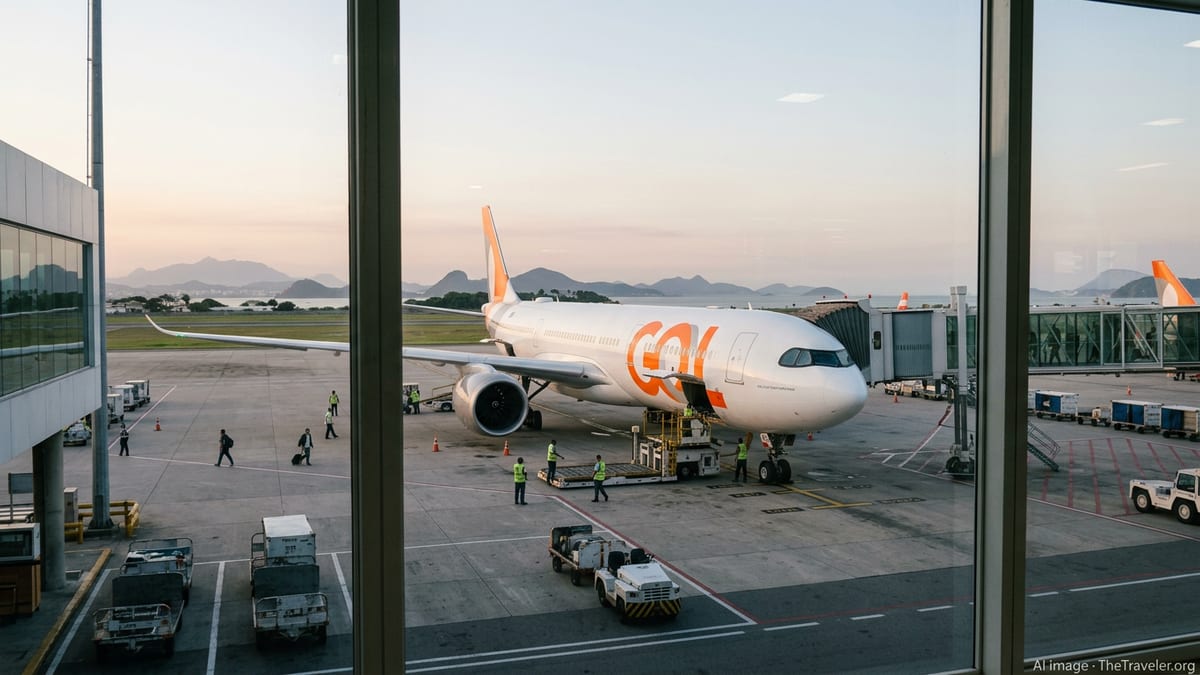
New Rio–New York Service Starts July 8, 2026
GOL announced that nonstop flights between Rio de Janeiro Galeão (GIG) and New York JFK will begin on July 8, 2026, with tickets already on sale through the airline’s direct channels. The launch marks a significant step in the carrier’s post-restructuring growth strategy and signals renewed confidence in long-haul demand from Brazil’s tourism capital.
The route will initially operate three times per week, positioning GOL as the first Brazilian low-cost airline to connect Rio directly with New York using its own metal. The Brazil–New York corridor is among the most competitive in the Americas, and the new service will add capacity and choice at a time of sustained recovery in international travel.
By selecting JFK, GOL is tapping one of the busiest international gateways in the United States, with strong onward connectivity across North America. For travelers in both countries, the new route offers a nonstop alternative to itineraries that currently require connections via São Paulo, other Brazilian hubs or third countries.
First Wide-Body Operation Marks New Era for GOL
The Rio–New York route will also inaugurate GOL’s long-awaited wide-body operations, a major shift for a carrier historically focused on single-aisle Boeing 737 aircraft. The airline will deploy Airbus A330-900neo jets on the Galeão–JFK service, leveraging their extended range and fuel efficiency to compete effectively on the nearly 4,800-mile transcontinental sector.
Configured for long-haul comfort, the A330-900neo will allow GOL to introduce an upgraded onboard experience, including lie-flat seating in the premium cabin and enhanced in-flight entertainment offerings. For a brand long associated with point-to-point domestic flying, the move into wide-body, intercontinental service represents both a commercial and reputational inflection point.
Industry analysts note that the decision to debut wide-body flights on a marquee route such as Rio–New York underscores GOL’s ambition to reposition itself as a serious player in South America–North America traffic. The choice of aircraft and route suggests the airline is targeting a mix of corporate, leisure and visiting-friends-and-relatives traffic that values both competitive fares and a direct overnight connection.
Strengthening Rio Galeão as an International Hub
The new service further consolidates Galeão’s role as GOL’s principal international gateway. The airline already operates more than 30 domestic and regional routes from the airport, allowing passengers from across Brazil to connect through Rio onto the New York flight with through-checked baggage and coordinated schedules.
Local authorities and airport stakeholders have been pushing to restore and enhance Galeão’s long-haul portfolio, which faced cutbacks during the pandemic and subsequent market shifts. GOL’s decision to base a flagship intercontinental route at Galeão is being welcomed as a vote of confidence in Rio’s capacity to reclaim its status as a major entry point to Brazil.
For the city and state of Rio de Janeiro, additional nonstop connectivity to North America is expected to support tourism growth, attract new events and conferences, and facilitate investment flows. Travel industry observers highlight that high-yield segments such as energy, finance and creative industries maintain strong ties between Rio and New York, making improved air links particularly strategic.
Competing in a Crowded Brazil–New York Market
GOL’s arrival on the Rio–JFK sector will add competition to a corridor already served by major U.S. carriers. American Airlines and Delta presently operate nonstop flights between Galeão and JFK on a seasonal or year-round basis, while São Paulo–New York remains a staple in the broader Brazil–U.S. network.
The new GOL service is expected to intensify rivalry on fares and schedules, particularly during peak northern summer and Brazilian holiday periods. As a low-cost carrier introducing wide-body aircraft, GOL may seek to differentiate itself through a combination of aggressive pricing, streamlined connections from secondary Brazilian cities, and ancillary services tailored to long-haul travelers.
Trade and tourism associations on both sides of the route have welcomed the added capacity, arguing that more seats and frequencies help stabilize prices and encourage first-time travelers. Analysts caution, however, that success will depend on GOL’s ability to sustain high load factors year-round in a market where currency volatility and shifting demand patterns can quickly alter profitability.
Boost for Tourism, Business Travel and Diaspora Links
The direct Rio–New York connection is expected to deliver tangible benefits for multiple traveler segments. For leisure passengers, the route links two globally recognized destinations, each with strong cultural appeal, iconic landmarks and established tourism infrastructure. Shorter total journey times and the avoidance of domestic transfers are likely to be particularly attractive to visitors planning multi-city itineraries within Brazil.
Business travelers will gain an additional overnight option connecting major financial and corporate centers, potentially improving flexibility for high-frequency flyers in sectors such as oil and gas, media, technology and professional services. The timing and onboard product of the new service will be closely watched by corporate travel managers assessing its suitability for inclusion in preferred programs.
The large Brazilian community in the New York metropolitan area, alongside a growing flow of U.S. residents relocating to or investing in Brazil, also stands to benefit. More nonstop options typically translate into easier planning for family visits, relocations and educational exchanges, reinforcing people-to-people ties that underpin the broader bilateral relationship.