

More news on this day
Brazilian carrier GOL Linhas Aéreas is preparing to connect Rio de Janeiro directly with Lisbon and Paris later in 2026, a transatlantic expansion that analysts say could reshape travel flows between Brazil and Europe and deliver a sharp boost to inbound and outbound tourism.
Get the latest news straight to your inbox!
From Low-Cost Pioneer to Long-Haul Contender
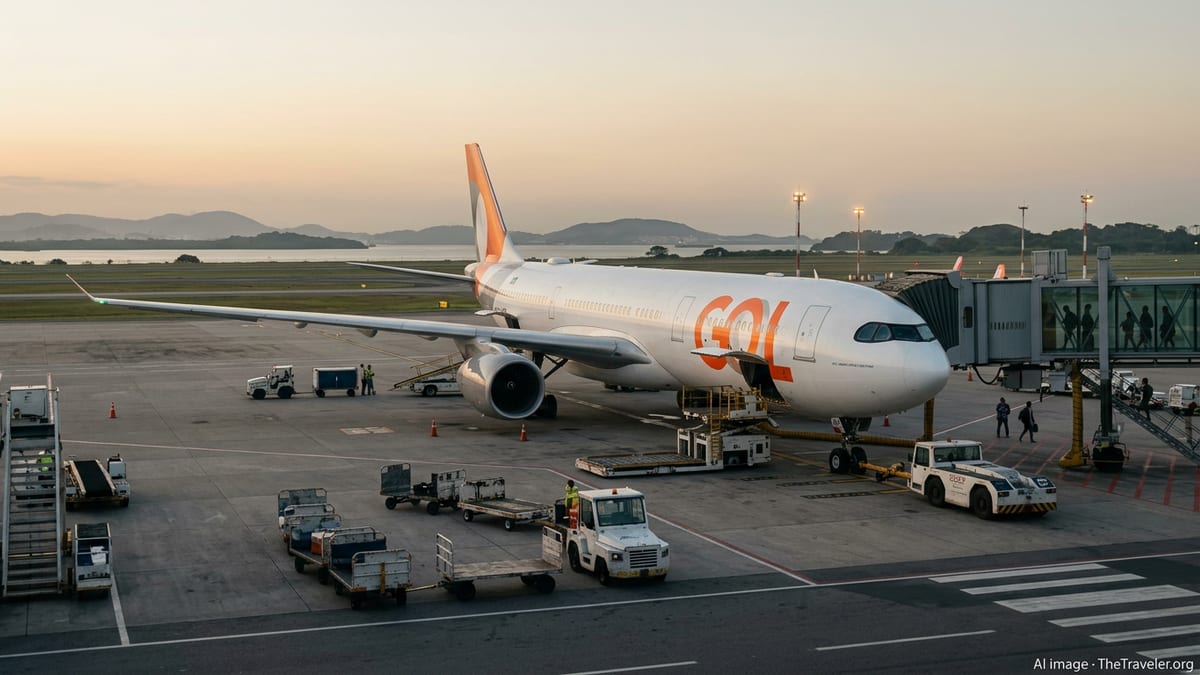
Publicly available information shows that GOL, long known as a low-cost operator focused on domestic and regional routes, is pivoting toward a new role as a long-haul player based at Rio de Janeiro/Galeão International Airport. The shift follows the airline’s restructuring and the decision to introduce up to five Airbus A330neo widebody aircraft between 2026 and 2027, enabling nonstop services from Rio to major European gateways.
Recent coverage of the airline’s strategy indicates that Paris Charles de Gaulle and Lisbon have been identified as GOL’s first scheduled destinations in Europe to be served from Rio. The A330neo’s range and efficiency are central to the plan, allowing the carrier to operate non-stop to central and western Europe while maintaining competitive costs and payloads.
The push into Europe is closely linked to GOL’s broader international build-out from Rio, which also includes its first long-haul route to New York John F. Kennedy, due to begin in July 2026. Industry observers view the European phase as a natural follow-on, positioning Rio as a true intercontinental hub for the airline rather than a secondary option to São Paulo.
By anchoring widebody operations at Galeão, GOL is also aligning itself with long-term efforts by local authorities and tourism stakeholders to rebalance Brazil’s international traffic away from a near-exclusive focus on São Paulo and toward a more diversified network that highlights Rio’s global appeal.
Direct Links to Lisbon and Paris Reshape Travel Patterns
According to recent aviation and travel trade reports, GOL’s planned nonstop flights from Rio to Lisbon and Paris later in 2026 are designed to capture both leisure and visiting-friends-and-relatives traffic, while offering new options for corporate travelers. Lisbon is expected to function as a key gateway for connections across Europe, particularly to secondary cities in Iberia, while Paris Charles de Gaulle offers access to one of the continent’s largest connecting hubs.
These routes are poised to change long-standing travel habits between Brazil and Europe. Today, many passengers from Rio either connect via São Paulo or rely on foreign carriers for direct transatlantic options. A dedicated Brazilian operator with a strong domestic network at Rio can route travelers from across the country into the new long-haul departures, simplifying itineraries and potentially lowering total journey times.
The choice of Lisbon and Paris also reflects deep cultural and economic ties. Lisbon offers a historic link to Brazil’s Portuguese heritage and is already a favored entry point for Brazilian travelers seeking access to the Schengen Area. Paris, for its part, remains one of the most sought-after destinations for Brazilian tourists and a central hub for European and North African connections, reinforcing the strategic value of the route for both inbound and outbound flows.
Travel industry analysts note that the combination of these two cities gives GOL a strong foundation for future European growth. If demand materializes as expected, additional frequencies or new destinations could follow, further embedding Rio within Europe’s long-haul network maps.
Tourism Boom Prospects for Rio and Beyond
The prospect of new nonstop links from Rio to Lisbon and Paris is already being framed by tourism bodies and market commentators as a catalyst for a fresh wave of international arrivals in Brazil. Easier access from two of Europe’s major outbound markets could encourage more first-time visitors to combine Rio with other Brazilian destinations on multi-stop itineraries.
GOL’s extensive domestic network gives it a structural advantage in distributing European passengers beyond Rio to beach destinations in the Northeast, eco-tourism hubs in the Amazon, and cultural centers such as Salvador and Belo Horizonte. With through-ticketing and coordinated schedules, travelers arriving from Lisbon or Paris would be able to connect on the same airline to smaller cities that previously required complex routing on multiple carriers.
The timing of the new routes, coming as Brazil’s tourism sector continues to rebuild and diversify after recent global disruptions, is also significant. Industry data for 2025 and early 2026 suggest a steady rebound in European demand for long-haul leisure travel, with Brazil often positioned in surveys as a high-interest destination for nature, culture, and events.
For Rio itself, a stronger position as a long-haul hub may encourage additional hotel investment, conference bids, and event tourism, building on the city’s track record with major global gatherings. Tourism officials and business groups are expected to watch booking trends closely once GOL publishes detailed schedules and fares for the Lisbon and Paris routes.
Competitive Dynamics in the Transatlantic Market
The planned GOL services will enter a transatlantic arena already served by European and Brazilian carriers linking Rio and São Paulo with major hubs such as Paris, Lisbon, Madrid, and Frankfurt. Bringing a new Brazilian competitor into the Rio to Europe segment could prompt adjustments in capacity, pricing, and partnership strategies among incumbent airlines.
Market analysis published in recent weeks suggests that GOL may leverage interline and codeshare arrangements to extend its reach beyond its own European gateways, while also feeding partners’ services deeper into Brazil via Rio. At the same time, existing joint ventures between European carriers and Latin American partners are likely to respond with promotional fares, schedule tweaks, or enhanced loyalty benefits to retain share.
For travelers, this additional competition generally translates into a broader choice of departure times, aircraft types, and fare products. GOL’s low-cost heritage may also influence how it structures its long-haul offering, with an emphasis on unbundled services, competitive base fares, and paid ancillaries such as extra legroom seats and onboard connectivity.
Industry observers caution, however, that sustaining long-haul routes requires consistent year-round demand, not only during peak holiday periods. The performance of the Rio to New York service, launching in mid-2026, is expected to offer early clues about GOL’s ability to manage seasonality and yield on its new widebody network before the European routes reach full maturity.
Infrastructure and Connectivity at Rio Galeão
The success of GOL’s European initiative will depend not only on aircraft and route planning but also on the ability of Rio Galeão to function smoothly as an international hub. Recent public information about the airport highlights ongoing efforts to optimize terminal operations, streamline security and immigration processing, and support higher volumes of widebody traffic.
For connecting passengers, the airport’s role is particularly important. Efficient minimum connection times, clear wayfinding, and reliable baggage transfers are essential if GOL is to convince travelers from secondary Brazilian cities that routing via Rio is as convenient as, or better than, flying through São Paulo or European hubs on foreign carriers.
There is also a local economic angle. Stronger hub activity at Galeão can drive employment in ground handling, catering, maintenance, and airport services, while encouraging ancillary development such as airport hotels and logistics facilities. As long-haul operations ramp up, these secondary benefits may become increasingly visible in Rio’s broader economic statistics.
Looking ahead, the combination of a retooled GOL, new A330neo aircraft, and carefully chosen European gateways suggests that Rio de Janeiro is on the cusp of a new phase in its aviation story. If the airline’s plans for direct flights to Lisbon and Paris unfold as anticipated, travelers on both sides of the Atlantic can expect more choice, new itineraries, and a renewed spotlight on Brazil as a long-haul tourism destination.