

More news on this day
Brazilian low-cost carrier GOL Linhas Aéreas is set to enter the long-haul arena with a new nonstop service between Rio de Janeiro and New York, a move poised to shake up Brazil–US travel and intensify competition on one of South America’s most strategically important corridors.
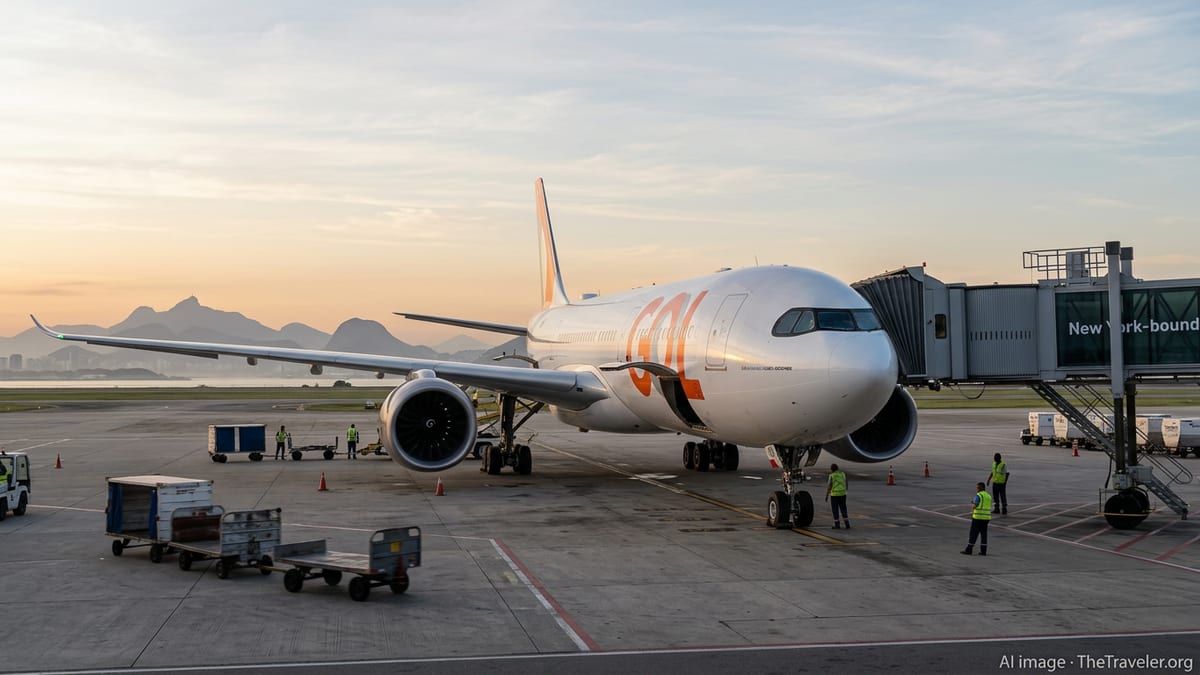
A Milestone First Long-Haul for GOL
GOL confirmed this week that it will launch nonstop flights between Rio de Janeiro’s Galeão International Airport and New York’s John F. Kennedy International Airport, with operations scheduled to begin on July 8, 2026. The route marks the airline’s first true long-haul service and its debut use of widebody aircraft, signaling a decisive shift beyond its traditional short and medium-haul network across Brazil and South America.
The new service will initially operate three times per week, with schedules designed for overnight transcontinental crossings that land in New York in the morning and return to Rio overnight. This timing targets both business travelers seeking full workdays on either side of the flight and leisure passengers connecting seamlessly into morning bank departures across North America.
Tickets have already gone on sale through GOL’s distribution channels, including its website, app, and partner agencies, giving early bookers the chance to secure seats on what is being billed domestically as a landmark step in Brazilian aviation. Launch events in Rio have highlighted the strategic importance of Galeão as an international gateway and underscored the airline’s renewed ambition after restructuring.
Airbus A330neo Widebodies Redefine GOL’s Model
To operate the near nine-hour Rio–New York sector, GOL will deploy newly leased Airbus A330-900neo aircraft, a significant evolution from its all‑Boeing 737 narrowbody fleet. The move introduces true long-haul comfort and range capabilities, positioning the airline to compete on cabin experience rather than just price.
The A330neo configuration is expected to feature a dedicated business cabin with lie-flat seating, a premium economy section, and an expanded standard economy cabin with upgraded in-flight entertainment and connectivity. While full cabin details have not yet been disclosed, GOL executives have emphasized a product tailored to both corporate contracts and higher-spend leisure travelers accustomed to widebody standards on transcontinental routes.
Operationally, the A330neo’s fuel efficiency and range performance are central to GOL’s entry into long-haul markets. The aircraft allows nonstop service between Rio and New York with competitive operating costs, an essential element for an airline historically built on a low-cost model. Industry observers note that this fleet pivot may also open the door to future transatlantic routes from Brazil to Europe if the Rio–New York performance meets expectations.
New Pressure on Brazil–US Competitors
The Rio–New York market is already served seasonally by US and Brazilian full-service carriers, but GOL’s entry introduces a new low-cost challenger with strong domestic feed. By leveraging its extensive network within Brazil, GOL aims to funnel passengers from secondary cities through Rio to New York, challenging the dominance of hubs in São Paulo and other regional gateways.
For travelers, the added capacity is expected to translate into sharper pricing and more choice across fare types, particularly during peak holiday periods when Brazil–US tickets traditionally spike. Travel industry analysts suggest that competing airlines may be forced to fine-tune schedules, loyalty benefits, and corporate deals to protect market share on a corridor vital to both business and leisure demand.
The move also reinforces the strategic importance of Rio’s Galeão airport, which has been working to regain long-haul routes and international prominence. Additional nonstop links to New York strengthen Rio’s position as a direct entry point to Brazil for North American visitors, reducing the need for connections via São Paulo or other hubs.
Tourism and Business Travel Boost for Rio and New York
Tourism authorities on both sides of the route are anticipating tangible gains once flights begin in July 2026. For Rio de Janeiro, additional nonstop capacity to New York is expected to accelerate the recovery of inbound US tourism, encouraging longer stays and higher spending, particularly in beach districts and cultural neighborhoods that attract North American visitors.
Business travel stakeholders also see upside. With New York serving as a global financial and corporate center, the nonstop Rio–JFK link offers Brazilian companies more efficient access to investors, partners, and head offices. At the same time, US firms with interests in energy, infrastructure, and technology in Brazil gain a direct bridge into one of the country’s most important economic hubs.
Travel agencies and corporate travel managers are already incorporating the new flight into medium-term planning, viewing it as an alternative to connections via São Paulo or Atlanta. As schedules and final onboard products are detailed, observers expect a clearer picture of how GOL will segment and price the route for both high-yield and price-sensitive travelers.
Gateway to a Wider Intercontinental Network
GOL’s Rio–New York launch is widely seen as a test case for a broader intercontinental strategy. With deliveries of up to five Airbus A330neo aircraft planned between 2026 and 2027, company executives have openly referenced the possibility of opening future long-haul routes from Brazil to European cities such as Lisbon and Paris, using both Rio and São Paulo as bases.
If successful, the new operation could reshape GOL’s identity from a primarily domestic low-cost carrier into a regional player with a meaningful long-haul footprint. That evolution would mirror trends seen in other markets where budget-oriented airlines have selectively entered transcontinental segments, blending competitive pricing with streamlined onboard services.
For now, all eyes are on July 8, 2026, when GOL’s first A330neo is scheduled to depart Rio de Janeiro for New York with paying passengers on board. The flight will not only inaugurate a new route, it will mark the beginning of a new chapter in how Brazilians and North Americans cross continents between two of the hemisphere’s most emblematic cities.