

More news on this day
Brazilian carrier GOL Linhas Aéreas has unveiled its first-ever long-haul route, a new nonstop service linking Rio de Janeiro’s Galeão International Airport with New York’s John F. Kennedy International Airport from July 8, 2026, a move expected to reshape Brazil–US air travel and intensify competition on one of the region’s most strategic corridors.
GOL Steps Onto the Long-Haul Stage
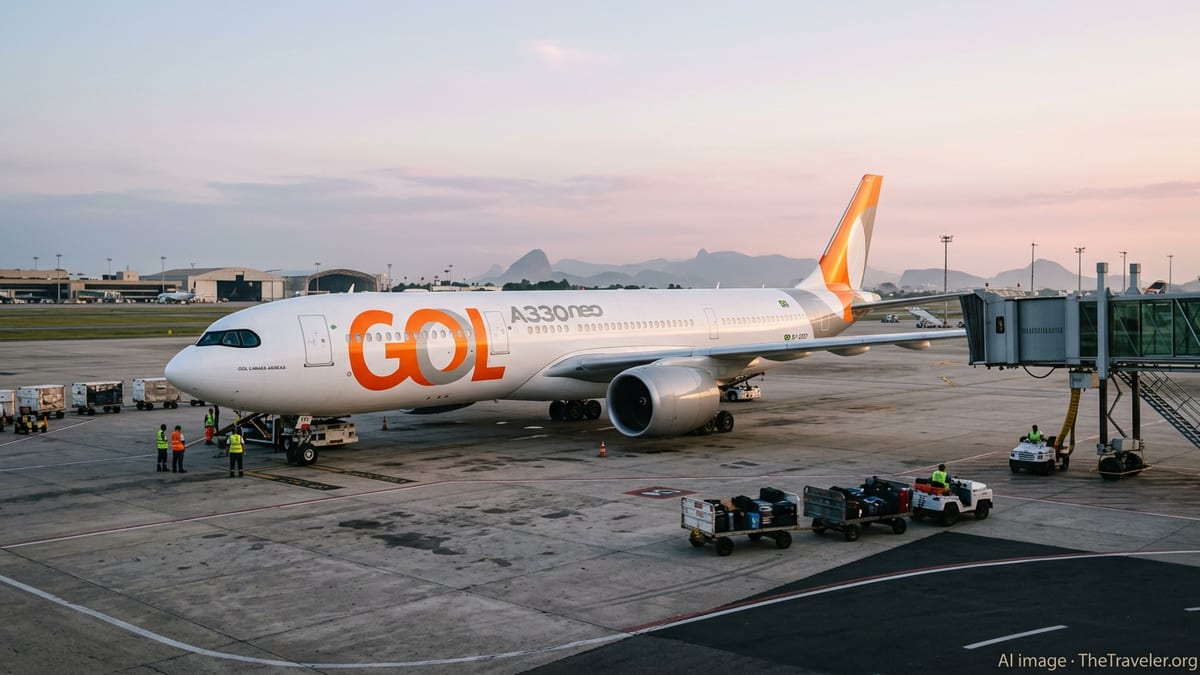
The Rio–New York launch marks a watershed moment for GOL, which has historically focused on short and medium haul operations using a single-aisle Boeing 737 fleet. The airline will deploy widebody Airbus A330 aircraft on the route, signaling a decisive shift in strategy as it targets higher-yield intercontinental traffic and positions Rio as a stronger gateway to North America.
Beginning July 8, 2026, the carrier plans to operate three weekly flights between Rio Galeão and New York JFK, with evening departures from Brazil designed to offer overnight journeys and convenient morning arrivals in the United States. The northbound leg is scheduled to leave Rio in the late evening, while the southbound return departs New York in the morning and lands back in Brazil early in the evening, aligning with onward domestic connections.
For GOL, the route is more than a network addition; it is the first step in a broader long-haul expansion that will eventually see the airline use a new fleet of Airbus A330neo jets on services between South America, North America and Europe. The Rio–New York launch is being framed internally as the proving ground for GOL’s ability to compete head-to-head with established full-service rivals on transcontinental sectors.
New Competition on a Crowded Brazil–US Corridor
The Rio–New York market is already served by major US carriers, but GOL’s entry is set to alter the competitive dynamics. American Airlines and Delta Air Lines operate nonstop flights between Rio Galeão and JFK and other US hubs, targeting a mix of leisure and corporate passengers on both sides of the hemisphere. GOL’s move adds a homegrown Brazilian challenger on the same trunk route and leverages its strong domestic network.
By offering a Brazilian-branded alternative on long-haul services, GOL aims to capture travelers who already fly the airline on domestic and regional itineraries and prefer to remain with one carrier from origin to final destination. The airline’s position within the broader alliance ecosystem, including codeshares and partnerships, is expected to help it feed traffic from secondary Brazilian and South American cities onto the Rio–New York flights.
Industry analysts note that the added capacity on the corridor could translate into more competitive fares and a wider range of schedule options for travelers. With three major players now vying for Rio–New York traffic, pricing, cabin product and frequent flyer benefits will be closely watched as airlines look to defend market share and court high-value customers in both leisure and corporate segments.
Rio Galeão Poised as a Growing International Hub
GOL’s decision to base its first long-haul route out of Rio Galeão underscores the airport’s ambition to reclaim relevance as an international hub. Galeão has seen fluctuating long-haul traffic in recent years as airlines recalibrated their Brazil strategies, but GOL’s commitment brings renewed focus and capacity to the country’s most iconic coastal city.
The airline already operates more than 30 domestic and regional routes from Rio, linking the city to Amazon gateways, the country’s northeast beaches, the agribusiness heartland and major metropolitan centers such as São Paulo, Brasília and Belo Horizonte. These flights will now act as feeders for the transcontinental service, creating one-stop connections from across Brazil onto a single-ticket itinerary to New York.
Airport officials and local tourism leaders have welcomed the announcement as a sign that Galeão is regaining momentum as a platform for international growth. The new long-haul operation is expected to support increased investment in airport services, including ground handling, catering and maintenance, while also boosting demand for hotels and conference facilities in the surrounding area.
Tourism and Business Travel Set to Surge
The new nonstop link between Rio and New York is being hailed by tourism authorities as a powerful new driver of visitor flows in both directions. The simplified journey is expected to appeal strongly to US travelers drawn to Rio’s beaches, culture and events calendar, as well as to Brazilians visiting New York for shopping, entertainment, education and business.
Brazil’s tourism officials anticipate that the additional seat capacity, combined with GOL’s extensive domestic connectivity, will open up easier access to less-visited regions such as the Amazon, Pantanal and inland colonial towns. Travelers originating in New York and connecting through Rio will be able to reach these destinations without the need for multiple interline transfers or airport changes, a convenience that could prove decisive for first-time visitors.
On the corporate side, the route is expected to deepen ties between financial and technology hubs in both countries. Rio and São Paulo’s energy, mining and services sectors maintain strong links with New York’s financial markets, and the added nonstop option is likely to feature prominently in corporate travel policies. Trade missions, conferences and cross-border investment roadshows are all tipped to benefit from the more streamlined air bridge.
Passenger Experience and Fleet Transformation
For travelers, GOL’s long-haul debut will bring a new onboard experience compared with the airline’s familiar single-aisle operations. The Airbus A330 widebodies will offer a multi-class cabin layout with lie-flat or deeply reclining seats in the premium cabin, an expanded economy section and improved inflight entertainment, including Wi-Fi connectivity and live TV on selected aircraft.
The airline has highlighted cabin upgrades such as new-generation seats using recyclable materials, larger overhead storage and a refreshed lighting concept aimed at reducing jet lag on overnight flights. Meal services are set to be enhanced as well, with menus tailored to both Brazilian and US tastes and an increased emphasis on healthier, locally sourced ingredients.
Behind the scenes, the transition into long-haul flying involves a major operational shift for GOL, including new crew training programs, long-range maintenance planning and adjustments to scheduling to accommodate aircraft utilization over longer sectors. Successful execution on the Rio–New York route is expected to pave the way for additional destinations as the airline takes delivery of more A330-family aircraft and cements its place in the intercontinental market.