

More news on this day
Brazilian low-cost carrier GOL is taking a bold step into long-haul flying, confirming new nonstop services between Rio de Janeiro’s Galeão Airport and New York’s John F. Kennedy International Airport from July 2026, a move set to reshape connectivity between Brazil and the United States.
A Landmark Long-Haul Move for GOL
GOL Linhas Aéreas announced on March 6, 2026, that it will launch direct flights between Rio de Janeiro Galeão (GIG) and New York JFK starting July 8, 2026. The route marks the airline’s first genuine long-haul operation using widebody aircraft and signals a new growth phase after its recent financial restructuring in the United States.
The Rio–New York service has long been dominated by full-service carriers, but GOL’s entry introduces a hybrid proposition: a low-cost airline operating a long-haul route with upgraded onboard product and a strong focus on competitive fares. Tickets have already gone on sale in Brazil and key international markets, aiming to capture both leisure and business demand for the busy North Atlantic corridor.
The new flights are also part of a broader strategy to reposition Rio de Janeiro’s Galeão as an international gateway. City and state authorities have actively courted airlines with incentive packages, and GOL’s decision to base new widebody aircraft at GIG underscores the airport’s ambition to reclaim long-haul traffic lost in recent years to São Paulo and other hubs.
For travelers, the move means another nonstop option linking Brazil’s most globally recognized city with the New York metropolitan area, reducing total journey times for passengers who previously had to connect via São Paulo, Miami or other hubs when flying GOL or its partners.
Route Details, Schedule and Flight Times
GOL’s Rio–New York operation will launch with three weekly roundtrips, gradually ramping up as demand builds. According to the initial schedule filing, flights will depart Rio de Janeiro Galeão in the late evening and arrive at New York JFK early the following morning, allowing same-day connections onward within the United States.
In the opposite direction, departures from JFK are planned for late evening, arriving in Rio mid-morning. This pattern is designed to maximize connectivity with GOL’s domestic network at GIG, enabling passengers from cities such as Belo Horizonte, Brasília, Porto Alegre and Salvador to connect to and from the New York service on the same day.
The block time between Rio and New York is expected to be approximately 10 hours northbound and around 9 hours southbound, depending on winds and seasonal routing. The overnight nature of both legs will appeal to travelers seeking to arrive with a full day ahead, whether for business meetings in Manhattan or leisure stays along Rio’s waterfront.
Operations will use JFK’s established international infrastructure, giving passengers access to full immigration and customs facilities and onward connections with U.S. and international partners. Exact terminal and gate allocations may evolve as the launch date approaches, but GOL is positioning the route as a key piece of its broader partnership and codeshare strategy in North America.
New Airbus A330-900neos and Onboard Experience
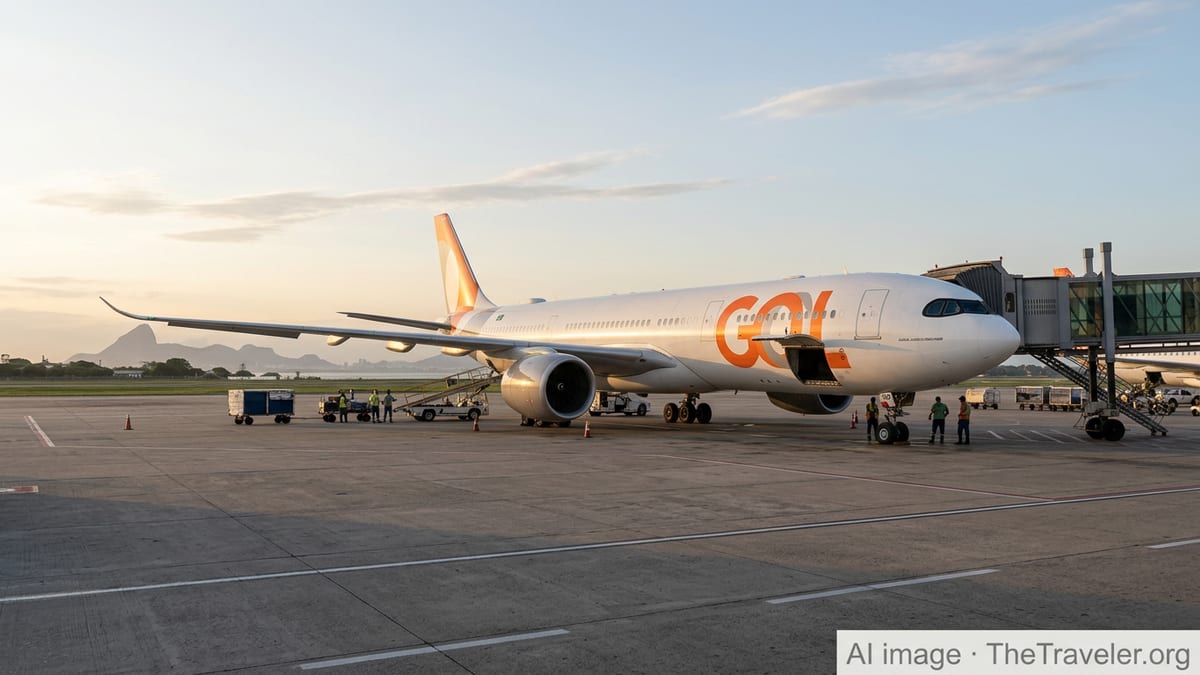
The Rio–New York flights will be operated by GOL’s new Airbus A330-900neo aircraft, a significant departure from the airline’s traditional all-Boeing 737 fleet. The widebody jets offer the range and capacity required for long-haul missions and will feature a three-class configuration tailored for both leisure and corporate travelers.
While final cabin details are still being refined, the A330neos are expected to include a dedicated business cabin with lie-flat seats, a premium economy section with extra legroom and enhanced amenities, and a high-density economy cabin aligned with GOL’s low-cost DNA. All classes are slated to offer personal in-seat entertainment, USB and power outlets, and onboard Wi-Fi on most sectors, subject to coverage.
The introduction of the A330-900neo is strategically important for GOL beyond the New York route. The airline has signaled plans to deploy the aircraft on additional long-haul services from Rio, including future routes to Paris and Lisbon, creating a mini long-haul hub at Galeão. For travelers, this means more nonstops to Europe and North America under a single brand, with consistent service standards and the ability to earn and redeem loyalty points across the network.
The use of modern, fuel-efficient widebodies also supports GOL’s narrative around cost discipline and environmental performance. The A330neo’s lower fuel burn per seat compared with older widebody types should help the airline keep fares competitive while managing operating costs on the lengthy transcontinental sector.
Fares, Competition and What Travelers Should Expect
GOL has positioned its Rio–New York fares to undercut many legacy competitors while maintaining a modular, “unbundled” product structure. Entry-level economy tickets will not automatically include checked baggage or seat selection, with passengers able to add extras as needed. Higher fare families and premium cabins will bundle more services, appealing to business travelers and long-stay visitors.
The route enters a competitive landscape that already includes U.S. and Brazilian carriers linking Rio and New York, either nonstop or via connections. GOL aims to differentiate itself with aggressively priced nonstops from Rio, a robust domestic feed at Galeão and loyalty benefits through its frequent flyer program and international partners. The airline also expects to tap into strong inbound tourism demand from the United States, particularly for events, festivals and peak holiday travel.
Travelers booking the new service should pay close attention to fare rules, especially around baggage, changes and cancellations, which can vary significantly between the lowest-price economy tickets and more flexible options. Food and beverage service standards will be upgraded compared with GOL’s short-haul offering, but the level of inclusions may still differ by cabin class and fare type.
Given the airline’s recent emergence from Chapter 11 restructuring in the United States, some travelers may be watching reliability and operational performance closely. GOL has emphasized that its refreshed fleet and streamlined cost base are intended to support more robust long-haul operations, with a focus on on-time performance and schedule stability on this flagship route.
Practical Tips for Booking and Flying the New Route
For travelers considering the new Rio–New York flights, early booking is likely to yield the most attractive fares, particularly around high-demand periods such as late July, August, Christmas and New Year. As with most long-haul launches, initial promotional pricing is expected, followed by dynamic adjustments based on load factors and competitor responses.
Passengers originating in other Brazilian cities should look for through itineraries that combine domestic segments with the GIG–JFK leg on a single ticket. This approach typically simplifies baggage handling and misconnection protection compared with separate point-to-point bookings. Minimum connection times at Galeão are generally manageable, but travelers should still allow adequate buffers, especially during peak hours.
On arrival in New York, Brazilian passengers must clear U.S. immigration and customs at JFK, even if they hold onward connections to other U.S. destinations. Conversely, U.S. and other international travelers heading to Brazil will clear immigration and customs in Rio, then recheck baggage if connecting to domestic flights. Allowing extra time for formalities, especially on the first days of the new operation, is advisable.
As launch day approaches, travelers should monitor communications from GOL for any fine-tuning of schedules, aircraft deployment or cabin details. For now, the announcement of nonstop Rio–New York flights with brand-new A330neos represents a notable milestone for Brazilian aviation and a welcome new option for transcontinental travelers between South and North America.