

More news on this day
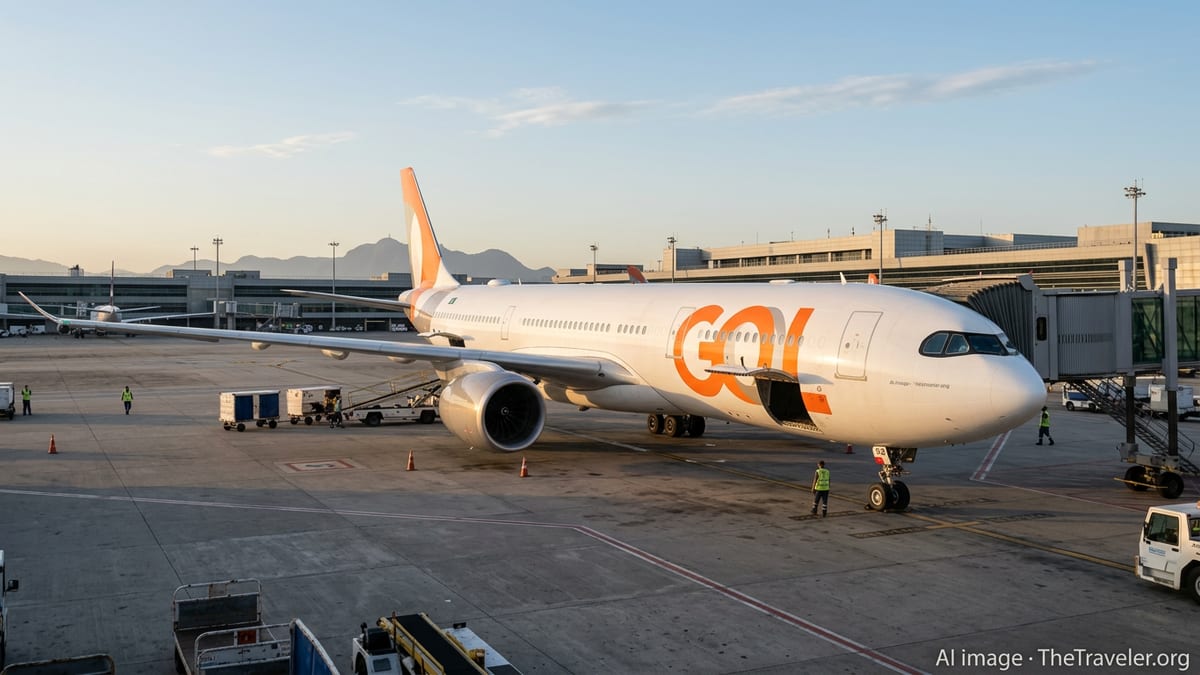
Brazil’s GOL Airlines is preparing to expand its long-haul network with a planned nonstop route between Rio de Janeiro and Orlando operated by newly leased Airbus A330neo aircraft, signaling a significant shift in the carrier’s strategy for Brazil–United States travel.
Get the latest news straight to your inbox!
New Nonstop Link Between Rio and Orlando
Publicly available industry coverage indicates that GOL has outlined plans to introduce a direct, long-haul service between Rio de Janeiro’s RIOgaleão – Tom Jobim International Airport and Orlando International Airport, a key gateway for Brazilian vacationers visiting Florida. Sector analysis reports that the route is expected to be operated with widebody Airbus A330neo aircraft, allowing the airline to compete more directly in the Brazil–U.S. leisure market traditionally dominated by rivals using larger jets.
Travel trade publications focused on the Brazilian market describe the Rio–Orlando connection as part of a broader schedule reshaping that follows GOL’s exit from court-supervised restructuring in 2025. The planned service is framed as an extension of the carrier’s growing long-haul portfolio from major Brazilian hubs, adding another nonstop option alongside proposed services to U.S. and European destinations.
Market reports also highlight that the route design capitalizes on Rio de Janeiro’s rising profile as an international hub. RIOgaleão has been steadily regaining long-haul links, and GOL’s move to station widebody aircraft there strengthens the airport’s position as a primary departure point for Brazilian travelers heading to North America.
Airbus A330neo Brings Widebody Comfort to GOL Passengers
Aviation industry reporting shows that GOL plans to integrate up to five Airbus A330-900neo aircraft into its fleet, marking the airline’s first step into operating twin-aisle jets after years as an all-Boeing 737 carrier. These aircraft are expected to seat close to 300 passengers, with configurations designed for long-haul comfort on routes such as Rio–Orlando and other transatlantic and transcontinental services.
The A330neo family is recognized in manufacturer and operator documentation for its quieter cabin, modern air filtration systems, and next-generation wing and engine technology aimed at reducing fuel burn. For passengers flying between Brazil and Florida, these features translate into a more comfortable in-flight experience, particularly on overnight or extended daytime sectors.
Specialist coverage of GOL’s fleet plans suggests that the cabin layout on the A330neo will likely include a differentiated premium section, extra-legroom economy seating, and standard economy, aligning the airline with global competitors serving Orlando. This is a notable evolution for a brand historically associated with short- and medium-haul domestic operations.
Strengthening Brazil–United States Leisure and VFR Demand
Tourism market briefings on Brazil consistently identify Orlando as one of the most in-demand U.S. destinations for Brazilian travelers, driven by theme park tourism, shopping, and strong visiting-friends-and-relatives traffic. Historically, this demand has been met by a mix of Brazilian and U.S. carriers offering services from São Paulo, Rio, and northeastern Brazil to Central Florida.
The introduction of a nonstop GOL flight from Rio de Janeiro to Orlando using high-capacity A330neo aircraft is expected to increase seat supply between the two markets and potentially stimulate further demand. Industry analysts note that additional capacity often supports more competitive pricing and increased itinerary flexibility, particularly during peak holiday periods and Brazilian school vacations.
Regional tourism reports also point to growing interest in multi-destination itineraries that combine Rio’s beaches and cultural attractions with Orlando’s entertainment offerings. A direct link between the cities provides tour operators and travel agencies with a more straightforward proposition for packaging combined Brazil–Florida trips, which may be marketed to both Brazilian outbound travelers and U.S.-based visitors looking for two-center vacations.
Competitive Pressure in a Crowded Orlando Market
GOL’s planned entry into the Rio–Orlando corridor comes at a time when several carriers are reinforcing their presence in Central Florida. International airline announcements over the past year show a steady buildup of services into Orlando, underscoring the destination’s importance on both leisure and family travel maps.
Aviation commentators indicate that by deploying widebody A330neo aircraft, GOL positions itself to better compete on comfort and capacity with other operators already offering long-haul service to Orlando. The route also broadens GOL’s long-haul footprint beyond traditional partnerships and code-shares, adding its own branded metal to a key international market.
Observers of Brazil’s aviation landscape suggest that this move may prompt tactical responses from competitors through schedule adjustments, aircraft upgauging, or promotional fares on overlapping routes. The resulting environment could benefit travelers through greater choice of departure times, products, and price points on journeys between Brazil and the United States.
Implications for GOL’s Post-Restructuring Strategy
Corporate and financial filings show that GOL has used its emergence from Chapter 11 protective proceedings as a springboard to rethink its long-haul strategy. The decision to lease Airbus A330neo aircraft, and to use them on sectors such as Rio–Orlando, illustrates a diversification away from an exclusively narrowbody fleet and signals a renewed ambition in the international market.
Industry commentary notes that relying solely on single-aisle Boeing 737 aircraft had limited GOL’s ability to contest high-density long-haul routes. The introduction of twin-aisle A330neo jets provides the scale required to serve popular U.S. and European gateways, while potentially improving unit costs on longer sectors. This shift is viewed as a pivotal step in restoring the airline’s competitiveness and widening its revenue base.
For travelers, the strategic shift should translate into a more international-facing GOL brand, with Rio–Orlando standing out as one of the most visible examples of the new direction. As the airline progressively receives additional A330neo aircraft, further route announcements are anticipated, suggesting that the Rio–Orlando link may be just the beginning of a broader expansion in Brazil–United States connectivity.