

More news on this day
Brazilian low-cost carrier GOL is set to launch nonstop flights between Rio de Janeiro and New York in July 2026, a landmark move that signals the airline’s entry into long-haul wide-body operations and a new phase in Brazil–United States connectivity.
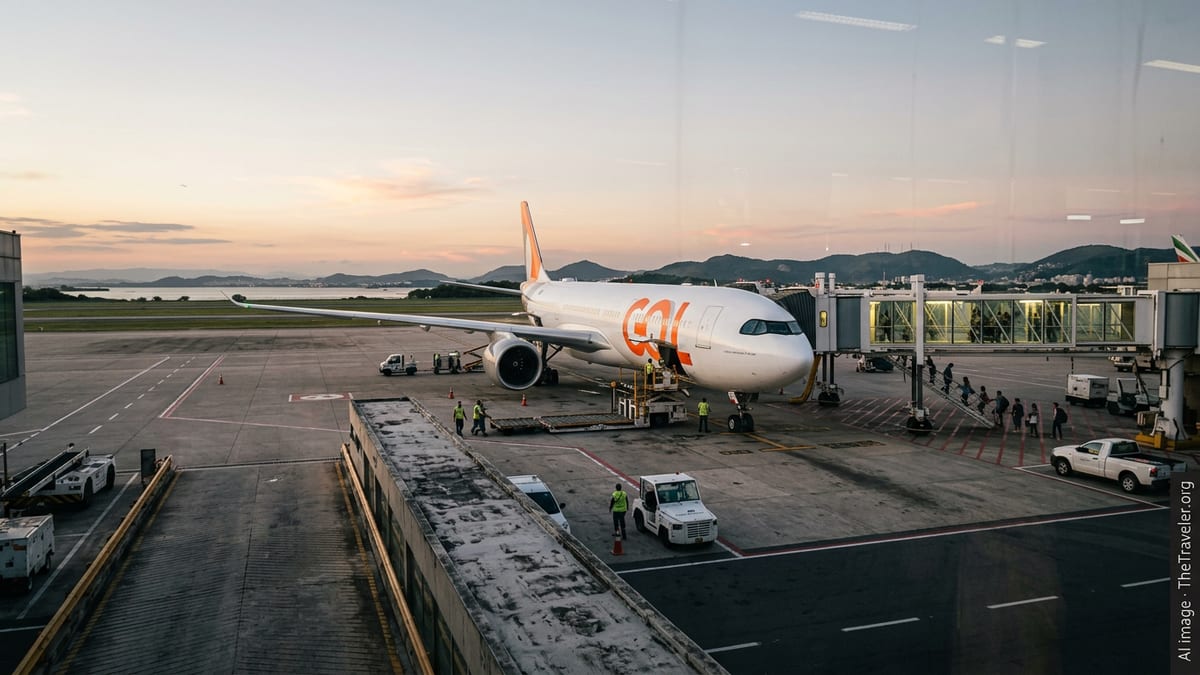
New Route Links Galeão and JFK From July 8
GOL Linhas Aéreas will inaugurate its new Rio de Janeiro Galeão to New York John F. Kennedy service on July 8, 2026, initially operating three times per week during the Southern Hemisphere winter and the peak Northern Hemisphere summer. The flights will depart Rio in the evening and arrive in New York the following morning, with the return leg leaving JFK in the morning and landing back in Rio early in the evening.
The launch places GOL in direct competition on one of the most prominent long-haul markets out of Brazil, currently served by full-service international carriers. For travelers, the new option adds capacity and schedule choice on a corridor that has seen rising demand from both leisure and business segments.
According to schedules released by the airline, the route will operate seasonally at first, running through late October 2026, with the potential to be extended or expanded in frequency depending on performance. The company is positioning the flight as a flagship international service that will anchor broader growth at Rio’s Galeão International Airport.
First-Ever Wide-Body Operation for a Short-Haul Specialist
The Rio–New York route marks a strategic turning point for GOL, which has traditionally focused on domestic and regional operations using a single-type fleet of Boeing 737 aircraft. To operate the nearly 4,800-mile sector, the carrier will deploy newly leased Airbus A330-900neo jets, configured with around 300 seats and capable of flying up to 15 hours.
This is the first time GOL has scheduled regular wide-body service, a move that follows its financial restructuring and renewed focus on higher-yield international markets. Industry analysts note that the shift broadens GOL’s profile from a point-to-point low-cost operator into a player willing to compete on longer routes where cabin product, range and fuel efficiency are critical.
The introduction of the A330neo fleet also signals a diversification away from GOL’s long-standing single-aisle model. Wide-body aircraft will allow the airline to pursue additional routes to Europe and North America, with the company already flagging plans for future services from Rio to Paris and Lisbon as part of the same international expansion strategy.
Building an International Hub Strategy at Galeão
The new Rio–New York service is central to GOL’s plan to consolidate Galeão as its primary international hub. The airline operates more than 30 routes from Rio, and many of these domestic flights will be timed to feed the transcontinental departure, linking Amazon gateways, northeastern beach destinations and southern Brazilian cities directly into the New York service.
Local authorities have backed the expansion as part of a broader effort to restore Galeão’s role as a major long-haul gateway. The city of Rio has offered financial incentives to support the route, including an estimated multimillion-real package aimed at boosting international traffic through the airport. Officials argue that stronger hub connectivity will support tourism, conferences and trade links at a time when Rio is preparing for a surge in foreign visitors.
For GOL, concentrating long-haul growth in Rio rather than São Paulo allows the airline to differentiate its network in a crowded Brazilian market. By anchoring new intercontinental flights at Galeão, the carrier aims to capture travelers who prefer a one-stop or nonstop option via Rio, while also reinforcing the city’s long-term ambitions to rival other South American hubs.
Tourism and Business Travel Gains on the Brazil–US Corridor
Tourism stakeholders in both Brazil and the United States are highlighting the GOL launch as a timely boost ahead of what is expected to be a record year for inbound travel to Rio de Janeiro. The nonstop flight to New York opens an additional pathway for US visitors drawn by the city’s beaches, cultural events and major international festivals scheduled for 2026.
On the outbound side, the route offers Brazilian travelers a direct link into one of the world’s most important business and leisure destinations. From New York, passengers will be able to connect onward to key cities across the United States and Canada on partner and interline carriers, reinforcing the role of JFK as a superhub for transatlantic and transcontinental itineraries.
Travel industry observers suggest that increased seat capacity and competition could help moderate fares on the Brazil–US market, which has historically seen price spikes during holiday and peak travel periods. At the same time, the presence of an additional carrier on the Rio–New York corridor may encourage existing operators to refine schedules and onboard products to maintain market share.
Positioning GOL for the Next Phase of Global Competition
The decision to launch long-haul service comes after GOL completed a court-supervised restructuring in the United States and refocused its strategy around profitable growth and international partnerships. Executives describe the Rio–New York route as a symbol of the airline’s renewed competitiveness and an example of how targeted intercontinental flying can complement its dominant domestic presence.
Looking ahead, industry analysts will be watching load factors, yields and operational reliability on the new route as indicators of whether GOL can successfully scale a long-haul product while preserving its cost discipline. The performance of the A330neo operation is likely to shape the pace at which additional transatlantic destinations from Rio move from plan to reality.
If the Rio–New York service meets expectations, GOL could emerge as a more globally visible brand, no longer confined to short- and medium-haul markets. For travelers, that would mean more choice on key intercontinental routes, and for Rio de Janeiro, it would reinforce the city’s claim to be a leading aviation gateway between South America, North America and Europe.