

More news on this day
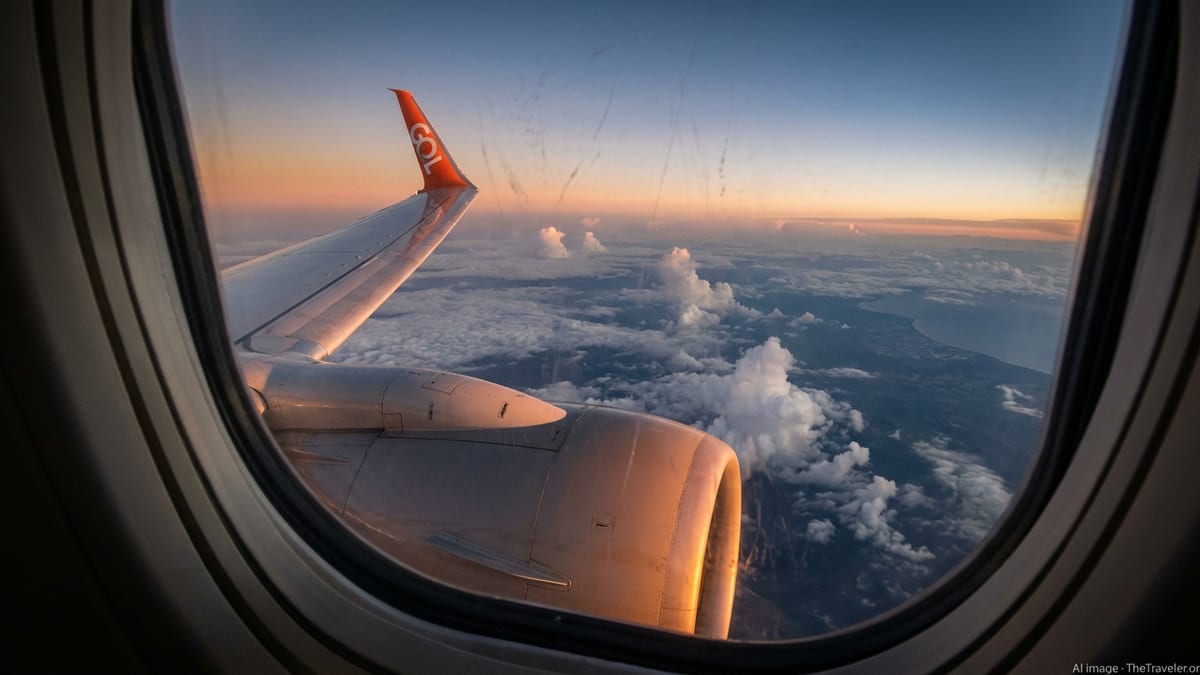
Brazilian carrier GOL Linhas Aéreas will launch nonstop flights between Asunción and Miami in June 2026, restoring Paraguay’s direct air link to the United States and setting a new distance record for the Boeing 737 MAX.
First Direct Paraguay–US Connection in More Than Five Years
The new Asunción–Miami route marks Paraguay’s first direct passenger connection to the United States since 2021, when previous nonstop services were suspended during the pandemic. For Paraguayan travelers, the announcement ends years of reliance on connections through regional hubs such as São Paulo, Lima and Panama City to reach North America.
GOL plans to operate four weekly round trips between Silvio Pettirossi International Airport in Asunción and Miami International Airport, with service expected to begin in the first half of June 2026, subject to final approvals from Paraguayan aviation regulator DINAC and counterpart authorities in Brazil and the United States. The carrier has already filed its request with DINAC, and government officials say remaining administrative steps are under way.
The move is being framed in Asunción as both a strategic and symbolic milestone. Paraguayan President Santiago Peña joined GOL executives at the Mburuvicha Róga presidential residence on February 10 to present the route, describing it as a long awaited bridge reconnecting Paraguayan citizens, businesses and the country’s diaspora with one of the Americas’ principal aviation gateways.
For GOL, the new link strengthens its role as a key player in northbound traffic from South America, complementing existing Miami services from Brazilian cities and deepening its presence in one of its most important international markets.
Record Breaking Route for the Boeing 737 MAX
Beyond its diplomatic and commercial weight, the Asunción–Miami route is attracting attention in the aviation world for its technical profile. Covering roughly 6,154 kilometers with an estimated block time of about eight hours, the service is set to become the longest nonstop route operated anywhere with a Boeing 737 MAX narrowbody.
GOL will deploy Boeing 737 MAX 8 aircraft on the route, leveraging the model’s extended range and improved fuel burn to make what was once a widebody mission viable with a single aisle jet. Aviation data specialists note that the new flight will surpass GOL’s current record length MAX route between Brasília and Orlando, and would rank as the longest scheduled 737 MAX operation globally under current timetables.
Operating such a long sector with a narrowbody poses specific planning challenges, from fuel management to payload trade offs, particularly in periods of adverse winds. GOL executives say the airline’s experience with transcontinental Brazilian services and northbound flights to the United States has prepared its operations teams for the new profile, and that the MAX fleet’s performance makes the route commercially sustainable.
The decision also reflects a broader industry trend in which next generation narrowbodies, including the 737 MAX and Airbus A321neo, are increasingly used to open long thin international routes that would not support the costs of larger widebody aircraft, especially in emerging markets.
Regulatory Green Light and TSA Security Certification
The launch of direct Paraguay–United States flights has depended not only on airline interest but also on regulatory and security milestones. Earlier in 2026, the United States Transportation Security Administration granted Silvio Pettirossi International Airport the necessary security certification to host nonstop flights to US territory, confirming that Asunción meets American standards for passenger screening, baggage handling and airport procedures.
That certification removed a key obstacle that had delayed the restoration of direct links after the pandemic. Paraguayan officials have highlighted the decision as recognition of the country’s investment in modernizing security infrastructure and processes at its main international gateway.
In parallel, GOL has formally requested authorization from DINAC to operate new international itineraries linking Brazil, Paraguay and the United States, using a regime of expanded traffic rights that allow the carrier to market the Asunción–Miami sector. Those applications cover both pure nonstop operations and triangular routings via Brazilian hubs, with the first flights tentatively dated from June 8, 2026.
Authorities in Asunción state that final approvals are contingent on routine administrative and bilateral steps but have expressed confidence that procedures will be completed in time for the airline to begin operating ahead of the North American summer peak and the 2026 World Cup, which will be hosted by the United States, Mexico and Canada.
Triangular Operations and Strategic Use of Traffic Rights
While the headline news is the nonstop Asunción–Miami connection, the underlying operational plan is more complex. GOL has proposed a system of triangular routes linking Brasília and Rio de Janeiro with Miami and Asunción, structured to take advantage of traffic rights agreed among Paraguay, Brazil and the United States.
According to filings and government statements, one operation is planned on a Brasília–Miami–Asunción–Miami–Brasília pattern, with a projected start date of June 8, 2026. A second operation would join Rio de Janeiro with Miami and Asunción starting in August 2026, with details of the exact routing still to be finalised based on aircraft performance and schedule optimisation.
These itineraries rely on advanced traffic freedoms that permit GOL, a Brazilian airline, to sell seats and carry cargo on the Miami–Asunción sector even though the flight continues to or originates from Brazil. Aviation specialists point out that this arrangement allows Paraguay to gain a direct US link without requiring its own carrier to operate long haul aircraft, while giving GOL additional feed from both Paraguayan and Brazilian markets into its Miami network.
From an operational standpoint, triangular patterns also improve aircraft utilisation, reducing the amount of time a jet spends idle on the ground far from its main bases. Analysts note, however, that careful scheduling will be needed to align departure and arrival times in Miami with onward connections and to maintain reliability on what will be very long duty days for aircraft and crews.
Economic Tailwinds for Tourism, Trade and Investment
Business leaders in Paraguay have welcomed the announcement as a potential catalyst for increased tourism, trade and foreign investment. Direct flights to Miami, a major gateway for the Americas and a key US hub for connections to Europe and the Caribbean, are expected to cut travel times and reduce the need for costly overnight layovers in third countries.
Tourism operators say the new route should make it significantly easier to promote Paraguay as a destination for North American visitors, particularly for niche segments such as cultural tourism in Asunción, eco and birdwatching trips to the Paraguayan Chaco and Itaipú region, and regional multi country itineraries that pair Paraguay with Brazil and Argentina.
Exporters and importers anticipate improved logistics for high value and time sensitive goods, from pharmaceuticals and electronics to perishables. With a nonstop option, freight forwarders will be able to offer shorter transit times and more predictable routing for shipments between Paraguay and key US markets, while Miami’s role as a consolidation hub may open new distribution channels.
Government officials also see the route as a tool to attract investment, particularly in service industries and regional headquarters operations, by reducing the perceived distance between Asunción and North American financial and technology centers. The hope is that easier access will encourage more site visits, corporate travel and business missions in both directions.
Passenger Experience and Onboard Product
GOL has not yet released full details of the onboard product specific to the Asunción–Miami service, but the airline’s existing long haul 737 MAX operations provide a guide. On comparable routes to Florida, the carrier typically offers a two class configuration with a premium cabin featuring enhanced legroom and upgraded service, alongside standard economy seating.
Given the route’s duration of about eight hours, GOL is expected to emphasize comfort elements such as adjustable headrests, access to digital entertainment via personal devices, and buy on board or pre ordered meal options aligned with long haul standards. The airline’s partnership with American Airlines in Miami is also likely to be highlighted as a benefit, enabling through check in and coordinated connections to a broad domestic US network.
For many Paraguayan passengers, especially those traveling to visit family or for study and business, the greatest change will be experiential rather than purely technical. A journey that currently involves changing aircraft in another South American hub and navigating separate immigration procedures will become a single nonstop flight, simplifying paperwork and reducing the stress associated with long international itineraries.
GOL has indicated that ticket sales for the new route will open in the coming weeks across its direct channels and frequent flyer program, giving travelers time to plan trips for the second half of 2026, including the busy World Cup period.
Regional Competitive Landscape and Connectivity
The Asunción–Miami launch comes amid intensifying competition among Latin American carriers for northbound traffic. Airlines based in Brazil, Colombia, Panama and Chile all offer extensive connections to the United States through their own hubs, and Paraguayan travelers have grown accustomed to routing through those airports in the absence of a nonstop option.
By introducing a direct link, GOL aims to capture a greater share of origin and destination traffic to and from Paraguay, while also positioning Asunción as a secondary connecting point within its broader South American network. The city already has flights from a wide range of regional and long haul carriers, and GOL’s expanded operations could strengthen its role as a modest but growing regional hub.
Industry observers note that the move also underscores Miami’s enduring appeal as the principal bridge between Latin America and the United States, even as other US cities work to expand their own international reach. For GOL, concentrating multiple South American flows into Miami simplifies partnerships and increases negotiating power with airports and service providers.
Other airlines are watching the Paraguayan market closely. Local authorities have confirmed that several carriers have expressed interest in temporary or seasonal flights around major events, including the World Cup. The success of GOL’s new route will likely influence how quickly rival operators move to add their own capacity or explore alternative US gateways.
What the New Route Means for Paraguayan Travelers
For ordinary travelers in Paraguay, the implications of the route change are tangible. Families with relatives in the United States, students heading to North American universities and small business owners who regularly travel to trade fairs or supplier meetings will all gain a more direct and predictable path to Miami and beyond.
Travel agents in Asunción report early interest from both leisure and corporate clients who have long requested a nonstop option. Many see the new flights as a quality of life improvement, reducing total travel times by several hours and limiting the risk of missed connections or lost baggage during intermediate stops.
The route could also reshape regional travel patterns within the Southern Cone. Residents of neighboring regions in Argentina, Brazil and Bolivia who currently connect through other hubs might begin routing via Asunción if fares and schedules are competitive, gradually expanding the airport’s catchment area.
Ultimately, the long awaited Asunción–Miami link highlights how advances in aircraft technology, evolving traffic rights and coordinated regulatory efforts can combine to redraw the map of international air travel for smaller markets, bringing distant destinations a nonstop flight closer.