

More news on this day
GOL Linhas Aéreas is preparing a major expansion of its international network, with plans for new direct services linking Brazil and Portugal from September 2026, positioning the low-cost carrier as a fresh competitor on one of South America’s busiest transatlantic corridors.
Get the latest news straight to your inbox!
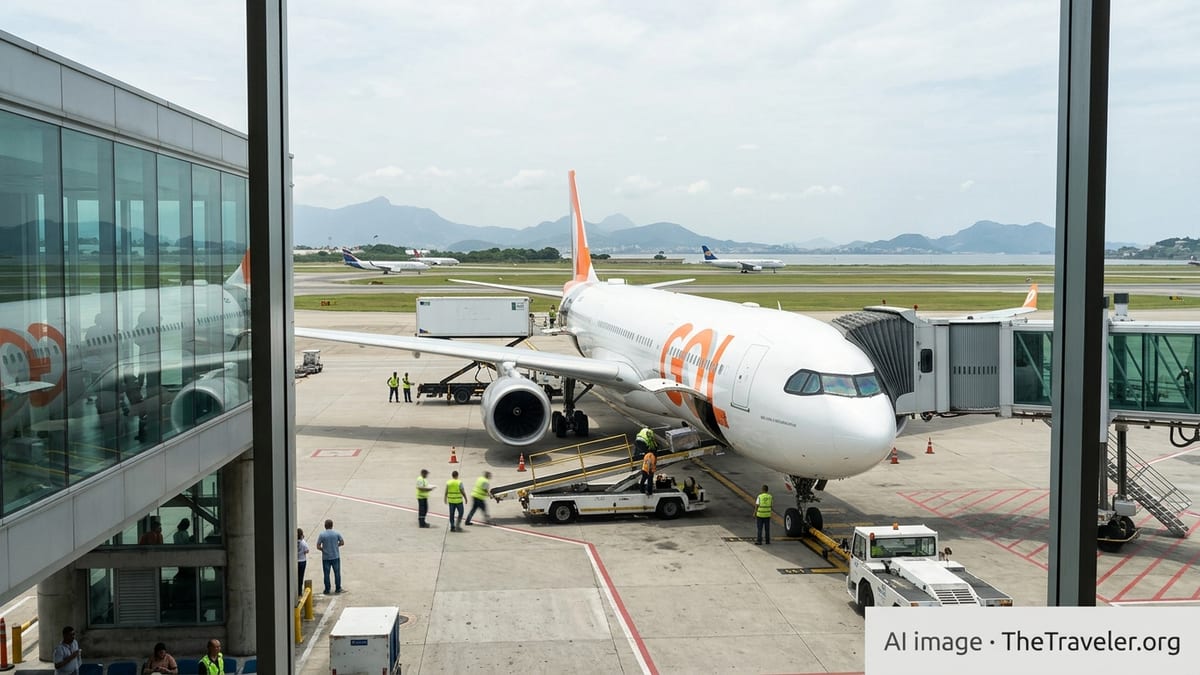
New Transatlantic Link Between Brazil and Portugal
Publicly available industry planning documents and recent reporting on GOL’s long haul strategy indicate that the airline intends to begin nonstop flights between Brazil and Portugal in the second half of 2026, with a targeted launch in September. The development is part of a broader push to grow GOL’s presence on long haul international routes beyond Latin America.
While final schedules and city pairs have not yet been loaded into public booking systems, filings and route-development coverage highlight Lisbon as the likely European gateway, reflecting strong demand between Brazil and Portugal and the role of Lisbon as a hub for connections across Europe and North Africa. On the Brazilian side, Rio de Janeiro’s Galeão and São Paulo–Guarulhos are emerging as the primary candidates, aligned with GOL’s recent focus on building long haul connectivity from these airports.
The move will place GOL into direct competition with established players already linking Brazil and Portugal, including TAP Air Portugal and larger Latin American network carriers. For travelers, the arrival of a new operator on the corridor is expected to add seat capacity and increase fare competition on both leisure and visiting-friends-and-relatives traffic.
The Brazil–Portugal market has seen steady growth in recent years, supported by strong cultural ties, a large Brazilian community in Portugal, and expanding tourism in both directions. GOL’s entry is expected to tap into this demand while also feeding connecting traffic from its extensive domestic network.
What We Know About Routes, Schedules, and Connectivity
According to recent aviation and tourism industry briefings, GOL has requested authorizations for a series of new long haul routes from São Paulo–Guarulhos to several European capitals, including Lisbon, with operations planned within the IATA northern summer 2026 season. The September 2026 launch window for Brazil–Portugal service would fall toward the end of that season and lead into the northern winter schedule.
Although detailed timetables are still subject to regulatory approvals and commercial adjustments, observers expect overnight departures from Brazil to Portugal, timed to arrive in Lisbon in the morning and allow same-day onward connections. The return services from Portugal are likely to depart late afternoon or evening, enabling domestic feed from across Brazil into the long haul departure point.
GOL’s domestic reach remains a key asset for the new route. Travelers originating in secondary Brazilian cities will be able to connect via São Paulo or Rio de Janeiro onto the Portugal flights on a single itinerary, simplifying connections that previously might have required mixing airlines or transferring through other South American hubs.
For Portugal-based travelers, the new link is expected to offer direct access not only to Brazil’s major coastal gateways but also, via connections, to popular destinations such as the Northeast beaches, the Amazon region, and key business centers in the Southeast and South.
Aircraft, Onboard Experience, and Service Expectations
GOL has confirmed the lease of up to five Airbus A330neo wide body aircraft as part of its long haul expansion strategy, with the first intercontinental route scheduled between Rio de Janeiro and New York from July 2026. The same aircraft type is widely expected to be deployed on the planned Portugal services, providing the range and capacity needed for nonstop Brazil–Europe operations.
The A330neo typically offers a two or three class configuration, with a dedicated business cabin, an enhanced economy or premium economy section, and standard economy seating. While GOL has not yet released a finalized cabin map for the Portugal routes, industry coverage indicates that the airline is targeting a competitive yet cost-efficient layout that aligns with its hybrid low cost model.
Travelers can anticipate a step up from GOL’s traditional narrow body product on domestic and regional routes, with features such as full-flat or highly reclined seats in business class, personal entertainment screens or enhanced streaming options, and upgraded catering on longer sectors. Economy passengers should expect a more basic but modern product, with paid extras for seat selection, additional baggage, and onboard services, consistent with GOL’s existing ancillary revenue approach.
Service standards on long haul flights are expected to emphasize reliability and value rather than luxury. Reports on GOL’s broader international plans suggest a focus on competitive fares, simplified fare families, and partnerships that can extend lounge and through-check benefits for select customers, particularly those connecting via alliance and codeshare partners.
Impact on Fares, Competition, and Traveler Choice
The introduction of GOL into the Brazil–Portugal market is likely to reshape pricing and competition on the corridor. Existing operators, particularly full service carriers, may respond to a new low cost competitor by adjusting fare structures, promotional campaigns, and capacity on overlapping routes, especially during peak travel seasons between Europe and Brazil.
For consumers, this typically translates into more choice in both schedule and price point. Travelers who previously relied on a limited set of carriers for nonstop flights may see a broader spread of departure times and fare options, including more aggressive sales in shoulder periods and outside of major holiday peaks.
Observers also note potential benefits for regional Brazilian airports. As GOL feeds more domestic traffic into long haul departures, smaller cities may gain stronger one stop access to Portugal and the wider Schengen area. This can support outbound tourism, student mobility, and business travel, while also encouraging inbound tourism flows beyond Brazil’s traditional gateways.
The competitive impact will extend beyond point to point demand. Network planners are watching how GOL’s move interacts with existing interline and partnership structures, including relationships that allow European carriers to sell onward legs on Brazilian domestic networks. Adjustments in these arrangements could influence which hubs travelers use when flying between Europe and different parts of Brazil.
Key Dates, Booking Timeline, and Practical Tips
With operations targeted for September 2026, travelers can expect GOL to begin publishing schedules and opening reservations several months in advance, once regulatory clearances are in place and aircraft deployment plans are firm. Industry practice suggests that initial schedules may appear in global distribution systems before full marketing campaigns begin, with promotional fares often used to stimulate early demand.
Prospective passengers should monitor GOL’s official channels and major booking platforms for the first indications of saleable inventory on the Brazil–Portugal route. Early adopters may benefit from lower introductory fares, though flexibility around exact dates and departure airports can be important in securing the most attractive prices.
Given that GOL will be ramping up its long haul operation throughout 2026, travelers are advised to pay close attention to schedule changes, aircraft assignments, and minimum connection times, especially when planning tight domestic–international transfers. Choosing slightly longer connection windows at hubs such as São Paulo–Guarulhos or Rio de Janeiro–Galeão can reduce stress if operational adjustments occur during the startup phase.
As the launch date approaches, more detailed information is expected to emerge regarding onboard services, baggage allowances, and any reciprocal benefits with partner airlines. Until then, travelers weighing trips between Brazil and Portugal in late 2026 may wish to factor GOL’s upcoming entry into their planning, particularly if they prioritize nonstop service and are comfortable with a value-focused long haul product.