

More news on this day
GOL Linhas Aéreas is preparing a landmark expansion into intercontinental flying, planning to deploy Airbus A330-900neo aircraft on new long-haul routes linking Brazil with major cities in Europe and the United States.
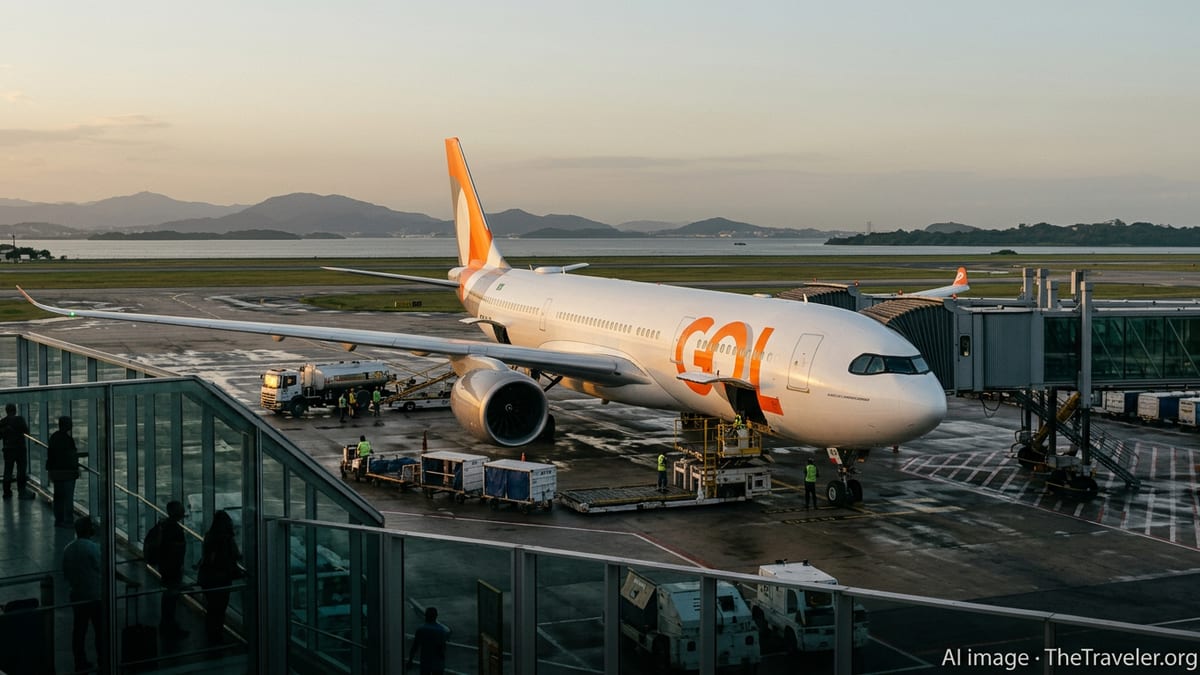
From Boeing-Only to Widebody Long-Haul Player
The move into Airbus A330-900neo operations marks a strategic shift for GOL, which has historically built its business around an all-Boeing 737 fleet focused on domestic and regional flying. Executives have recently confirmed that the airline is advancing plans to induct widebody aircraft for the first time, positioning the carrier to compete directly in the long-haul market.
Industry briefings indicate that up to five A330-900neos will be introduced on a phased timeline beginning this year, with aircraft sourced through the Abra Group, the holding company that also controls Avianca. The new jets will give GOL the range and capacity needed to launch nonstop services from Brazil to Europe and North America, a step change from its current network that relies on partners for most long-haul connectivity.
GOL’s leadership has framed the shift as a structural evolution rather than a tactical experiment. By diversifying its fleet beyond single-aisle aircraft, the airline aims to broaden its revenue base, strengthen its role within the Abra Group, and capture higher-yield traffic that today connects over foreign hubs. The A330neo’s operating economics and range profile have been key factors in the decision.
Planned Routes Linking Brazil to Europe and the United States
While detailed schedules have yet to be published, statements from the Abra Group and GOL suggest that the first intercontinental routes will connect major Brazilian gateways such as São Paulo and Rio de Janeiro with primary destinations in Europe and North America. The group has explicitly cited long-haul markets to and from Europe and the United States as the initial focus for the new A330-900neo fleet.
Industry observers expect that GOL will prioritize cities with strong origin-and-destination demand from Brazil and ample connecting traffic opportunities on partner networks. In Europe, this points to large hubs with existing Abra or partner presence, where feed from GOL’s extensive domestic network can be combined with onward connections. In the United States, large Brazilian diaspora markets and strong leisure demand are likely early candidates for service.
The gradual introduction of up to five aircraft gives GOL the flexibility to test and refine its long-haul strategy, adjusting capacity and destinations as performance data emerges. Initial routes are expected to launch once the first A330-900neos complete induction, certification, and crew training processes, with additional aircraft enabling new city pairs or added frequencies over the following months.
What Passengers Can Expect Onboard the A330-900neo
The Airbus A330-900neo is a latest-generation widebody designed for long-haul routes, offering a quieter cabin, lower fuel burn, and improved range compared with older A330 variants. Passengers can expect a two-aisle layout with modern cabin features, large overhead bins, and advanced lighting designed to reduce the effects of jet lag on overnight flights.
Although GOL has not yet revealed the final interior configuration, the airline is expected to introduce a competitive long-haul product with lie-flat or deeply reclining seats in the premium cabin and an upgraded economy section compared with its single-aisle fleet. Inflight entertainment at every seat, reliable connectivity, and multiple power options are likely to be central to the onboard offering, in line with passenger expectations on intercontinental routes.
The A330-900neo’s operating efficiency should also help GOL keep a tight grip on unit costs while still delivering a step up in comfort. For travelers used to connecting via foreign hubs, the prospect of boarding a nonstop widebody service from Brazilian gateways to Europe or the United States will represent a significant improvement in convenience, particularly on overnight sectors.
Network Synergies Within the Abra Group
The deployment of A330-900neos at GOL is closely tied to the broader strategy of the Abra Group, which seeks to knit together its airlines’ networks to create a more competitive pan-regional offering. With Avianca already operating long-haul services from Bogotá, GOL’s new widebody operations from Brazil will add another pillar to the group’s intercontinental footprint.
By coordinating schedules, connections, and commercial agreements, Abra can route passengers via multiple South American gateways, offering alternatives to traditional European and North American hubs. GOL’s dense domestic network will feed long-haul departures, while Avianca and other partners can provide onward connectivity in Europe and North America through existing and future alliances.
For travelers, this is likely to translate into more one-stop options between secondary cities in Brazil and destinations abroad, using GOL’s domestic services to connect to A330neo flights. The strategy could also help the group capture cargo demand on long-haul sectors, taking advantage of the widebody’s belly capacity to move high-value freight between Brazil, Europe, and the United States.
Competitive Impact on Brazil’s Long-Haul Market
GOL’s entry into intercontinental flying with the A330-900neo comes at a time of renewed competition in Brazil’s long-haul market, where global carriers and local rivals have been rebuilding networks. Brazil’s other major airlines already operate widebodies on long-haul routes, and international carriers from Europe and North America maintain an extensive presence at São Paulo and Rio de Janeiro.
The addition of GOL-operated A330neo services will introduce new capacity and potentially new nonstop city pairs, putting pressure on fares and giving consumers more choice. As GOL is known domestically as a value-focused carrier, its long-haul pricing strategy will be closely watched by both leisure travelers seeking affordable transatlantic trips and corporate buyers looking for competitive premium options.
For airports in Brazil, the move offers an opportunity to attract new long-haul services and strengthen their role as international gateways. If the A330-900neo deployment proves successful, analysts expect GOL and the Abra Group to consider further fleet expansion or route additions, deepening Brazil’s direct air links with key markets across the Atlantic.