

More news on this day
Brazilian carrier Gol Linhas Aéreas will enter the long-haul market in 2026, launching a new nonstop service between Rio de Janeiro’s Galeão International Airport and New York’s John F. Kennedy International Airport in July, a move set to reshape air connectivity between Brazil and the United States.
Route Launch Date, Schedule and Frequency
Gol’s new Rio de Janeiro to New York JFK service is scheduled to begin on July 8, 2026, according to the airline and industry reports. The launch creates a fresh nonstop option on one of the most important leisure and business corridors between South America and the United States.
The carrier plans to operate three weekly flights between Rio’s Galeão International Airport and New York JFK. Initial schedules indicate evening departures from Rio, arriving in New York the following morning, with return flights leaving JFK in the morning and reaching Rio early in the evening, designed to suit both business travelers and tourists.
This new service will be Gol’s first direct route from Rio de Janeiro to the United States and its first-ever operation into New York JFK. The schedule also positions Galeão as a growing hub, offering connections from across Brazil into the new North American gateway.
Tickets for the route are already on sale through Gol’s usual distribution channels, giving travelers nearly a year and a half of lead time to plan trips for the Northern Hemisphere summer of 2026 and beyond.
First Widebody Flights and the Airbus A330-900neo
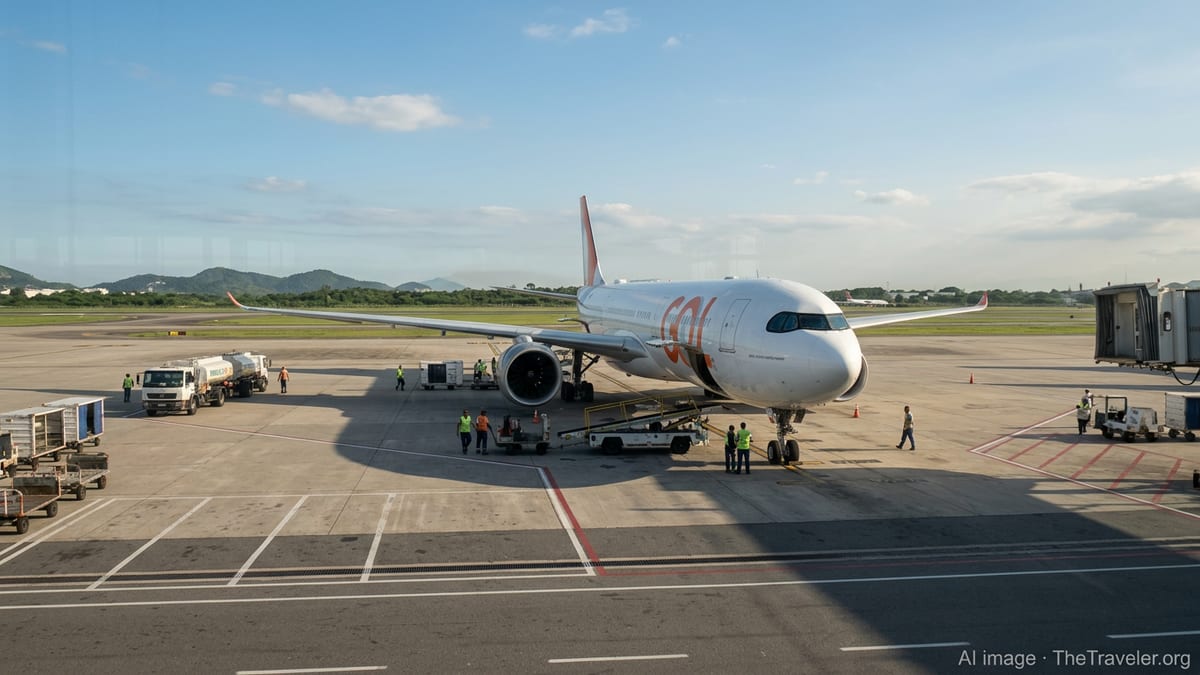
The Rio to New York link marks a strategic milestone for Gol, which has traditionally operated a single-aisle Boeing 737 fleet focused on domestic and short- to medium-haul regional routes. For the new long-haul service, the airline will deploy newly leased Airbus A330-900neo widebody aircraft, signaling a significant shift in its fleet strategy.
Gol has announced plans to incorporate up to five A330-900neo jets, and the Rio to New York route will be the debut of these aircraft in scheduled service. The move gives the airline the range and capacity required to compete on transcontinental routes while offering a cabin product more in line with international expectations.
The A330-900neo aircraft are expected to feature a dedicated premium cabin with lie-flat seats on the Rio to New York flights, alongside a high-capacity economy section configured for both comfort and efficiency. Details such as seat pitch, inflight entertainment and onboard service are being positioned as upgrades over the airline’s traditional narrowbody product.
By entering the widebody segment, Gol is not only diversifying its fleet but also preparing the ground for future long-haul destinations. Company executives have already floated the possibility of additional routes to Europe from Rio once the A330neo operation is established and performing well.
What the New Route Means for Travelers
For travelers in both Brazil and the United States, Gol’s Rio to New York JFK service increases choice on a route historically dominated by a handful of legacy carriers. The new flights are expected to stimulate competition on fares while broadening schedule options, particularly for passengers originating outside São Paulo who prefer to connect through Rio.
From the Brazilian side, the route will offer a same-airline connection from dozens of domestic destinations into Rio Galeão for onward travel to New York, simplifying itineraries that previously required a change of airlines or an additional international connection. For U.S.-based travelers, the service opens up more direct access to Rio’s beaches, cultural attractions and major events, with onward connections to Brazil’s northeast and other tourist hotspots.
The presence of a Brazilian low-cost oriented carrier on this long-haul market could also reshape ancillary pricing and cabin options. While final fare structures have not yet been fully detailed, Gol is expected to maintain its unbundled pricing approach, where travelers can tailor add-ons such as checked bags, advance seat selection and onboard meals according to their budget.
For frequent flyers and loyalty program members, the route adds new opportunities to earn and redeem miles on a Brazil-originating carrier between South America and the United States, complementing existing offerings from North American and European airlines serving Rio and São Paulo.
Economic Impact on Rio, New York and Tourism Flows
The new nonstop service is being framed by Brazilian officials as a key part of a broader strategy to reinforce Rio de Janeiro’s role as an international gateway. Local authorities have indicated that financial incentives were offered to support Gol’s expansion from Galeão, with the goal of restoring and expanding the airport’s long-haul network.
By strengthening Rio’s direct connectivity with a major global hub like New York JFK, the route is expected to drive incremental tourism, business travel and trade flows. Tourism boards on both sides anticipate that easier access will encourage first-time visitors while also making repeat trips more attractive to frequent travelers and diaspora communities.
For New York, the service adds another nonstop link to Brazil at a time when demand for Latin American destinations continues to grow. Travel analysts note that Brazil remains one of the largest outbound markets in the region for shopping, cultural tourism and events in the United States, while inbound U.S. travel to Brazil is supported by favorable currency dynamics and renewed interest in nature and adventure experiences.
The added capacity between Rio and New York may also help balance seasonal swings in demand, giving airlines and tourism operators more flexibility to package air, hotel and cruise products for both northern winter and southern summer travel peaks.
Looking Ahead: Gol’s International Expansion Strategy
Gol’s decision to launch the Rio to New York JFK route is widely seen as the opening move in a broader international expansion following its restructuring efforts earlier in the decade. The adoption of A330-900neo widebodies provides the range and efficiency necessary to consider additional long-haul markets beyond the United States.
Executives have already mentioned potential future services from Rio to European cities such as Lisbon and Paris, which would further consolidate Galeão’s role as the airline’s primary intercontinental base. Any such expansion would likely build on the operational experience and demand data gathered from the New York route in its first years.
Industry observers will also be watching how Gol leverages partnerships and alliances in North America. New York JFK’s extensive network of onward connections across the United States, Canada and the Caribbean presents opportunities for interline and codeshare arrangements that could amplify the impact of a single daily-equivalent operation.
As July 2026 approaches, the performance of advance bookings, corporate demand and connecting traffic will be key indicators of how successfully Gol can transition from a predominantly domestic and regional operator into a credible long-haul competitor linking Brazil to one of the world’s most important aviation hubs.