


More news on this day
The Golden Horizon, the world’s largest tall sailing cruise ship and a long-troubled asset for Croatia’s Brodosplit shipyard, has reportedly been sold to a Swiss shipping company for about 110 million euros, potentially ending years of legal and financial uncertainty surrounding the five-masted vessel.
Get the latest news straight to your inbox!
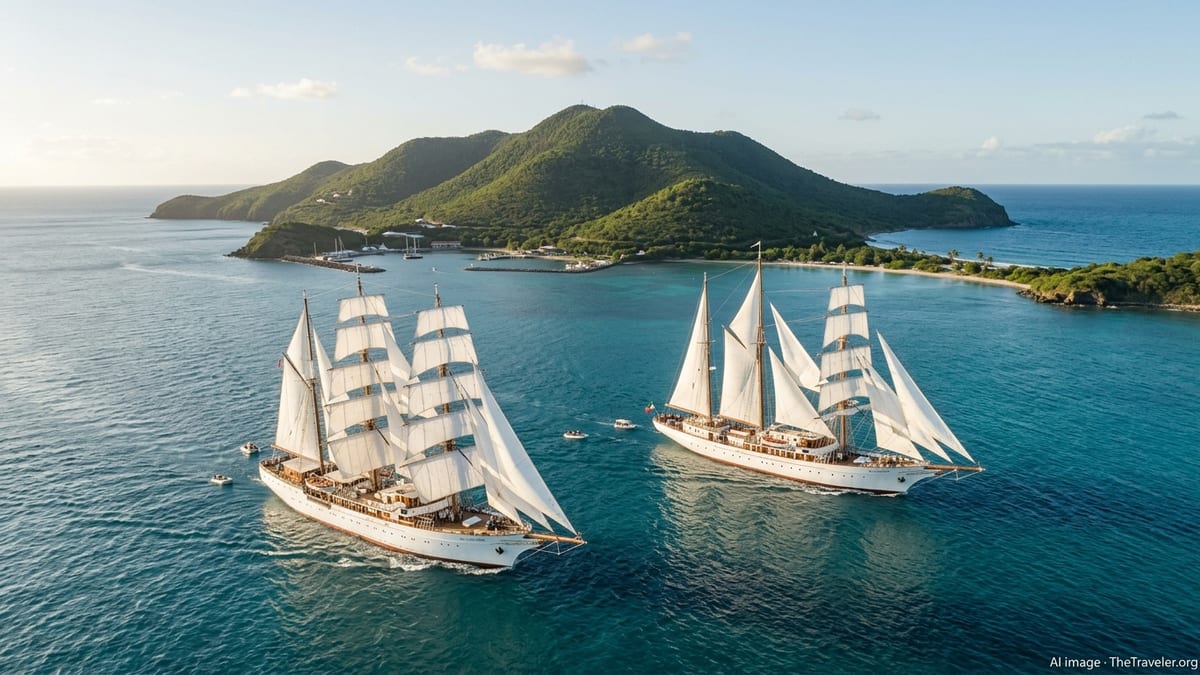
Landmark Deal for a Record-Breaking Tall Ship
Recent coverage in specialist cruise and maritime media indicates that Brodosplit has reached an agreement to sell the 8,770‑gross‑ton Golden Horizon to an unnamed Swiss shipping company reportedly operating a fleet of around 100 vessels. Croatian outlets have described the contract as signed, while also noting that contractual restrictions limit public disclosure of the buyer’s identity and detailed terms.
The reported price of approximately 110 million euros marks a significant step up from earlier sale indications and reflects the ship’s status as the largest square‑rigged sailing ship in the world. Industry reports describe the transaction as a crucial move for Brodosplit, which has faced prolonged financial strain and project delays in recent years.
The change of ownership, if fully completed and registered, would give Golden Horizon its first stable long‑term owner since construction was finished in 2021. Up to now, the vessel has spent most of its short life laid up in Croatia, despite strong interest among cruise enthusiasts in its classic sailing profile and low‑emission credentials.
From Flying Clipper to Golden Horizon
Golden Horizon’s path to this reported sale has been unusually complex. The five‑masted barque was originally ordered as Flying Clipper for tall‑ship specialist Star Clippers and designed as a near‑replica of the early twentieth‑century French sailing ship France II. Built at Brodosplit in Split, Croatia, the ship was conceived as a flagship product showcasing the yard’s capability in high‑end passenger construction.
Disputes between Star Clippers and the yard meant the vessel was never delivered to its original customer. Public records show that the completed hull remained under Croatian ownership, setting the stage for a protracted legal and commercial standoff that delayed the vessel’s entry into service.
Rebranded as Golden Horizon, the ship eventually entered limited commercial operation under British start‑up Tradewind Voyages in 2021. The line promoted sail‑powered itineraries with a focus on slow travel and reduced environmental impact. However, sanctions affecting the Russian‑linked financing behind the project and broader funding pressures led to a pause in operations and a swift return to lay‑up.
Financial Lifeline for Brodosplit Shipyard
For Brodosplit, the reported sale is being framed in Croatian business coverage as a vital financial lifeline. The shipyard has been contending with a tight credit environment, unresolved financing arrangements and the lingering effects of the war in Ukraine on regional banking and investment flows.
Publicly available statements from the yard’s leadership in recent months have highlighted Golden Horizon as both a showcase vessel and a heavy balance‑sheet burden. The ship’s size, passenger fit‑out and specialized rigging meant considerable capital remained tied up in an asset that was not consistently generating revenue.
Croatian media reports describe the 110‑million‑euro deal as a first step toward stabilizing the yard and enabling work to resume on other stalled projects, including expedition tonnage. Industry observers note that converting an unfinished or laid‑up cruise ship into cash is increasingly difficult, given persistent cost inflation in shipbuilding and cautious lending to the passenger sector.
What a Swiss Owner Could Mean for Golden Horizon
With the buyer reported to be a Swiss company overseeing about 100 vessels, expectations within the cruise and shipping community have turned to how Golden Horizon might be deployed. Switzerland hosts several maritime and commodity‑shipping groups, as well as river and niche cruise brands, though no operator has yet been publicly linked to the acquisition.
Analysts following the tall‑ship and small‑ship cruise segment suggest three broad possibilities. The vessel could be integrated into an existing ocean or adventure fleet, chartered out to a tour operator under a long‑term agreement, or repurposed for premium corporate, educational or sail‑training programs alongside limited cruise operations.
The ship’s design supports multiple concepts. Golden Horizon can carry roughly 300 guests in cruise configuration, supported by a crew complement in the low hundreds, and is sail‑assisted to reduce fuel consumption. Its combination of traditional rigging with modern hotel services aligns with current demand for experiential, lower‑impact travel, especially on routes in the Mediterranean, Northern Europe and tropical sail itineraries.
Implications for the Niche Sailing‑Cruise Market
The reported sale of Golden Horizon comes as small‑ship and expedition cruising continues to expand, even while some traditional cruise segments remain cautious about new capacity. Industry trackers point to strong booking patterns for boutique ships and sailing vessels that offer distinctive experiences rather than mass‑market scale.
Golden Horizon’s prolonged lay‑up had been seen by many cruise watchers as a missed opportunity for the broader sailing‑cruise niche. If the Swiss buyer proceeds with an active deployment strategy, the ship could quickly become a high‑profile entrant in a market that includes classic sail operators and hybrid expedition brands.
The vessel’s future itinerary plans, onboard concept and branding have not yet surfaced in public registries or company announcements. Until more information emerges, the reported acquisition is being viewed primarily as a significant asset transfer that may unlock both a new chapter for the ship and much‑needed liquidity for its Croatian builder.